
New Talbert Lowboy Trailers For Sale in Illinois
New Talbert lowboy trailers for sale in Illinois. Compare 55-ton class specs, RGN options, deck height, axle setups, and heavy haul features.
Learn more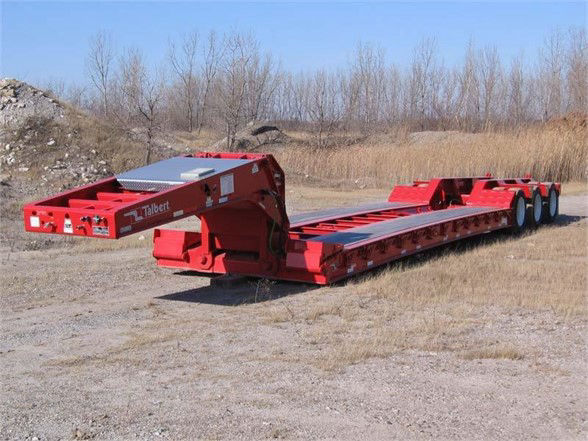
Have new talbert lowboy trailer to sell? List it here to reach thousands of buyers.
About New Talbert Lowboy Trailers in Illinois
A key decision is the style of gooseneck. Many Talbert lowboy trailers in this class use a hydraulic removable gooseneck, often called an RGN, which allows self-loading from the front and helps reduce loading time for tracked equipment. Non-ground-bearing hydraulic RGNs are popular because they simplify hookup on uneven jobsites and paved yards. Buyers should also look closely at deck configuration. A flat level deck with a low ride height helps with overall loaded height and machine stability, while removable outriggers can add flexibility for wider machines. On regional and over-the-road heavy haul work, details like a two-position kingpin, LED lighting, battery backup strobes, and flag holders are not minor options. They support permitting, visibility, and day-to-day operating convenience.
Capacity and axle planning should be matched to the freight, not just the headline ton rating. A 55-ton Talbert lowboy may be set up for strong performance in a concentrated 13-foot well, but actual legal payload depends on axle group, tractor specs, routing, and state bridge laws. Illinois buyers often pay close attention to whether a trailer is spreader bar ready or fourth-axle capable, since future axle additions can improve flexibility for heavier or more specialized loads. Suspension design, tire size, deck length, and loaded deck height all affect loading angle, ground clearance, and how easily a machine can be positioned for proper weight distribution.
Talbert lowboys appeal to fleets that want a trailer designed for repeated heavy haul service rather than occasional equipment transport. Frame construction, hydraulic neck reliability, deck height consistency, and serviceability all matter over the long term. When comparing new Talbert lowboy trailers for sale, focus on the combination of tonnage rating, gooseneck style, deck profile, axle expandability, and kingpin placement. Those are the specifications that determine how much trailer you are actually buying and how well it will fit your permits, tractors, and freight mix.
Frequently Asked Questions
What is a Talbert lowboy trailer used for?
A Talbert lowboy trailer is used to haul heavy, tall, or tracked equipment that needs a lower deck height than a standard flatbed or step deck can provide. Common loads include excavators, bulldozers, loaders, pavers, and other construction or industrial machines. The low deck helps reduce overall loaded height, which is critical for permit compliance and route planning.
What should I compare first on a new Talbert lowboy?
Start with capacity rating, deck height, usable deck length, gooseneck style, and axle configuration. Those specifications determine what equipment the trailer can carry and how easily it can be loaded, permitted, and balanced. Buyers should also review kingpin settings, overall weight, and whether the trailer is designed for future axle additions such as a spreader bar or fourth axle.
What is the advantage of a hydraulic removable gooseneck on a lowboy trailer?
A hydraulic removable gooseneck allows front loading, which is especially useful for tracked machines and equipment with limited ramp climbing ability. It can speed up loading and unloading, reduce the need for separate ramps, and improve jobsite flexibility. Non-ground-bearing designs are often preferred because they can be easier to connect and disconnect on uneven surfaces.
How does deck height affect lowboy trailer performance?
Deck height directly affects overall loaded height, center of gravity, and machine stability. A lower ride height helps keep taller equipment within legal height limits and can improve confidence when hauling heavy machinery over longer distances. It also influences loading angle and under-deck clearance, so it should be evaluated alongside suspension setup and intended freight.
Why do Illinois buyers pay attention to axle setup on a lowboy?
Axle setup affects legal weight distribution, bridge compliance, and permitting flexibility. In Illinois and surrounding states, the right axle arrangement can make a major difference in how much equipment can be hauled on a given route. Buyers often look for lowboys that are spreader bar ready or fourth-axle capable so the trailer can be adapted as hauling needs change.