
New Fontaine Double Drop Deck Trailers For Sale in Illinois
New Fontaine double drop deck trailers for heavy haul, machinery, and over-height loads. Compare deck height, neck type, capacity, and axle setup.
Learn moreNo exact matches found for your search
Showing New Double Drop Deck Trailers instead.
Have new fontaine double drop deck trailer to sell? List it here to reach thousands of buyers.
About New Fontaine Double Drop Deck Trailers in Illinois
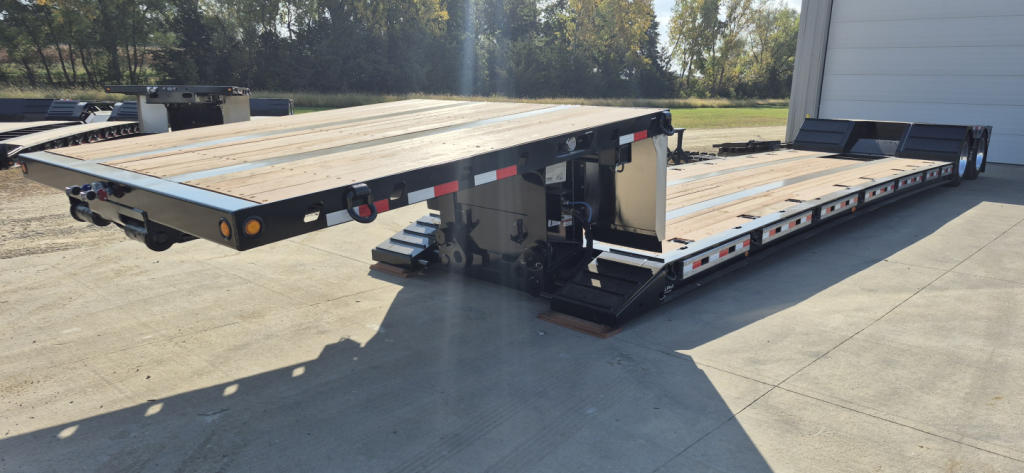
Fontaine’s double drop lineup commonly includes mechanical detachable gooseneck and hydraulic detachable gooseneck designs, along with fixed or extendable deck configurations. Mechanical necks are straightforward, durable, and often attractive for fleets that want lower acquisition cost and simple serviceability. Hydraulic necks speed up loading and unloading and can make daily operation easier when the trailer is used hard. Typical specs in this category include 40-ton to 55-ton classes, loaded deck heights around 18 to 20 inches, clear deck lengths near 29 feet, and tandem or tridem axle groups depending on the model. Buyers should also watch swing clearance, ground clearance, rear deck length, and whether the trailer is prepped for a flip axle, spreader bar, or other capacity-extending setup.
A buyer comparing new Fontaine double drops should pay close attention to the deck structure and load securement package. Outriggers matter if you routinely haul wider machinery or need added support for tracked equipment. Traction cleats on the approach, a flat level deck, and air ride suspension with manual and automatic controls can all affect day-to-day usability. Weight is another major factor. A trailer with strong capacity on paper still has to leave enough payload for the machine you are trying to move. In Illinois and surrounding Midwest lanes, axle spread, bridge compliance, and permit strategy can influence which configuration makes the most practical sense.
Fontaine has a strong reputation in specialized hauling, and new units appeal to buyers looking for current safety equipment, fresh suspension and brake components, and less near-term maintenance risk. If the work involves pavers, excavators, loaders, dozers, or over-height fabricated loads, a double drop deck can open freight options that a standard flatbed or step deck cannot handle. The best match usually comes down to how often you load, the heights and track widths you carry, and whether you need a simple tandem mechanical setup or a more flexible hydraulic or extendable heavy haul configuration.
Frequently Asked Questions
What is a Fontaine double drop deck trailer used for?
A Fontaine double drop deck trailer is used to haul taller and heavier freight that benefits from a lower main deck height than a flatbed or standard step deck can provide. Common loads include excavators, skid steers, loaders, pavers, forklifts, tanks, and industrial components. The lowered well deck helps reduce overall loaded height, which is critical for bridge and overpass clearance and can also improve load stability.
What is the difference between a mechanical detachable neck and a hydraulic detachable neck?
A mechanical detachable neck uses a simpler coupling system and is generally valued for durability, lower complexity, and easier long-term service. A hydraulic detachable neck uses hydraulic power to assist detachment and hookup, which can reduce loading time and operator effort. Fleets that load and unload frequently often prefer hydraulic necks, while buyers focused on simplicity and acquisition cost often lean toward mechanical designs.
How do I choose the right capacity for a new double drop deck trailer?
Capacity should be matched to the actual machine weights, attachment weights, and the axle and permit rules where the trailer will run. A 40-ton class trailer may suit many common construction and equipment-hauling jobs, while heavier or more specialized freight may require a 55-ton class, tridem setup, or provisions for a flip axle. The trailer’s legal payload depends on more than the published rating, so buyers should consider empty weight, axle group, GAWR, bridge laws, and permit strategy before choosing a configuration.
Why does deck height matter on a double drop trailer?
Deck height directly affects how much overall freight height you can carry before running into clearance issues. An 18-inch or 20-inch loaded deck can make the difference between a legal move and a permitted over-height move. Lower deck height also helps with machine stability, but buyers still need to confirm ground clearance and approach geometry so the trailer works in uneven jobsite conditions and during loading.
What options should buyers look for on a new Fontaine double drop deck?
The most important options depend on the freight mix, but many buyers focus on outriggers, air ride suspension, aluminum wheels, traction cleats, deck extension capability, and connections for flip axles or spreader bars. Swing clearance and rear deck dimensions also matter when hauling machines with long tails or specific axle placement requirements. For frequent heavy haul work, it is smart to evaluate how the trailer is configured for securement, loading efficiency, and future capacity upgrades.