
New Fontaine Double Drop Deck Trailers For Sale in Alabama
Shop new Fontaine double drop deck trailers in Alabama. Compare detachable gooseneck, deck height, axle setups, outriggers, and capacity.
Learn more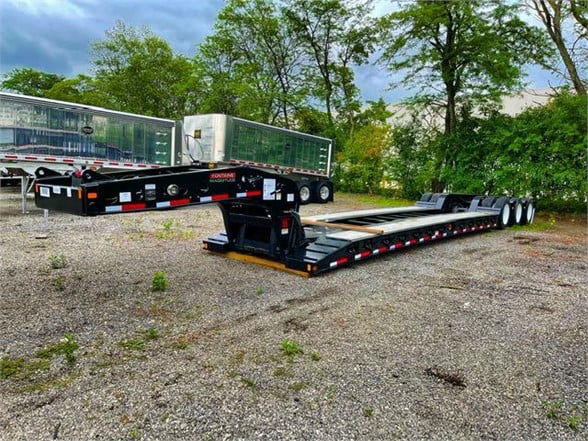
Have new fontaine double drop deck trailer to sell? List it here to reach thousands of buyers.
About New Fontaine Double Drop Deck Trailers in Alabama
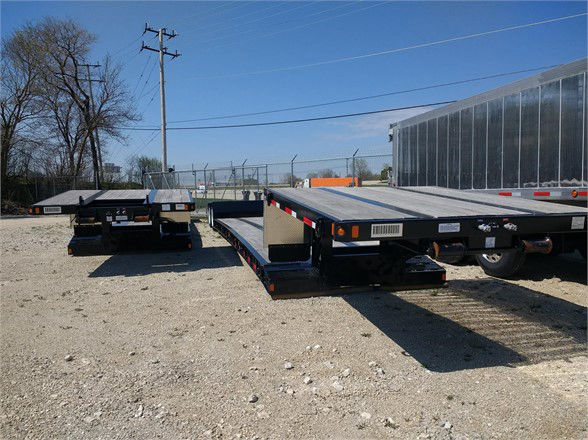
The first decision is usually deck style and gooseneck configuration. Fontaine offers double drop deck trailers in mechanical detachable gooseneck and other specialized heavy haul layouts, including flat level deck designs and extendable models on some series. Buyers should pay close attention to loaded deck height, clear well length, swing radius, ground clearance, and whether the trailer has a flat deck or a sloped approach. An 18 to 20 inch loaded deck height can make a major difference when hauling taller iron. A mechanical detachable gooseneck is a practical choice for fleets that want straightforward operation and frequent loading of self-propelled equipment, while extendable or modular-style configurations fit longer and more variable freight.
Capacity, axle arrangement, and suspension specification are what separate a general-purpose low deck trailer from a true heavy haul tool. Common considerations include 40-ton to 55-ton ratings, tandem or tridem axle groups, axle spread, lift axle options, and air ride or other suspension setups. Outriggers are important for wider machinery and concentrated loads, and buyers should also look at deck construction, crossmember design, traction cleats on loading ramps, and tie-down layout. Features like a third axle airlift, wet-line compatibility, flip axle provisions, and flip box connections can significantly expand how the trailer can be configured for legal payload distribution and jobsite flexibility.
Fontaine has a strong reputation in specialized hauling because the trailers are engineered around real-world service demands such as corrosion resistance, structural durability, and ease of loading. For buyers comparing new Fontaine double drop deck trailers for sale, the most important step is matching the trailer to the freight profile, not just the rated tonnage. Deck length, neck style, suspension controls, empty weight, and attachment points for future expansion often matter just as much as headline capacity. A well-spec'd double drop deck trailer can handle construction equipment, industrial components, agricultural machinery, and oversize loads with fewer route compromises and better day-to-day usability.
Frequently Asked Questions
What is a Fontaine double drop deck trailer used for?
A Fontaine double drop deck trailer is used to haul tall or heavy equipment that benefits from a lower deck height than a standard flatbed can provide. Common applications include construction equipment, farm machinery, industrial components, tanks, and oversize loads that need extra clearance under bridges and overpasses. The lowered well area is the key advantage because it helps keep overall loaded height within legal or permit limits.
What should I compare first when shopping for a new double drop deck trailer?
Start with loaded deck height, clear well length, capacity rating, and gooseneck type. Those four items determine what freight the trailer can realistically handle. After that, compare axle configuration, suspension type, ground clearance, outriggers, ramp design, and empty trailer weight. A trailer with the right tonnage but the wrong deck length or neck setup can still be a poor fit for the work.
Is a mechanical detachable gooseneck a good choice on a double drop trailer?
A mechanical detachable gooseneck is a strong option for operations that load equipment frequently and want a durable, relatively straightforward system. It allows machines to be driven onto the deck from the front after the neck is removed. Buyers should still confirm swing radius, neck length, hookup procedure, and compatibility with their tractors and loading environment, especially if the trailer will be used on uneven jobsites.
How do axle setup and accessories affect legal payload on a Fontaine lowboy or double drop?
Axle count, axle spread, and available accessories such as lift axles, flip axles, or spreader configurations directly affect weight distribution and permit flexibility. A tridem or expandable setup can improve legal loadability in certain jurisdictions, but the actual legal payload always depends on GAWR, GVWR, tractor setup, and state bridge formulas. Buyers in Alabama and multi-state operations should spec the trailer around their normal routes, not just the maximum advertised rating.
What features matter most for long-term durability on a new heavy haul trailer?
Look closely at the frame design, deck structure, coating system, suspension components, and wear areas around the neck, ramps, and axle group. Corrosion protection, quality welds, replaceable wear components, and a layout that simplifies service access all contribute to lower lifetime operating cost. On a heavy haul trailer, durability is not just about surviving weight. It is also about resisting twist, abrasion, repeated loading impacts, and weather exposure over years of use.