
Manac Flatbed Expandable Trailers For Sale in Georgia
Browse Manac flatbed expandable trailers with details on deck length, extension range, axle setup, and hauling applications.
Learn more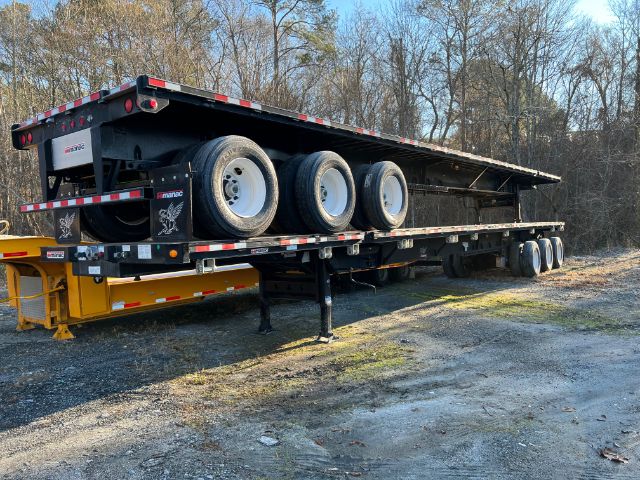
Have manac flatbed expandable trailer to sell? List it here to reach thousands of buyers.
About Manac Flatbed Expandable Trailers in Georgia
Manac expandable flatbeds are built for operators who need open-deck versatility without stepping up to a specialized beam or multi-axle configuration for every job. Typical spec points include aluminum or steel construction, air ride suspension, tandem or spread axle layouts, sliding suspension options, winch tracks, stake pockets, chain spools, and hardwood or apitong flooring. Extension design matters just as much as raw length. Buyers should look at main beam construction, deck rating in both closed and extended positions, concentrated load limits, and how easily the trailer can be pinned and repositioned. Crossmember spacing, deck height, and loaded tare weight all influence what freight the trailer can legally and profitably carry.
Securement and durability features deserve close review because an expandable flatbed often sees irregular freight with difficult tie-down points. A practical spec may include coil package provisions, extra D-rings, sliding winches, toolbox space, LED lighting, and tire inflation systems. If the work involves fabricated steel, lumber packs, utility poles, or long equipment, check for the number and placement of tie-down options across the fixed and telescoping sections. Rear bolster arrangements, outriggers, and dock compatibility can also matter depending on the mix of freight. The best trailer is not simply the one that reaches the longest length, but the one that keeps enough deck strength and securement flexibility across the loads you actually book.
A Manac expandable flatbed is often chosen by fleets and owner-operators that need one trailer to cover standard flatbed work on some days and overlength freight on others. That dual-purpose value is where these trailers earn their keep. Compare axle spacing, kingpin setting, overall empty weight, and extension increments before buying, especially if the trailer will run in multiple states with different bridge and permit considerations. A well-matched expandable flatbed can widen the freight profile you can accept without giving up the day-to-day utility of a conventional open-deck trailer.
Frequently Asked Questions
What is the typical length range for a Manac flatbed expandable trailer?
A common Manac expandable flatbed starts at 53 feet closed and extends to about 90 feet, although exact dimensions vary by build. The useful number is not just maximum extension, but how the trailer performs at intermediate lengths, what the deck rating is when extended, and how axle placement affects bridge compliance. Buyers should verify both the closed and extended working lengths against the freight they expect to haul most often.
What freight is a flatbed expandable trailer best suited for?
This trailer type is built for overlength cargo that still fits an open-deck platform. Common examples include steel beams, long pipe, trusses, utility poles, precast materials, long machinery components, and fabricated structural pieces. It also works for carriers that want a standard flatbed trailer when closed and additional deck length when a longer load comes up, which makes it a practical crossover trailer for varied open-deck operations.
What specs matter most when comparing expandable flatbeds?
The key specs are closed length, maximum extended length, deck rating in both positions, axle configuration, suspension type, kingpin setting, tare weight, and tie-down layout. Buyers should also look closely at the extension mechanism, pinning positions, main beam design, flooring material, and crossmember spacing. Those details determine how easily the trailer can be loaded, how much freight it can legally carry, and how well it holds up under repeated extension cycles.
Are expandable flatbeds harder to permit and route than standard flatbeds?
They can be, especially once the trailer is extended with an overlength load. Permit requirements depend on overall loaded length, axle spacing, weight distribution, and the states being crossed. A trailer that is easy to run in Georgia may face different permit or bridge considerations in neighboring states, so buyers should match the trailer's dimensions and axle layout to the lanes they expect to cover most often.
How do I know if an expandable flatbed is a better fit than a fixed 53-foot flatbed?
An expandable flatbed makes sense when a meaningful part of your freight base includes loads longer than 53 feet, but not so specialized that you need a different trailer class entirely. If most loads are standard building materials, machinery, or palletized open-deck freight, a fixed flatbed may be simpler and lighter. If you regularly quote steel, pipe, poles, or structural freight with extra length, the expandable design can open up more revenue opportunities while still handling everyday flatbed work when retracted.