
Double Drop Deck Trailers For Sale in Illinois
Compare double drop deck trailers for heavy haul work in Illinois. Review deck height, neck style, axle setup, capacity, and load clearance.
No exact matches found for your search
Showing Double Drop Deck Trailers instead.
Have double drop deck trailer to sell? List it here to reach thousands of buyers.
Double Drop Deck Trailers in Illinois
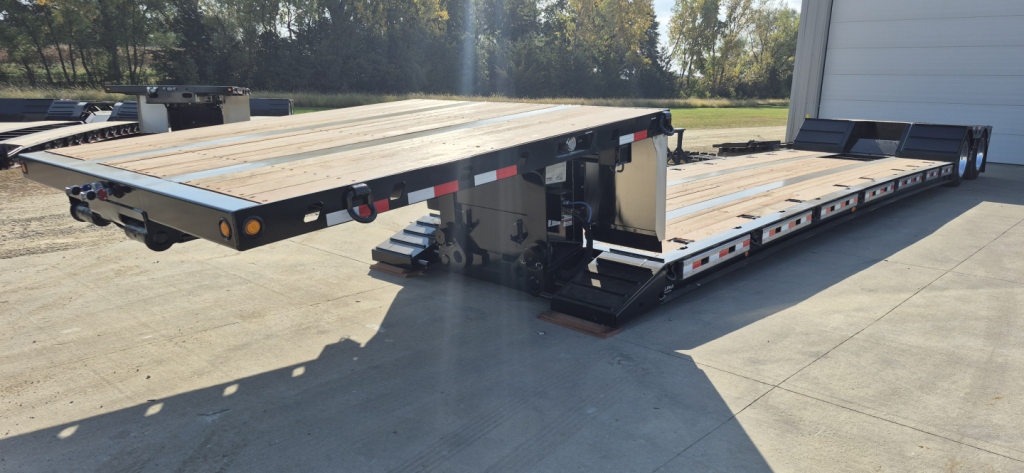
For most buyers, the first decision is neck style and capacity. Mechanical detachable goosenecks are common in 35 to 40 ton classes and are a practical fit for fleets loading crawlers, skid steers, compact excavators, and other self-propelled equipment from the front. Hydraulic detachable necks speed loading and can make sense when cycle time matters or when the trailer sees varied equipment every day. Capacity ratings often look straightforward, but legal payload depends on axle spacing, tire ratings, suspension, and how the trailer is configured with flip axles or spreader options. Tandem axle trailers are common, while tri-axle and booster-ready setups are used when buyers need better bridge law flexibility and heavier gross combinations.
Deck geometry matters as much as rated tonnage. Buyers should compare loaded deck height, well length, swing clearance, rear deck length, and ground clearance under the loaded deck. A low 18 to 20 inch loaded deck height is valuable for taller machines, but it also changes ramp angle, jobsite clearance, and approach on uneven ground. Many heavy haul double drops use 102 inch overall width, wood flooring over steel frame construction, air ride suspension, and outriggers for wider cargo support. Features such as traction cleats on the front ramp, aluminum outside wheels, tire inflation systems, scuff protection, and prepared connections for close-coupled flip axles can add real operating value depending on the freight mix.
Used double drop deck trailers deserve a close structural review because this category often lives a hard life. Pay attention to neck fit-up, deck crossmembers, beam condition, suspension wear, kingpin area, axle alignment, and any signs of concentrated loading damage in the well. If the trailer will haul excavators, pavers, or other tracked equipment, inspect the deck plating and transition areas carefully. Buyers working Illinois, Wisconsin, Iowa, and broader Midwest lanes should also think about corrosion exposure, winter road treatment, and parts support for hydraulic and air systems. The right trailer is not just a capacity match. It is a deck layout, axle package, and detach style that fits your freight, your permits, and the tractors already in your fleet.
Frequently Asked Questions about Double Drop Deck Trailers in Illinois
What is the difference between a double drop deck trailer and a step deck trailer?
A double drop deck trailer has three deck sections: a front deck, a lower well deck, and a rear deck. A step deck has only two levels and does not drop as low in the middle. That lower well is the key advantage of a double drop because it allows taller freight to ride lower, which improves legal height compliance and makes it better suited for heavy equipment and over-height loads.
How do I choose between a mechanical detachable neck and a hydraulic detachable neck?
A mechanical detachable neck is typically simpler, lighter, and often less expensive to purchase and maintain. It is a strong fit for fleets with consistent loading procedures and experienced operators. A hydraulic detachable neck reduces manual effort and can speed loading and unloading, especially when the trailer handles multiple machine types or frequent daily cycles. The better choice depends on loading frequency, tractor wet-line setup, operator preference, and maintenance capacity.
What capacity should I look for in a double drop deck trailer?
The right capacity starts with the heaviest machine or component you expect to haul, but the trailer's posted ton rating is only part of the picture. Legal payload also depends on axle count, axle spacing, suspension, tire capacity, and whether the trailer is configured for flip axles or booster axles. Many buyers start in the 35 to 40 ton range for general heavy equipment hauling, while specialized applications may require 50 ton and heavier configurations.
Why does loaded deck height matter so much on a lowboy or double drop?
Loaded deck height directly affects overall loaded height, and that determines routing flexibility, permit requirements, and bridge and overpass clearance. A trailer with an 18 to 20 inch loaded deck can carry taller freight than a higher-deck trailer without exceeding legal height as quickly. The tradeoff is that lower decks can reduce ground clearance and change loading angles, so deck height should be evaluated alongside the type of equipment, jobsite conditions, and route profile.
What should I inspect on a used double drop deck trailer before buying?
Focus on structural and running gear condition first. Inspect the main beams, crossmembers, neck connection points, kingpin area, outriggers, suspension components, axle alignment, brakes, and deck surface for signs of overloading or poor repairs. Check for cracking around stress points, uneven tire wear, and damage from tracked equipment in the well and transition sections. On detachable models, confirm proper neck engagement and verify that hydraulic or air systems operate correctly if equipped.