
Caterpillar Skid Steer Loaders For Sale in New York
Shop Caterpillar skid steer loaders for sale in New York. Compare Cat wheel and track models, horsepower, hydraulics, cab options, and attachment capability.
Selling a caterpillar skid steer loaders? List your caterpillar skid steer loaders for sale and reach thousands of commercial buyers.
Caterpillar Skid Steer Loaders in New York
The core buying decisions are rated operating capacity, hydraulic flow, machine width, and undercarriage or tire condition. Many Caterpillar skid steer loaders in this class run in the roughly 70 to 76 horsepower range, with hydrostatic drive, auxiliary hydraulics, and quick coupler setups that let one machine handle buckets, forks, brooms, augers, trenchers, cold planers, and snow attachments. High Flow hydraulics are important if the machine will power mulchers, planers, or other demanding tools. Enclosed cabs with heat are especially relevant in New York for winter operation, and visibility, control pattern options, and pilot controls can make a noticeable difference for operators running long shifts.
Cat models are known for strong breakout force, stable lift geometry, and good attachment compatibility, but condition matters more than the badge on a used skid steer loader. Check boom and bucket pins, bushings, coupler wear, hydraulic leaks, tire wear or track condition, roller and sprocket life, and any signs the bucket does not sit level. On track machines, inspect the undercarriage closely because rollers, idlers, and tracks can change the real ownership cost quickly. On wheeled units, tire size, rim condition, and sidewall damage affect both uptime and ride quality. Hour meter readings help, but service history, cold-start behavior, and hydraulic response under load usually tell more about the machine.
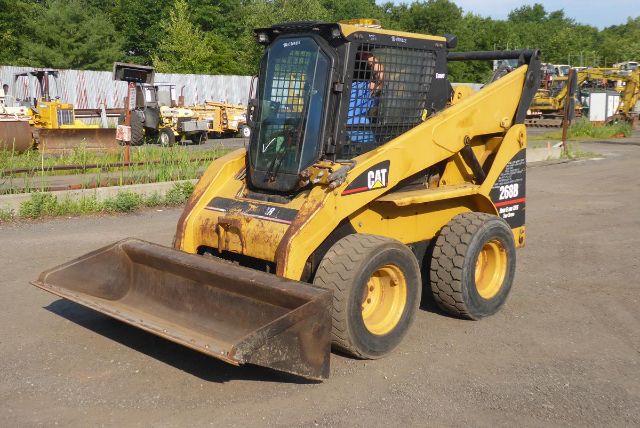
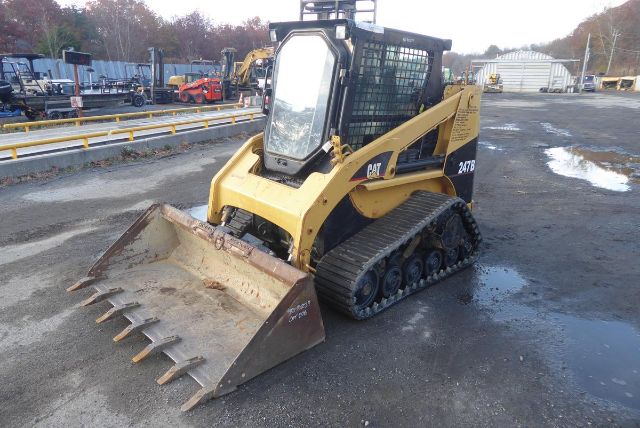
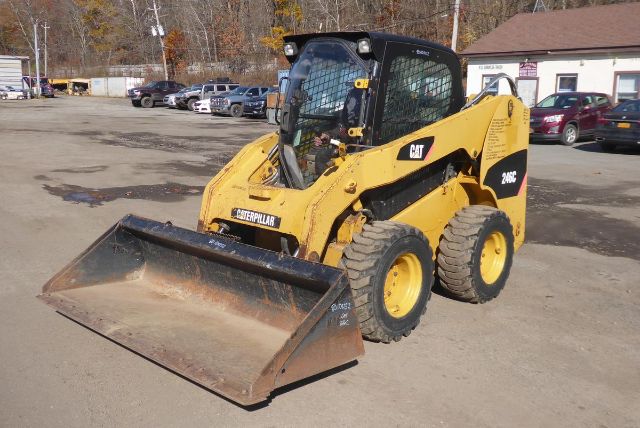
Transport and job fit should be part of the decision up front. Many Caterpillar skid steer loaders fall into a size range that is manageable for landscape contractors, utility crews, site contractors, and property maintenance fleets, but overall operating weight, trailer capacity, and machine width still need to line up with how the loader will be moved. Buyers comparing models like the 246C, 247B, or 268B should pay attention to lift path, bucket size, tipping load, and whether the machine has standard-flow or high-flow auxiliary hydraulics. A compact footprint is valuable, but the right Cat skid steer is really the one that matches the attachments, surface conditions, and daily duty cycle the job requires.
Frequently Asked Questions about Caterpillar Skid Steer Loaders in New York
What is the difference between a Caterpillar skid steer loader and a Caterpillar compact track loader?
A Caterpillar skid steer loader typically uses tires and is best suited for pavement, hard surfaces, and jobs that require more travel speed and lower replacement cost for the running gear. A Caterpillar compact track loader uses rubber tracks and is better in mud, soft ground, snow, and uneven terrain because it spreads the machine weight over a larger footprint. Buyers often compare both because the hydraulic capability and attachment options can be similar, but the ground conditions usually determine which one is the better long-term fit.
How much horsepower do Caterpillar skid steer loaders usually have?
Many mid-size Caterpillar skid steer loaders commonly found on the used market fall in the low-70 to mid-70 horsepower range, though exact output depends on model and series. That power level is enough for general loading, grading, pallet work, and many hydraulic attachments. Horsepower alone should not decide the purchase. Auxiliary hydraulic flow, rated operating capacity, machine weight, and whether the unit has High Flow hydraulics are often more important for attachment performance.
What should I inspect first on a used Cat skid steer loader?
Start with the hydraulic system, boom and bucket pins, bushings, quick coupler, and the condition of the tires or undercarriage. Then check for cylinder leaks, uneven bucket alignment, excess play in the loader arms, and how the machine starts and responds when cold. A used skid steer loader can show acceptable hours and still need expensive work if the pumps are weak, the coupler is worn, or the track system is near the end of its service life. Service records and a functional test under load are more valuable than cosmetic appearance.
Are High Flow hydraulics necessary on a Caterpillar skid steer loader?
High Flow hydraulics are not necessary for every application, but they are important if the machine will run attachments that need higher hydraulic volume and sustained power. Standard-flow machines are usually fine for buckets, forks, light augers, and many common jobsite tools. High Flow becomes more important for cold planers, mulching heads, heavy snow blowers, and similar attachments. If attachment use is a major part of the machine's workload, hydraulic flow requirements should be checked before choosing a model.
Are Caterpillar skid steer loaders a good choice for New York contractors?
Caterpillar skid steer loaders are a practical choice for New York contractors because they cover a wide range of work, from site prep and landscape work to snow removal and municipal maintenance. Machine size, cab heat, tire or track setup, and hydraulic attachment capability matter more than region alone, but those factors line up well with the mixed surfaces and seasonal conditions common in New York. Buyers who expect winter use should put extra value on enclosed cabs, heater function, traction setup, and cold-start performance.