
Used John Deere Excavators For Sale in New York
Shop used John Deere excavators for digging, site work, demolition, and utility jobs. Compare sizes, operating weights, booms, and undercarriage condition.
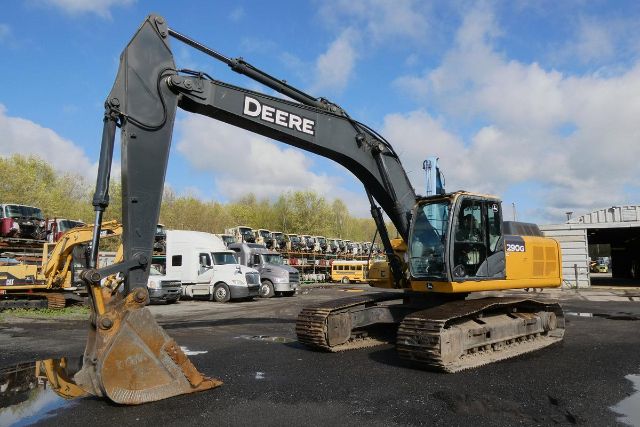
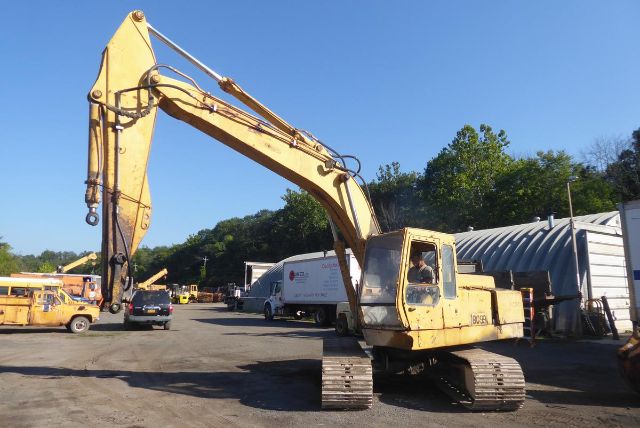
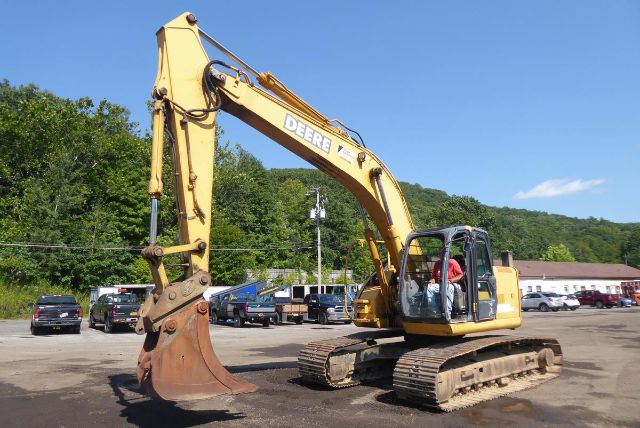
Selling a used john deere excavators? List your used john deere excavators for sale and reach thousands of commercial buyers.
Used John Deere Excavators in New York
On a used John Deere excavator, the undercarriage deserves close attention because it is one of the most expensive wear areas to correct. Track pad width, roller count, chain wear, sprocket condition, and remaining undercarriage percentage all matter, especially in New York where mixed ground conditions, demolition debris, frost cycles, and mud can accelerate wear. Boom and stick pins, bucket linkage, turntable bearing play, and cylinder seepage should also be evaluated carefully. Excess movement in the front end can affect grading accuracy and digging performance, while swing bearing wear and center joint leaks can turn a cheap machine into a costly one. Many buyers also look for auxiliary hydraulics, a third valve, or extra lines on the boom if the excavator may run a hammer, thumb, or specialty attachment.
John Deere excavators are generally known for straightforward controls, good parts support, and strong performance in excavation, drainage, roadwork, land clearing, and loading trucks. Common specs in this class include enclosed cabs, hydrostatic travel, diesel engines in roughly the 125 to 150 horsepower range on mid-size units, and boom lengths around 18 to 20 feet with sticks around 9 to 10 feet. Standard or long-carriage configurations can improve stability, while reduced tail swing models are useful when working near traffic lanes, buildings, or utilities. Bucket setup matters too. A wide cleanout bucket suits ditch shaping and finish work, while a tooth bucket is better for general digging, breaking compacted material, and production trenching.
For used equipment buyers, service history and present mechanical condition usually matter more than model year alone. Hour meters on older excavators may be unreadable or replaced, so engine blow-by, cold-start behavior, hydraulic response, travel power, slew smoothness, and cab function can tell a more complete story. In colder Northeast markets, it is worth checking heater operation, glass condition, wiring repairs, and how the machine has been stored. A used John Deere excavator with a solid undercarriage, tight pins, dry cylinders, and healthy hydraulics will usually deliver more value than a cheaper unit with deferred wear across the house, boom, and track system.
Frequently Asked Questions about Used John Deere Excavators in New York
What should I inspect first on a used John Deere excavator?
Start with the undercarriage, swing bearing, boom and stick pins, and hydraulic cylinders. These areas drive major repair costs and quickly reveal how the machine was used and maintained. Check for track chain wear, sprocket wear, roller condition, play in the house bearing, leaks at the center swivel, and slop in the bucket linkage. Then evaluate engine performance, travel power, and hydraulic responsiveness under load.
Are older John Deere excavators still a good buy?
They can be, especially for buyers who want lower upfront cost and are comfortable with cosmetic wear or simpler systems. Older Deere excavators are often used in farm work, light site prep, and property maintenance, but condition matters more than age. An older machine with a strong undercarriage, solid hydraulic function, and acceptable pin and bushing wear can be more practical than a newer unit with major structural or hydraulic issues.
What size John Deere excavator is best for general construction work?
Mid-size excavators in the 20-ton to 30-ton class are often the most versatile for general construction, utility trenching, foundation digging, and truck loading. They typically provide enough reach, breakout force, and lift capacity for daily production work without the hauling and access limitations of larger machines. Buyers should match machine size to trench depth, attachment needs, transport restrictions, and available jobsite space.
Why is undercarriage condition so important on a used excavator?
Undercarriage wear directly affects operating cost, travel performance, and resale value. Replacing chains, rollers, idlers, sprockets, and pads can be a major expense, so the remaining life of those components should be factored into the purchase price. A machine with a worn engine can sometimes still work productively for a while, but a badly worn undercarriage can immediately limit traction, stability, and profitability.
Do auxiliary hydraulics add value on a used John Deere excavator?
Yes, auxiliary hydraulics often make a used excavator more useful and easier to resell. Extra hydraulic lines and a third valve allow the machine to run attachments such as thumbs, hammers, compactors, and specialty buckets. For contractors handling mixed work, that flexibility can improve utilization and reduce the need for a dedicated attachment carrier.