
Used Air Compressor For Sale
Have used air compressor equipment to sell? List it here to reach thousands of buyers.
Used Air Compressor
Engine package and serviceability matter as much as rated air output. Many used air compressors in this class are powered by diesel engines from well-known industrial suppliers such as John Deere, Kubota, Deutz, or Caterpillar. Buyers should look closely at hour meter readings, cold-start behavior, blow-by, fuel system condition, and whether the unit builds and holds pressure properly under load. On a used machine, the air end is a major value driver, so it is worth checking for unusual noise, oil carryover, excessive moisture, and maintenance history on separators, filters, and coolers. A compressor that runs smoothly but has poor service records can become expensive quickly.
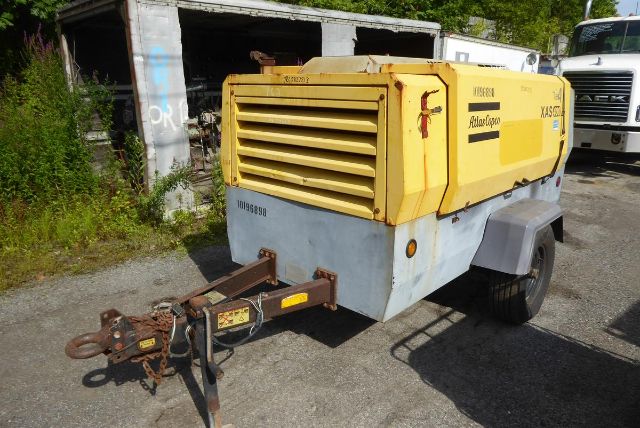
Chassis and towing details are also important because these units are moved from site to site like other towable construction equipment. Common points to inspect include axle rating, tire condition, wheel and hub wear, lunette ring or hitch setup, lighting, safety chains, jack operation, and overall frame condition. Buyers should also verify the number and size of discharge connections, since outlet configuration affects how easily the compressor can support multiple tools or larger hose packages. Weatherproof enclosure design, access panels, and cooling layout matter on used units because jobsite reliability often depends on how well the machine handles heat, dust, and daily service.
For most buyers, the best used air compressor is the one sized correctly for the application without paying for excess capacity. A 400 CFM diesel air compressor, for example, is commonly chosen for heavier road and utility work, while smaller compressors may be a better fit for general contractor fleets or mobile service operations. Also known as a towable air compressor or portable air compressor, this equipment class is valued for mobility, simple setup, and the ability to deliver jobsite air where a stationary system is not practical. When comparing listings, focus on verified operating pressure, consistent air production, engine hours, service access, and overall condition rather than model year alone.
Frequently Asked Questions about Used Air Compressor
What should I check first when buying a used air compressor?
Start with the two numbers that define the machine's capability: CFM and PSI. Those ratings need to match the tools or processes the compressor will support. After that, inspect engine hours, startup behavior, pressure build time, and how the unit performs under load. On a used compressor, the condition of the air end, cooling system, filters, separators, and discharge valves is often more important than paint or model year.
What is the difference between CFM and PSI on a portable air compressor?
CFM measures airflow volume, while PSI measures air pressure. A compressor must deliver enough CFM to keep the tool running continuously, and enough PSI to meet the operating pressure requirement of that tool or application. If airflow is too low, tools will lag or stop working efficiently. If pressure is too low, the equipment may not operate at all or may perform poorly even if airflow is adequate.
How many hours is a lot for a used diesel air compressor?
Hour count matters, but maintenance history matters more. A higher-hour compressor with documented service, clean oil, proper pressure output, and a healthy diesel engine can be a better buy than a lower-hour unit with neglected filters, cooling issues, or air end problems. Buyers should treat hours as one part of the evaluation and combine that with a mechanical inspection, load test, and review of past service intervals.
What size used air compressor is common for road and utility work?
Units in the 185 to 400 CFM range are common in contractor and municipal fleets, with 375 CFM and 400 CFM models frequently used for heavier road, utility, and pipeline applications. The right size depends on total air demand, hose length, elevation, and whether multiple tools will be connected at once. It is usually better to size the compressor to actual peak demand with a reasonable operating margin rather than simply choosing the largest unit available.
Are towable air compressors practical for fleet use?
Yes. Towable air compressors are widely used because they can be moved easily between jobsites and set up quickly without a permanent compressed air system. For fleet use, practical value comes from durable running gear, common engine platforms, easy parts support, and simple service access. A used unit that is easy to tow, easy to maintain, and correctly sized for the work will usually produce better long-term value than a larger or newer machine that is underutilized.