
Used Ford Mechanic Trucks For Sale in Tennessee
Shop used Ford mechanic trucks in Tennessee. Compare service bodies, crane setups, GVWR, cab options, and work-ready fleet specs.
Learn more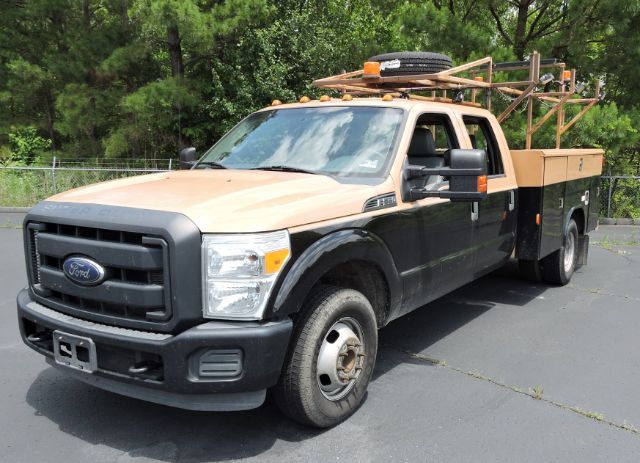
Have used ford mechanic truck to sell? List it here to reach thousands of buyers.
About Used Ford Mechanic Trucks in Tennessee
A used Ford mechanic truck may be equipped with a standard utility body for lighter service work or a true mechanics body with reinforced outriggers, integrated crane mount, welder or generator provisions, and dedicated storage for oils, fittings, and service tools. Common details to evaluate include body manufacturer, crane make and rating, whether the truck has a PTO-driven or hydraulic compressor, and the condition of compartment doors, latches, and seals. On lighter gas-powered Ford units like an F-350 with a 6.2L V8, the truck may be ideal for municipal, facilities, or local service use where lifting needs are modest and maintenance simplicity matters. On heavier diesel-based models, buyers often get better payload, more usable crane options, and stronger towing performance for field repairs on larger equipment.
Cab style and chassis specifications matter because mechanic trucks often spend as much time driving between jobs as they do parked on site. Regular cab units maximize body length on a shorter wheelbase, while SuperCab and Crew Cab layouts add personnel space but can reduce body room or increase overall length. Check GVWR, front axle rating, rear axle ratio, dual rear wheel setup, hitch equipment, and trailer brake controls if the truck will tow compressors, mini excavators, or support trailers. Many used examples also include ladder racks, pipe racks, work lights, beacons, inverter systems, and receiver hitches. In Tennessee, rust tends to be less severe than in northern salt-belt markets, but buyers should still inspect utility body floors, outriggers, crossmembers, and the underside of the cab for corrosion, repairs, or fatigue from heavy service use.
The best used Ford mechanic truck is the one whose service body, crane capacity, storage layout, and chassis rating match the work order. A truck used for mobile diesel repair has different needs than one assigned to HVAC, water utility, telecom, or road department service. Pay attention to maintenance records, idle hours if auxiliary equipment is installed, and signs of hard vocational use such as overloaded springs, frame modifications, or compartment damage. For buyers comparing multiple listings, the key differences usually come down to body configuration, power source for tools, towing setup, and how much of the truck’s rated capacity is still available once the mechanic body and equipment are onboard.
Frequently Asked Questions
What should I look for first on a used Ford mechanic truck?
Start with the service body and the upfit package, because that determines the truck’s real job capability. Verify the body manufacturer, compartment condition, crane mounting, outrigger design, compressor or welder setup, and available payload after the upfit is installed. Then confirm the chassis matches the work, including GVWR, axle ratings, engine type, cab configuration, and towing equipment. A clean Ford chassis does not automatically mean the mechanic body is suited for heavy field service.
Is a Ford F-350 mechanic truck enough for field service work?
A Ford F-350 mechanic truck can be a good fit for lighter-duty service operations, especially when the truck is used for local maintenance, municipal work, facilities support, or jobs that do not require a large crane or heavy payload. It is often easier to maneuver and may have lower operating costs, particularly with gas engines. The limitation is payload and upfit capacity. Once a service body, tools, fluids, compressors, and lifting equipment are added, an F-350 can run out of usable capacity quickly compared with an F-450 or F-550.
Are gas or diesel Ford mechanic trucks better in the used market?
Gas and diesel each make sense depending on the application. Gas-powered Ford mechanic trucks, especially with the 6.2L V8 on older Super Duty models, are often attractive for fleets that want simpler maintenance, lower acquisition cost, and predictable local-route service. Diesel trucks usually make more sense when the mechanic truck carries a heavier body, tows regularly, or needs stronger low-end torque for vocational use. The right choice depends less on fuel type alone and more on total truck weight, expected idle time, towing demand, and the service territory.
How important is GVWR on a mechanic truck?
GVWR is critical because mechanic trucks gain weight fast once the body, crane, tools, parts inventory, air system, and fluids are added. A truck that looks work-ready can still be overloaded in normal use if the body and equipment consume too much of the chassis capacity. Buyers should compare the truck’s GVWR and axle ratings against the estimated operating weight, not just the empty curb weight. This is especially important if the truck will tow a trailer or carry a fully stocked parts inventory every day.
Do used mechanic trucks in Tennessee have an advantage over trucks from other regions?
Used mechanic trucks from Tennessee can be attractive because they often see less road salt exposure than trucks from northern states, which may reduce corrosion on utility bodies, crossmembers, and undercarriage components. That said, regional origin is only one factor. A Tennessee truck still needs a close inspection for rust in body compartments, floor pans, frame rails, crane mounts, and outriggers, along with signs of hard vocational use, poor repairs, or overloaded service history.