
Mack Rolloff Trucks For Sale in Arkansas
Explore Mack rolloff trucks built for waste, scrap, and hauling work, with heavy-duty hoists, strong axle ratings, and vocational durability.
Learn more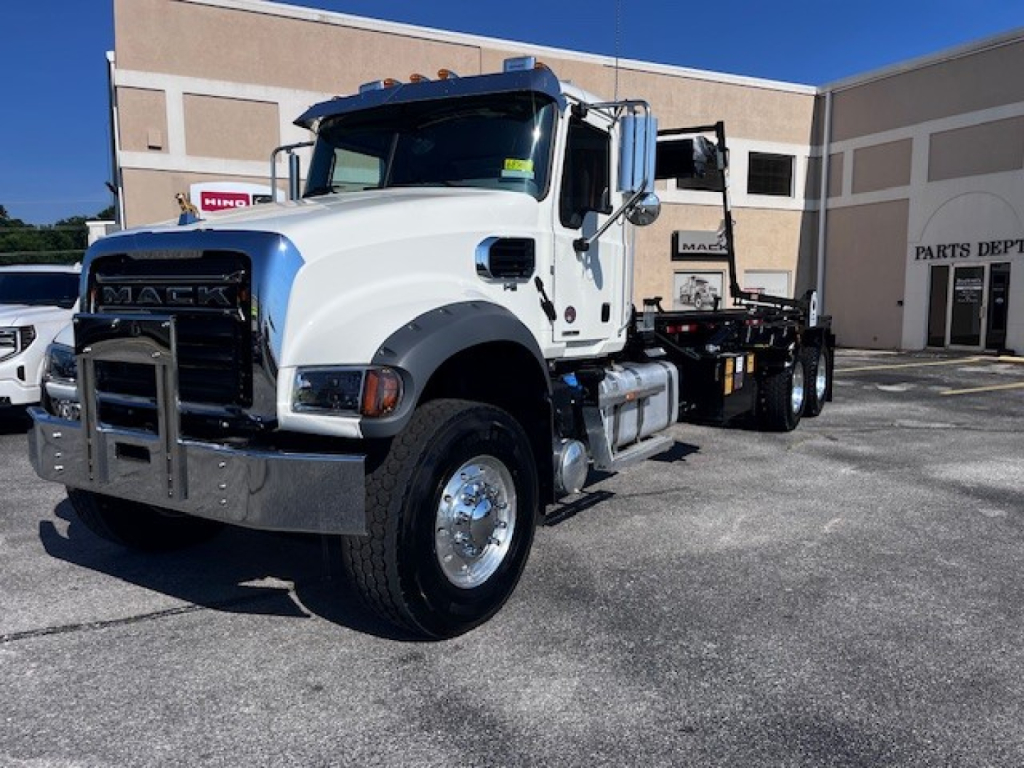
Have mack rolloff truck to sell? List it here to reach thousands of buyers.
About Mack Rolloff Trucks in Arkansas
On the chassis side, Mack rolloff trucks are commonly spec'd with tandem rear axles, heavy front axle ratings, and vocational suspensions designed to handle body weight plus container transfer forces. Models in this class often use Mack diesel power with horsepower in the low-to-mid 400 range, paired with automated manual or manual transmissions suited for frequent starts, backing, and jobsite maneuvering. Wheelbase is a major buying decision because it affects container compatibility, bridge law considerations, turning radius, and how the truck balances loaded bins. Rear suspension design, gear ratio, differential locks, and brake type also deserve close attention if the truck will see muddy jobsites, steep approach angles, or repeated operation at max legal weight.
The body and hydraulic package is where productivity is won or lost. Buyers should look closely at hoist brand, cable or hook system design, tarp system, PTO setup, reservoir capacity, and control layout in the cab and outside the truck. A well-matched tarp system is especially important for demolition, refuse, and scrap operations where load securement and turnaround time directly affect revenue. Frame reinforcement, hoist installation quality, and body upfitter reputation matter because rolloff applications place concentrated stress on the rails and rear of the chassis. It is also worth checking for features like inter-axle and cross-locks, liner-friendly container rails, and service access that simplifies maintenance on hydraulic components.
Mack remains a strong fit for operators who prioritize vocational durability, parts support, and a cab built for hard daily use. For Arkansas buyers, it makes sense to spec a rolloff truck around terrain, transfer station distance, and the type of debris being hauled rather than chasing maximum hoist capacity alone. A truck hauling light construction debris on shorter city routes may need a different wheelbase, suspension, and gearing than one pulling dense scrap or serving rural container drops. The best Mack rolloff truck is the one whose chassis, hoist, and hydraulic system are balanced for the containers you actually run and the weight profile you expect every day.
Frequently Asked Questions
What should I look for first on a Mack rolloff truck?
Start with the hoist rating, axle ratings, and wheelbase. Those three items determine what container sizes the truck can handle, how the load transfers onto the chassis, and whether the truck is suitable for the weight and route profile of your operation. After that, review engine horsepower, transmission type, suspension, gearing, and hydraulic system details to make sure the truck is matched to your material type and loading conditions.
Is a 60,000-lb hoist enough for most rolloff applications?
A 60,000-lb class hoist covers many construction, demolition, waste, and scrap applications, but it is not automatically the right spec for every operation. Container length, material density, loading practices, and terrain all affect real-world performance. Dense scrap, wet debris, and uneven loading can push the truck harder than the nominal hoist rating suggests, so buyers should evaluate actual payload habits and legal operating weights before choosing a hoist capacity.
Why does wheelbase matter on a rolloff truck?
Wheelbase affects container fit, weight distribution, maneuverability, and bridge law compliance. A longer wheelbase may better support larger containers and improve load balance, but it can reduce maneuverability on tight job sites or urban routes. A shorter wheelbase may turn easier, but it may limit body setup options or change how the truck carries heavier bins. On a rolloff truck, wheelbase is a core operating spec, not just a dimension on paper.
Are automated manual transmissions a good choice for rolloff work?
Yes, many buyers choose automated manual transmissions for rolloff work because they reduce driver fatigue in stop-and-go service and help standardize operation across multiple drivers. They can work well in vocational applications when paired with the right engine and gearing. Some fleets still prefer manual transmissions for driver preference or specific off-road conditions, but modern automated manuals are widely used in heavy vocational Mack chassis.
What options help a Mack rolloff truck in Arkansas jobsite conditions?
Differential locks, vocational suspension, appropriate rear gearing, heavy front axle capacity, and a reliable tarp system are all valuable in Arkansas conditions. Rural routes, muddy access points, uneven construction sites, and mixed pavement quality can expose weak specs quickly. Buyers should also pay attention to brake type, tire selection, and hydraulic component protection if the truck will operate regularly on unpaved or debris-heavy sites.