
Kenworth Rolloff Trucks For Sale in Texas
Shop Kenworth rolloff trucks for Texas waste, scrap, and demolition work. Compare T880 specs, hoist setups, axle ratings, and PTO options.
Learn more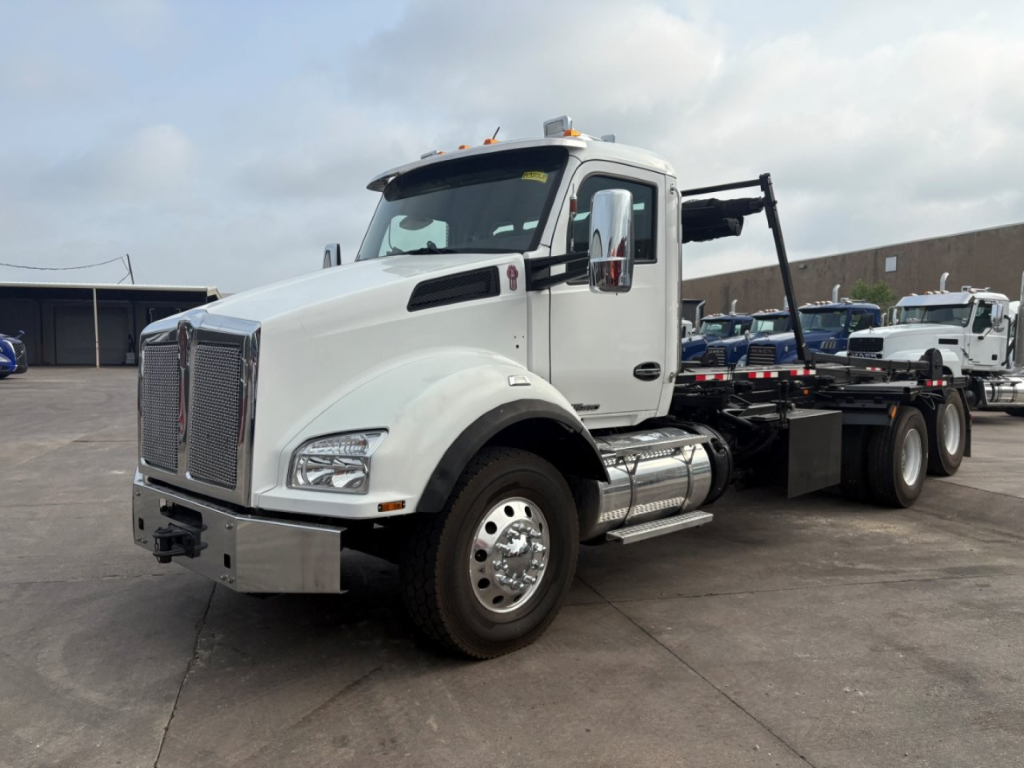
Have kenworth rolloff truck to sell? List it here to reach thousands of buyers.
About Kenworth Rolloff Trucks in Texas
Typical Kenworth rolloff configurations include tandem rear axles, 20,000-pound front axles, 44,000-pound rears, and GVWRs in the 64,000-pound range, although exact ratings vary by body and suspension spec. Many are powered by PACCAR MX-13 engines in the 450 horsepower class, often paired with an Allison automatic transmission for stop-and-go work and easier driver operation around jobsites, transfer stations, and tight urban accounts. Wheelbase, rear ratio, suspension type, and PTO setup all affect how the truck loads, how it transfers weight during container pickup, and how comfortably it works on mixed pavement and dirt surfaces. A 75,000-pound rolloff hoist is a common target for operators handling larger cans and heavier debris streams.
The details that separate one rolloff truck from another are usually in the working equipment, not just the cab and drivetrain. Buyers should pay close attention to hook height or cable setup, hoist manufacturer, tarp system, container compatibility, inside and outside rail condition, and any evidence of frame reinforcement or repair. Rear suspension choice matters too. Spring suspension remains common in severe-service applications because of its simplicity and durability, while other setups may improve ride depending on the route. In Texas service, cooling performance, PTO response, hydraulic condition, and brake life are especially important because these trucks often spend long hours in heat, traffic, and repeated loading cycles.
A good Kenworth rolloff truck should match the container sizes, payload expectations, and legal road weights of the operation. Too much truck can add unnecessary tare weight and fuel cost, while too little axle or hoist capacity can shorten component life and limit revenue loads. For buyers comparing used rolloff trucks, it makes sense to look beyond engine hours and odometer readings and inspect the hoist, hinge points, rollers, cable or hook components, and signs of twist or stress at the rear of frame. Kenworth rolloff trucks remain a strong choice for fleets and owner-operators that need a vocational chassis with broad parts support, familiar serviceability, and proven performance in demanding refuse and debris applications.
Frequently Asked Questions
What is the most common Kenworth model used for rolloff truck applications?
The Kenworth T880 is one of the most common models used for rolloff applications because it is designed for vocational work and supports heavy front axle ratings, tandem rear axle configurations, and severe-service frame setups. It is well suited for waste, demolition, scrap, and construction debris work where the truck sees frequent loading cycles, uneven surfaces, and high PTO use.
What axle ratings are typical on a Kenworth rolloff truck?
A common tandem-axle Kenworth rolloff setup includes a 20,000-pound front axle and 44,000-pound rear axles, often producing a GVWR around 64,000 pounds depending on the exact chassis and body specification. Buyers should verify axle ratings against the hoist capacity, container size, and expected payload, because legal and practical working limits can differ from the advertised hoist rating.
Why do many Kenworth rolloff trucks use an Allison automatic transmission?
Allison automatic transmissions are popular in rolloff service because they perform well in constant stop-and-go driving, repeated backing, and frequent low-speed maneuvering at jobsites and transfer stations. They also reduce driver fatigue and simplify operation in tight spaces. In vocational work, that can translate into more consistent performance across multiple drivers and less strain during daily container exchanges.
What should I inspect first on a used Kenworth rolloff truck?
Start with the hoist system, rear frame section, rails, rollers, hydraulic components, and tarp system before focusing only on the engine and cab. A rolloff truck can look clean and still have expensive wear in the working equipment. Check for cracks, welded repairs, uneven rail wear, leaking cylinders, slow PTO engagement, and signs of frame twist near the rear of the chassis. Those issues directly affect productivity and repair cost.
Is a 75,000-pound rolloff hoist enough for most applications?
A 75,000-pound hoist is a common spec for operators handling larger containers and heavier debris streams, and it fits many commercial waste, scrap, and demolition applications. The right hoist capacity still depends on container length, material type, axle ratings, and how the truck is loaded in real service. Heavy wet debris, concrete, roofing tear-off, and scrap can push a truck to its limits quickly, so the full chassis spec matters more than the hoist number alone.