
2025 Mack Flatbed Trucks For Sale
Shop 2025 Mack flatbed trucks built for medium-duty hauling, delivery, construction, and equipment transport with durable body options.
Learn more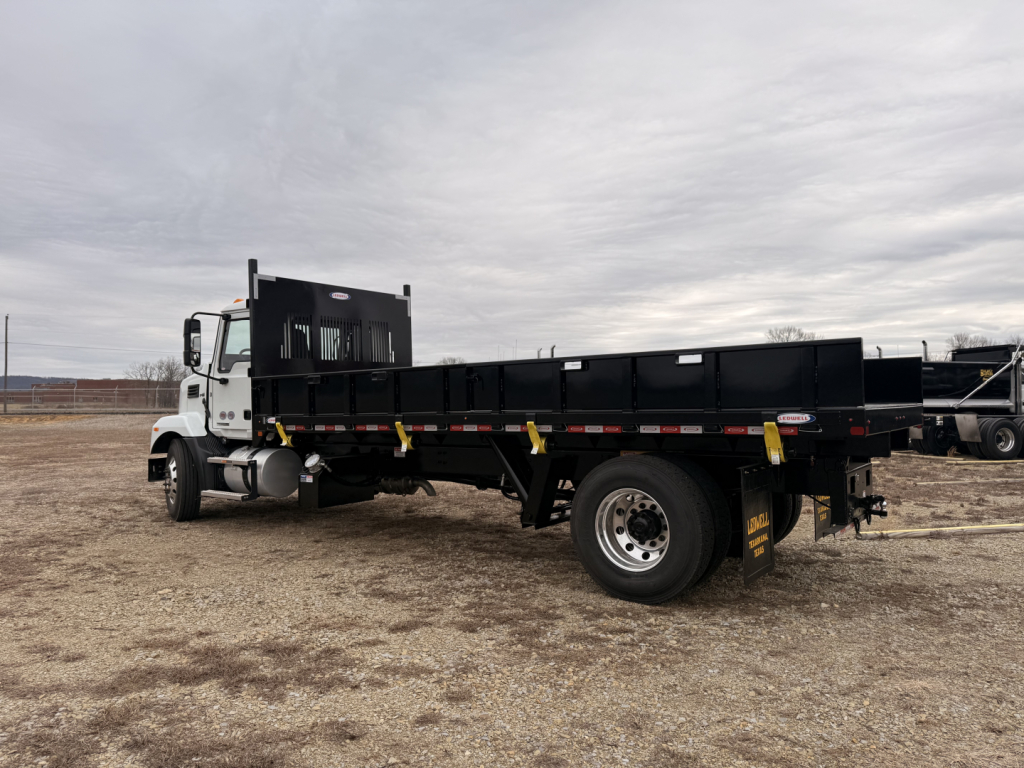
Have 2025 mack flatbed truck to sell? List it here to reach thousands of buyers.
About 2025 Mack Flatbed Trucks
Powertrain is a major buying decision in this category. Many 2025 Mack flatbed trucks are equipped with the Cummins ISB6.7 diesel in the 280 to 300 horsepower range, commonly paired with an Allison 2500 RDS automatic transmission. That setup is popular because it is straightforward, widely serviceable, and well suited for stop-and-go routes, municipal work, equipment delivery, and contractor fleets with multiple drivers. Buyers should look closely at GVWR, axle ratings, rear axle ratio, and wheelbase because those specs affect bridge law compliance, turning radius, body fitment, and loaded drivability. A 26,000-pound GVWR MD7 can be especially attractive for operators who want strong capability without moving into CDL territory in many applications, assuming the truck is spec’d and operated within applicable regulations.
Body configuration matters as much as the chassis. Common features on a Mack flatbed include a bulkhead or headache rack, stake pockets, rub rail, tie-down points, toolboxes, and pintle hitches for trailer towing. Some units are set up more like a straight flatbed truck, while others blur into contractor territory with dump-style bodies, PTO provisions, or electric brake controls. Bed length, deck height, and frame spacing should match the cargo you move most often, whether that is palletized building materials, pipe, jobsite equipment, or mixed municipal loads. If forklifts are loading from both sides, bed width and rub rail design are worth attention. If the truck will carry machinery or tow regularly, buyers should verify hitch capacity, rear suspension spec, and brake package instead of focusing only on advertised horsepower.
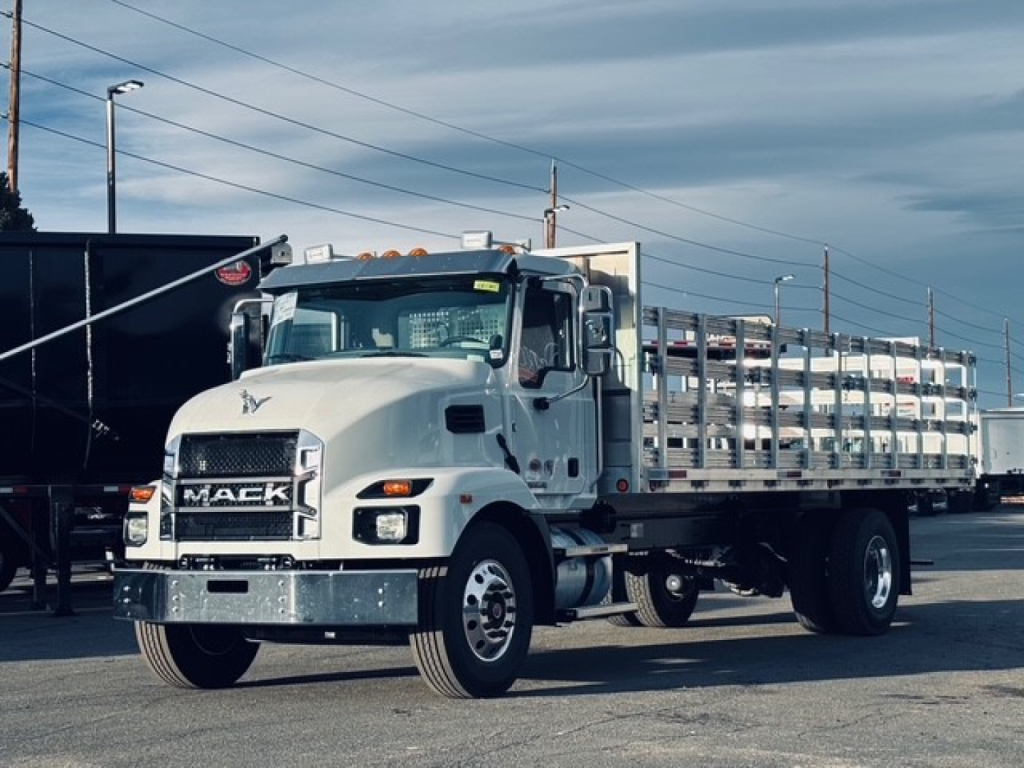
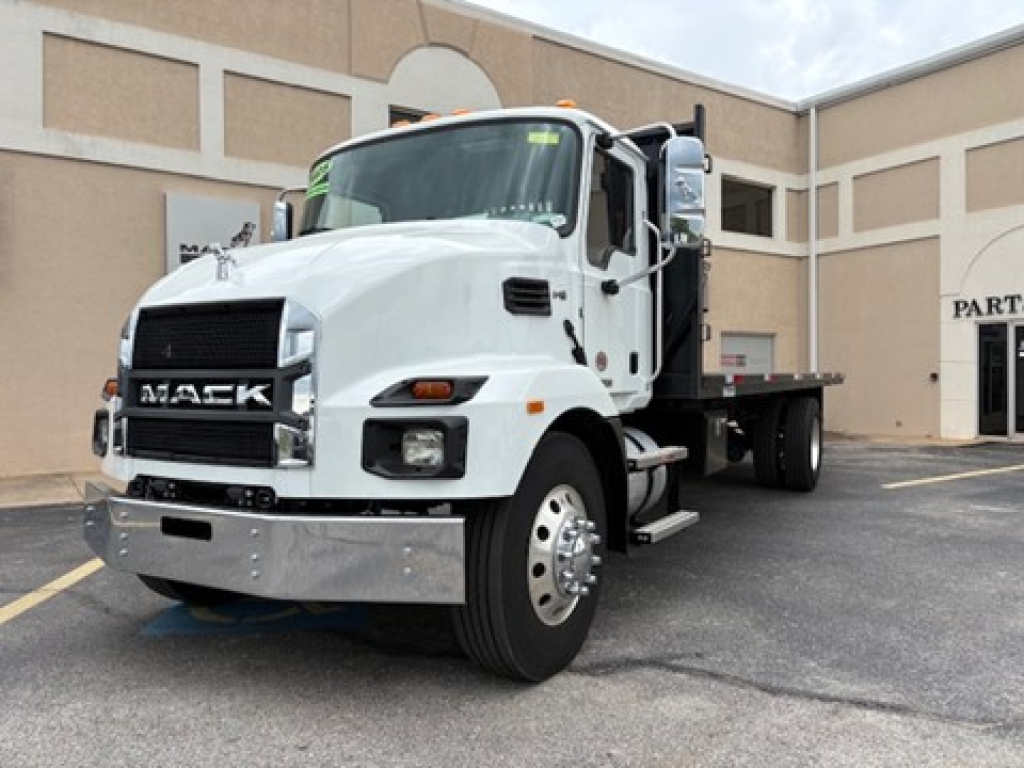
For many fleets, a Mack flatbed truck is appealing because it combines a durable cab and chassis with a simple, versatile body style that can be adapted across several industries. Landscaping suppliers, utility contractors, rental houses, building material distributors, and public works departments all use flatbeds because they are easy to load, easy to secure, and easier to repurpose than many enclosed body types. When comparing listings, the smartest approach is to evaluate the truck as a complete package: chassis class, body material, bed length, tie-down equipment, towing hardware, and cab configuration. A well-matched 2025 Mack flatbed should fit your payload profile, loading method, and route conditions without forcing compromises on legal capacity or day-to-day usability.
Frequently Asked Questions
What is the difference between a Mack MD6 and MD7 flatbed truck?
The Mack MD6 is typically positioned as a Class 6 medium-duty chassis, while the MD7 moves into Class 7 with higher GVWR and payload potential. For flatbed buyers, that usually means the MD7 is better suited for heavier materials, more aggressive towing specs, or body setups that add weight before cargo is even loaded. The MD6 can be a strong fit for lighter delivery work, contractor use, and routes where maneuverability and non-CDL operation are priorities. The right choice depends on body length, axle ratings, cargo density, and whether the truck will regularly tow equipment or trailers.
Are 2025 Mack flatbed trucks usually equipped with diesel engines and automatic transmissions?
Yes. Many 2025 Mack flatbed trucks in the medium-duty segment are spec’d with the Cummins ISB6.7 diesel and an Allison automatic transmission, often the 2500 RDS series. This combination is common because it balances horsepower, torque, drivability, and service support for vocational use. It also works well for fleets with multiple drivers because automatic transmissions reduce training issues and make stop-and-go operation easier. Buyers should still confirm engine rating, PTO compatibility, and rear axle ratio because those details affect real-world performance more than the transmission type alone.
Is a steel or aluminum flatbed better on a Mack truck?
Steel flatbeds are often preferred for severe-duty work because they handle concentrated loads, rough jobsite use, and repeated forklift traffic well. Aluminum flatbeds reduce body weight, which can improve payload and sometimes fuel efficiency, making them attractive for delivery-oriented applications where every pound matters. Neither material is automatically better for every fleet. The decision should be based on cargo type, loading equipment, corrosion exposure, and how much importance you place on lower tare weight versus heavier-duty deck construction.
What specs matter most when buying a 2025 Mack flatbed truck?
GVWR, front and rear axle ratings, wheelbase, body length, rear axle ratio, and bed material are the core specs to review first. After that, buyers should check the practical equipment that affects daily use, including bulkhead design, stake pockets, rub rails, tie-down placement, toolbox size, hitch type, and trailer brake controls. If the truck will operate in urban routes, turning radius and overall length matter. If it will handle dense materials or equipment, suspension spec, brake package, and deck construction become more important than convenience features.
Can a 2025 Mack flatbed truck be used for towing as well as hauling?
Yes, many flatbed trucks in this category are spec’d to handle both deck cargo and trailer towing, especially when equipped with a pintle hitch, brake controller, and the correct rear frame and suspension setup. The key is to verify towing capacity from the actual truck spec, not assume capability based on the presence of a hitch. Gross combined weight rating, rear axle capacity, hitch rating, and brake configuration all need to align with the intended trailer and cargo. For buyers who tow equipment regularly, those ratings are just as important as flatbed size or engine output.