
Peterbilt Dump Trucks For Sale Near Royse City, Texas
Browse Peterbilt dump trucks for sale with specs, body options, axle setups, and vocational features built for construction and aggregate work.
Learn moreNo exact matches found for your search
Showing Peterbilt Dump Trucks in Texas instead.
Have peterbilt dump truck to sell? List it here to reach thousands of buyers.
About Peterbilt Dump Trucks Near Royse City, Texas
Engine, transmission, and suspension choices have a direct effect on payload, gradeability, and maintenance cost. Peterbilt dump trucks are commonly spec'd with PACCAR MX, Cummins, or other vocational diesel engines depending on model year, horsepower target, and local preference. Allison automatic transmissions are popular in stop-and-go work and off-road conditions, while automated manual and manual transmissions still show up in fleets focused on driver familiarity or fuel control. Hendrickson, Chalmers, and other severe-service suspensions are common on these trucks, along with double-frame sections, locking differentials, and high-capacity front axles for heavier body and plow or pup trailer applications.
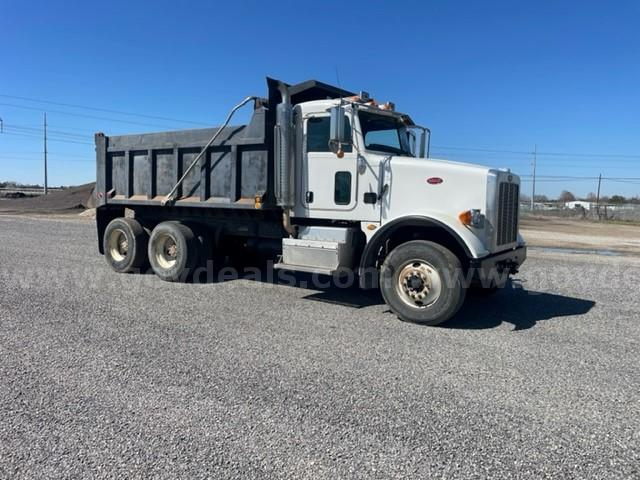
Body spec is just as important as chassis spec. Steel dump bodies are typically chosen for demolition, riprap, and abrasive material, while aluminum bodies can reduce tare weight for sand, gravel, and other bulk loads. Common features include high-lift tailgates, air-operated gates, electric or air tarp systems, cab shields, hitch plates, pintle hooks, and wet line kits. Hoist design, body length, side height, and liner condition all matter because they affect cycle time, cleanout, and long-term durability. On a used Peterbilt dump truck, buyers should pay close attention to frame condition, hoist pins, crossmembers, PTO operation, hydraulic leaks, body floor wear, and signs of overload damage around suspension hangers and axle seats.
Peterbilt models seen in the dump segment often include the 367, 365, 357, and other vocational platforms built for mixer, dump, and severe-service work. Cab style, hood set-back or set-forward axle layout, wheelbase, and visibility all influence how the truck performs on tight sites versus highway runs between pit and plant. A well-matched Peterbilt dump truck should fit the material being hauled, the legal payload target, and the jobsite conditions it will face every day. Buyers comparing listings should look beyond mileage and engine rating and focus on axle ratings, body manufacturer, frame spec, hydraulic setup, and evidence of consistent vocational maintenance.
Frequently Asked Questions
What should I look for first when buying a used Peterbilt dump truck?
Start with the truck's intended job, then match that job to axle configuration, GVWR, body material, and suspension. A truck hauling dense aggregate every day needs a different spec than one moving light fill or asphalt. On the used side, inspect the frame rails, hoist, PTO, hydraulic tank, body floor, tailgate hardware, suspension hangers, and differential housings. Service records, engine hours, and signs of chronic overloading are often more important than the odometer on a vocational truck.
Which Peterbilt models are most common as dump trucks?
Peterbilt dump trucks are commonly built on vocational platforms such as the 367, 365, and older 357-series trucks. The exact model matters less than how the chassis was spec'd, since front axle rating, frame reinforcement, suspension type, wheelbase, and engine-transmission pairing determine how well the truck handles dump work. Many buyers also compare set-forward and set-back front axle layouts based on bridge law, turning radius, and body fit.
Is a steel or aluminum dump body better on a Peterbilt dump truck?
Steel bodies are generally better for demolition debris, shot rock, and other abrasive or impact-heavy materials because they tolerate punishment better. Aluminum bodies save weight and can improve legal payload on bulk commodities like sand or gravel, but they are not always the best choice for severe impact applications. The right answer depends on material density, loading method, expected abuse, and how important tare weight is to the operation.
Are automatic transmissions a good choice in Peterbilt dump trucks?
For many dump applications, yes. Allison automatic transmissions are widely used because they perform well in stop-and-go hauling, backing, and off-road movement where smooth power delivery helps productivity and reduces driver fatigue. Automated manuals can still make sense for fleets focused on fuel economy or standardization, but the transmission should be chosen around route profile, terrain, and driver mix rather than preference alone.
How important is axle setup on a dump truck in Texas?
Axle setup is critical because it affects legal payload, bridge compliance, maneuverability, and how the truck performs on rough sites. Tandem axle trucks are common and versatile, while lift axles or tri-axle configurations can improve payload capacity when state and route conditions support them. In Texas, buyers should confirm axle ratings, wheelbase, and bridge-related practicality for the exact material and haul pattern the truck will see.