
Used Autocar Day Cab Trucks For Sale
Browse used Autocar day cab trucks with specs on engines, wheelbases, axles, and vocational setups for local and regional hauling.
Learn more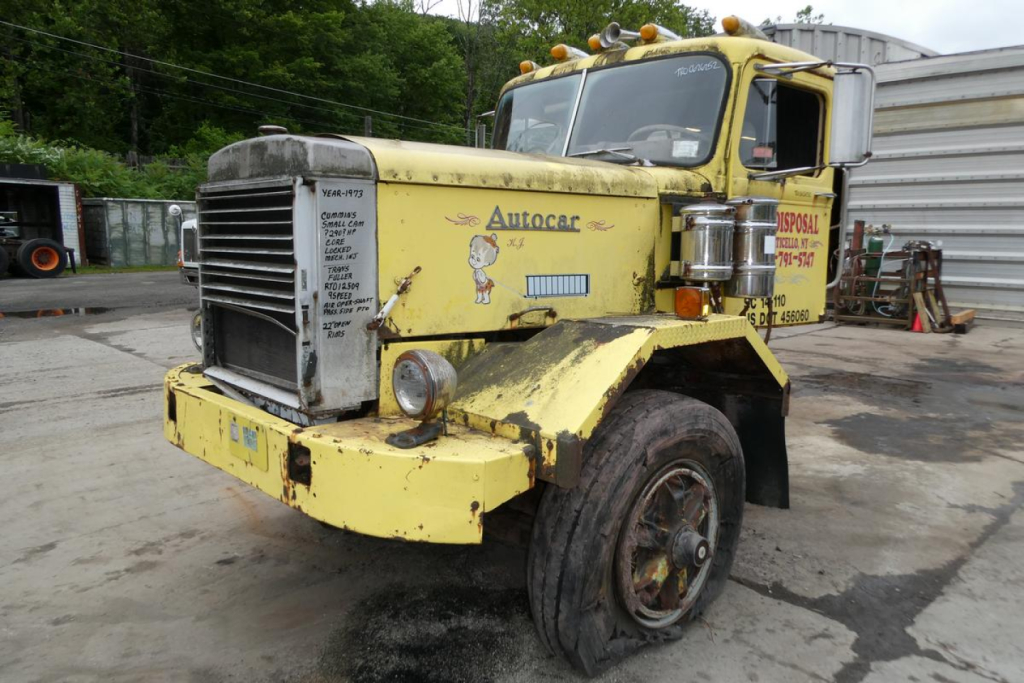
Have used autocar day cab truck to sell? List it here to reach thousands of buyers.
About Used Autocar Day Cab Trucks
The key buying decision with a used Autocar day cab is chassis specification. These trucks are often ordered for a very specific job, so axle ratings, suspension type, wheelbase, frame reinforcement, PTO provisions, and transmission setup matter as much as engine make. Buyers should pay close attention to front axle capacity, rear axle ratio, locking differentials, and whether the truck has a set-forward or set-back axle configuration. Engine options commonly include Cummins power, paired with manual Fuller transmissions, automated manuals, or heavy-duty automatics depending on the application. If the truck will run a dump trailer, blower, wet kit, roll-off system, or hydraulic equipment, confirm PTO compatibility and inspect the hydraulic plumbing, controls, and frame space available for additional components.
Cab condition is especially important on older used Autocar day cabs because many spent their lives in tough stop-and-go or off-road service. Check for corrosion around cab mounts, floors, door bottoms, hood structure, and fenders. On severe-service trucks, look closely at steering components, spring hangers, walking beam or air suspension wear, fifth wheel condition, and evidence of frame repairs or prior upfitting. A shorter wheelbase can be a major advantage for urban work and yard spotting, while a longer wheelbase may better suit heavier trailer loads or specialized equipment. Interior layout, visibility, ingress and egress, and switch placement also matter more in a day cab because the truck is built around repeated entries, exits, and constant jobsite use.
Autocar has a strong reputation in vocational trucking, and that shows up in the used market through durable frames, straightforward serviceability, and application-specific builds. The best choice is rarely the newest truck. It is the truck whose axle package, drivetrain, and frame layout match the work. A buyer comparing used Autocar day cab trucks should focus first on service history, engine and transmission specification, emissions system condition if applicable, and signs of prior heavy vocational use. When the spec is right, a used Autocar day cab can be a practical platform for regional hauling, refuse transfer, equipment moving, municipal contracts, and other operations that need a purpose-built tractor rather than a general highway truck.
Frequently Asked Questions
What is an Autocar day cab truck best used for?
An Autocar day cab truck is best suited for local and regional work where a sleeper is unnecessary and the truck needs to handle frequent stops, tight maneuvering, or severe-duty service. Common applications include refuse transfer, construction hauling, municipal work, yard spotting, heavy vocational trailer work, and short-haul regional freight. Many used Autocar day cabs were originally built for a dedicated job, so their value depends heavily on how closely the existing specification matches the intended use.
What should I check first on a used Autocar day cab?
Start with the chassis and drivetrain specification before looking at cosmetic condition. Verify axle ratings, wheelbase, suspension type, frame rails, transmission model, PTO setup, and engine rating. After that, inspect cab structure, hood condition, steering and suspension wear, fifth wheel wear, brake components, and any signs of frame cracking or poor repairs. If the truck has emissions equipment, check maintenance records and fault history because aftertreatment repairs can be a major ownership cost.
Are used Autocar day cabs good for heavy vocational work?
Yes, many Autocar day cabs are specifically built for heavy vocational and severe-service applications. They are commonly spec'd with heavy front axles, durable frame configurations, vocational suspensions, and drivetrains chosen for low-speed, high-load work rather than highway efficiency alone. That said, not every used truck will be suitable for the same job. A terminal tractor-style setup, a refuse spec, and a construction tractor may all be day cabs but have very different axle, frame, and gearing requirements.
Which engine and transmission combinations are common in used Autocar day cabs?
Cummins engines are common in many used Autocar day cab trucks, often paired with Eaton Fuller manual transmissions, automated manuals, or heavy-duty automatic transmissions depending on the original application. Manual 9-speed, 10-speed, 13-speed, and vocational transmission setups can all appear in the used market. The right combination depends on operating speed, terrain, PTO needs, and driver preference. Buyers should match horsepower, torque, and gearing to the expected trailer weight and duty cycle instead of choosing only by engine brand.
How important is wheelbase on a used day cab truck?
Wheelbase is one of the most important fitment decisions because it affects turning radius, bridge law flexibility, trailer swing clearance, ride quality, and available frame space for tanks, toolboxes, hydraulic systems, or other equipment. A shorter wheelbase is often preferred for urban routes, terminal work, and tight jobsites, while a longer wheelbase can provide better load distribution and room for vocational accessories. On a used Autocar day cab, wheelbase should be evaluated together with axle placement, frame length, and intended trailer type.