
Used Crane Carrier Cab and Chassis Trucks For Sale
Shop used Crane Carrier cab and chassis trucks built for severe-duty upfits, municipal work, refuse bodies, and specialty applications.
Learn more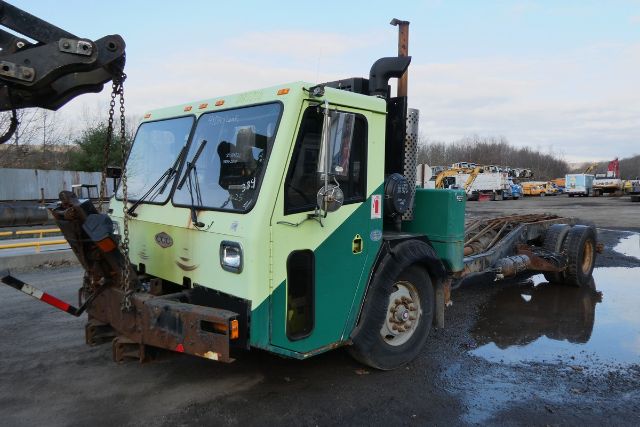
Have used crane carrier cab and chassis truck to sell? List it here to reach thousands of buyers.
About Used Crane Carrier Cab and Chassis Trucks
The first things to compare are axle ratings, wheelbase, cab-to-axle, and frame configuration. Crane Carrier chassis often carry heavy front axles, tandem rear axles, and high GVWRs that support dense equipment loads and body-mounted systems. It is common to see Cummins diesel engines paired with Allison automatic transmissions, which is a familiar and serviceable combination for municipal fleets and stop-and-go work. Buyers should also look closely at rear axle ratio, suspension type, and whether the truck has a straight frame or drop frame, since those details affect body fitment, center of gravity, and low-speed performance.
Cab design is another reason buyers seek this make. Many Crane Carrier units were built for specialized operator environments, including low-entry or dual-control configurations depending on the original application. On a used cab and chassis, that original vocation matters. A former refuse or municipal truck may have very low miles but high engine hours and extensive PTO use. That is not automatically a drawback, but it does make maintenance records, idle time, transmission condition, hydraulic integration, and frame integrity more important than odometer reading alone. Pay attention to crossmember condition, steering components, suspension wear, and any signs of corrosion around body mounts or auxiliary equipment attachment points.
For buyers planning a rebody or repurpose, dimensional compatibility is critical. Cab-to-axle, cab-to-end, wheelbase, rail width, and frame height need to match the body or equipment being installed. Confirm PTO provisions, cooling capacity, electrical layout, and available clearance for pumps, tanks, hoists, or packer gear. A used Crane Carrier cab and chassis can be a very strong value when the specs line up with the intended body and duty cycle, especially for fleets that need a rugged vocational platform instead of a general-purpose medium-duty truck.
Frequently Asked Questions
What are Crane Carrier cab and chassis trucks commonly used for?
Crane Carrier cab and chassis trucks are commonly used in severe-duty municipal and vocational service. Typical applications include refuse collection, sewer and vacuum equipment, street sweeping, water trucks, utility service bodies, and other specialized body installations. They are valued for heavy axle ratings, durable frame construction, and configurations designed around body equipment rather than long-haul transport.
What specs matter most when buying a used Crane Carrier cab and chassis?
The most important specs are wheelbase, cab-to-axle, GVWR, front and rear axle ratings, suspension type, and frame layout. Those dimensions determine whether the chassis can accept the body or equipment you plan to install. Buyers should also verify engine and transmission combination, rear axle ratio, PTO compatibility, and any frame modifications from the prior upfit, since those details directly affect performance, serviceability, and repurposing cost.
Are low miles on a used Crane Carrier always a good sign?
Not necessarily. Many Crane Carrier trucks spend their lives in stop-and-go municipal service with long idle periods, PTO operation, and frequent starts and stops. A low odometer can come with high engine hours, hydraulic use, and transmission wear. Engine hours, service history, and the condition of the driveline, frame, steering, and auxiliary systems usually tell you more than mileage alone on this type of truck.
Why is frame type important on a Crane Carrier cab and chassis?
Frame type affects body fit, load distribution, and working height. Some Crane Carrier chassis use drop-frame or specialized rail designs to support low center-of-gravity equipment or application-specific bodies. If you are replacing a body or planning a new upfit, the frame profile, rail spacing, and rear overhang must match the equipment requirements. A mismatch can create expensive fabrication work or limit what bodies can be installed.
What powertrain setups are common on used Crane Carrier cab and chassis trucks?
Many used Crane Carrier cab and chassis trucks are equipped with Cummins diesel engines and Allison automatic transmissions, especially in municipal and refuse applications. That setup is common because it handles frequent stop-and-go duty well and is widely supported for parts and service. Final gearing, axle capacity, and suspension choice are just as important as engine horsepower, since these trucks are typically built for low-speed load carrying and PTO-driven work.