
Freightliner Bucket Trucks For Sale in Minnesota
Shop Freightliner bucket trucks for utility, telecom, and tree work in Minnesota. Compare boom height, insulation, GVWR, PTO hours, and chassis specs.
Learn more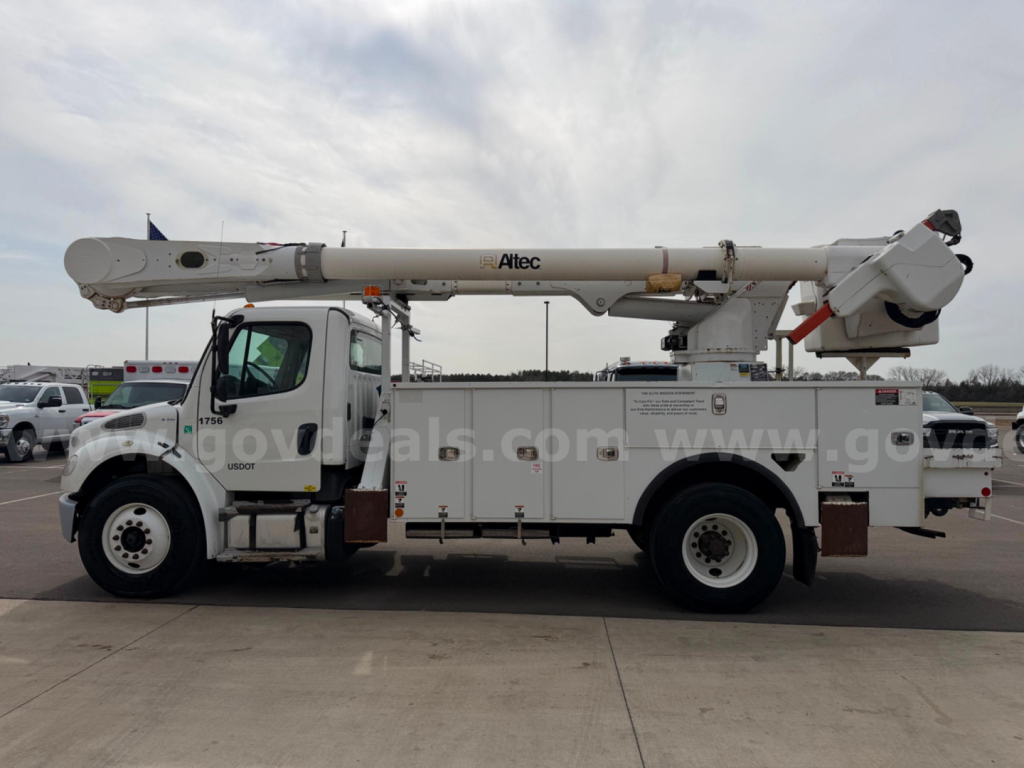

Have freightliner bucket truck to sell? List it here to reach thousands of buyers.
About Freightliner Bucket Trucks in Minnesota
For Minnesota buyers, cold-weather performance and service access matter as much as boom height. Heated mirrors, automatic transmissions, engine brakes, differential locks, and air brake configurations are all worth checking on a Freightliner chassis that may spend time on municipal streets, gravel shoulders, or job sites through winter. GVWR is another major decision point. Some Freightliner bucket trucks are spec'd at 26,000 pounds GVWR to stay in a non-CDL class, while heavier configurations around 33,000 pounds offer more chassis capacity, tool storage, and stability for larger aerial packages. If towing is part of the plan, look for a pintle hitch or trailer hitch and confirm brake provisions.
The aerial device deserves the closest inspection on any used bucket truck. Buyers should verify annual dielectric testing if the unit is insulated, inspect lower and upper boom sections for repairs or damage, and review hydraulic operation through the full range of motion. Platform leveling, outrigger function, turret rotation, hydraulic leaks, and upper and lower controls should all be tested. PTO hours can tell a different story than odometer miles, especially on utility and city fleet trucks that spend long periods working on site. A low-mile truck with high engine or PTO hours may still be a good fit, but it should be priced and evaluated like a vocational unit, not a standard road truck.
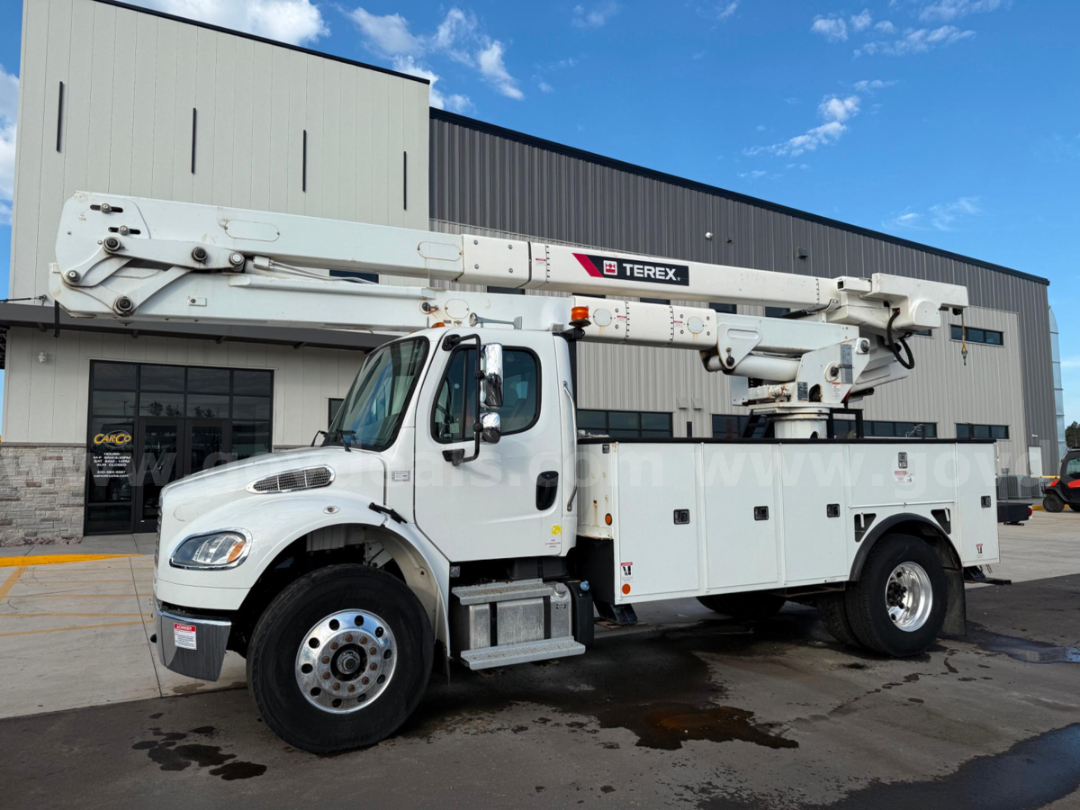
Freightliner bucket trucks are also known as boom trucks or aerial lift trucks, though the exact body style depends on the upfit. The best match comes down to your trade. Electric utility and telecom crews usually prioritize insulated booms, stable outriggers, and dependable hydraulic systems. Tree and lighting contractors may focus more on working height, storage layout, and chassis maneuverability. Parts support, familiar Cummins power, and Allison automatic transmissions are common advantages in this category, but the real buying decision should come down to boom condition, service records, weight class, and how the truck is spec'd for the work you actually do.
Frequently Asked Questions
What should I check first on a used Freightliner bucket truck?
Start with the aerial device, not just the chassis. Confirm boom model, working height, side reach, platform capacity, insulation status, PTO hours, and current inspection records. Then inspect boom sections for structural damage or repairs, test outriggers and controls, and look for hydraulic leaks or drift. After that, review chassis items like GVWR, brake type, engine hours, transmission operation, and any signs of hard municipal or utility service.
Is a 26,000-pound GVWR Freightliner bucket truck a better choice than a 33,000-pound truck?
It depends on the application. A 26,000-pound GVWR truck can be attractive because it may fall into a non-CDL class, which can simplify staffing and route flexibility. A 33,000-pound truck usually gives you more payload capacity, a heavier-duty chassis, and room for a larger boom, more tools, or additional equipment. Buyers should compare license requirements, axle ratings, body weight, and the actual payload and stability needs of the job before deciding.
Why do PTO hours matter on bucket trucks?
PTO hours show how long the aerial equipment and hydraulic system have been working, which is often more important than road miles on this type of truck. A utility fleet truck may have modest mileage but extensive idling and boom use. Higher PTO hours are not automatically a problem, but they should prompt a closer look at hydraulic pumps, hoses, control valves, turret components, and maintenance history. PTO hours help buyers judge real vocational wear.
Are insulated booms necessary on a Freightliner bucket truck?
Insulated booms are necessary for energized line work and other applications where electrical protection is required, but not every buyer needs one. Sign, lighting, facilities, and some tree service work may not require an insulated unit. If insulation is important, verify the boom's rating, confirm dielectric test records, and make sure the unit has been maintained to that standard. An insulated boom that has not been properly tested or repaired correctly should not be assumed safe for utility work.
What chassis and drivetrain specs are common on Freightliner bucket trucks?
Many Freightliner bucket trucks in this class are equipped with Cummins diesel engines and Allison automatic transmissions, which are popular because they are familiar to fleet shops and widely supported. Buyers will also commonly see air brakes, engine brakes, locking differentials, and vocational features such as pintle hitches and trailer brake provisions. The right spec depends on terrain, climate, and whether the truck will spend more time driving between jobs or operating stationary equipment on site.