
Fontaine Lowboy Trailers For Sale in Wisconsin
Browse Fontaine lowboy trailers built for heavy haul, construction equipment, and oversize loads with low deck heights and detachable goosenecks.
Learn more
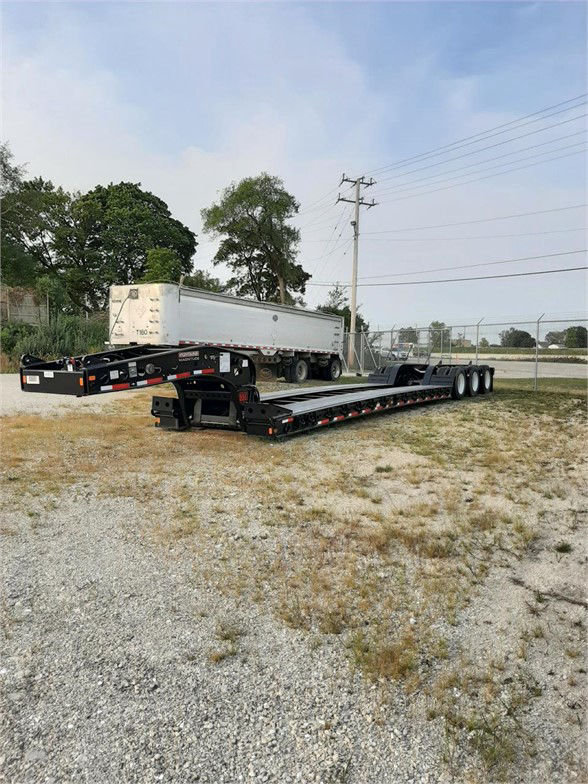
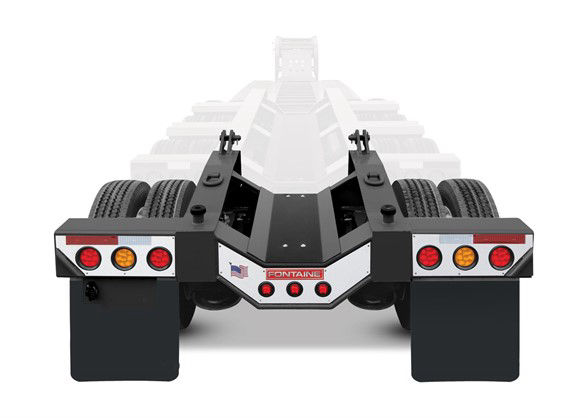
Have fontaine lowboy trailer to sell? List it here to reach thousands of buyers.
About Fontaine Lowboy Trailers in Wisconsin
A buyer should pay close attention to clear deck length, loaded deck height, swing clearance, axle spread, and whether the trailer is designed for specific rear axle combinations or flip axle setups. Many Fontaine heavy haul models are configured to accept a close-coupled flip axle, spreader bar, or flip box, which can materially change bridge compliance and payload flexibility. A ratcheted or hydraulic detachable neck, front ramps, full outriggers, covered wheel areas, and lockable tool storage are all useful real-world features, not just brochure items. If the work involves low-ground-clearance equipment, a roller paver or paver-specialized lowboy can be the better fit because the deck approach angle is gentler than a conventional lowboy and helps prevent dragging on loading.
In Wisconsin, spec discipline matters. State weight laws, seasonal road restrictions, permit routing, frost laws, and county or municipal bridge limitations can all affect how a lowboy performs in actual service. A trailer that looks similar on paper may behave very differently once you factor in axle spacing, ride height adjustment, and attachment points for additional axle equipment. Buyers hauling across Wisconsin into Illinois, Minnesota, Iowa, or Michigan often prioritize axle versatility because regional permit requirements can change by commodity, route, and overall length. For mixed fleets, it also makes sense to confirm compatibility with existing tractors, neck heights, coupler setup, and loading practices so drivers are not fighting the trailer every day.
Fontaine has a strong reputation in the heavy haul market because these trailers are generally engineered around high-cycle commercial use rather than occasional transport. Steel construction remains common in this category because it offers durability, repairability, and predictable long-term performance under severe loading. When comparing Fontaine lowboys, look beyond the headline ton rating and focus on where the trailer carries that weight, how much capacity is available in a specified length, how the neck and bogie are configured, and whether the trailer matches the exact equipment you move most often. A lowboy that is right for a 20-ton excavator fleet may not be the right trailer for tall forestry machines, long-boom excavators, or paving equipment with fragile loading geometry.
Frequently Asked Questions
What is the difference between a standard Fontaine lowboy and a roller paver lowboy?
A standard Fontaine lowboy is designed for general heavy equipment hauling and typically balances low deck height, concentrated load capacity, and detachable neck convenience. A roller paver lowboy is built specifically to load equipment with low ground clearance, using a gentler load angle and deck profile that reduces the chance of dragging during loading and unloading. That makes the roller paver style a better choice for asphalt pavers, rollers, and similar machines that are sensitive to approach angle.
How do I choose the right capacity in a Fontaine lowboy trailer?
Do not shop by gross ton rating alone. The more important number is the trailer's rated capacity in a stated length, such as 110,000 pounds in 10 feet or 13 feet, because heavy equipment rarely loads evenly across the entire deck. Buyers should compare the operating weight of the machine, attachment weight, track or tire footprint, overall length, and how that load will sit between the neck and rear bogie. If the load mix changes often, a trailer with compatible flip axle or spreader options can add flexibility for permits and bridge law compliance.
Why do axle configurations and flip axle compatibility matter on a Fontaine lowboy?
Axle setup directly affects legal payload, bridge compliance, turning behavior, tire wear, and the routes available to the trailer. A tri-axle lowboy may work well for one machine and one state, but a close-coupled flip axle, 3-plus-1 setup, or spreader configuration may be needed for heavier or more restrictive applications. Buyers should confirm whether the trailer is designed to accept the specific rear axle, flip axle, or flip box arrangement they plan to use, because not every lowboy is built for every combination.
What specs matter most when comparing Fontaine lowboy trailers for construction hauling?
The most important specs are loaded deck height, clear deck length, ground clearance, swing clearance, axle spread, neck type, and capacity in the loaded area. Buyers should also look at practical features such as outriggers, storage trays, front loading ramps, ride height adjustment, and air lift axles. These details affect how easily equipment loads, how well the trailer handles oversize or odd-shaped machines, and how much daily frustration the trailer adds or removes from the job.
Are Fontaine lowboys a good fit for Wisconsin heavy haul work?
They can be a strong fit because Wisconsin contractors and carriers often deal with a mix of local construction work, regional hauling, seasonal restrictions, and interstate permit requirements. A Fontaine lowboy with the right axle spacing, detachable neck setup, and optional axle compatibility can help a fleet adapt to changing road rules and varying machine sizes. The best results come from matching the trailer not just to the heaviest machine, but also to the most common routes, permit conditions, and loading environments the trailer will see.