
New Flatbed Expandable Trailers For Sale
Shop new flatbed expandable trailers built for long, oversized freight with adjustable deck length, strong payload capacity, and road-ready specs.
Learn more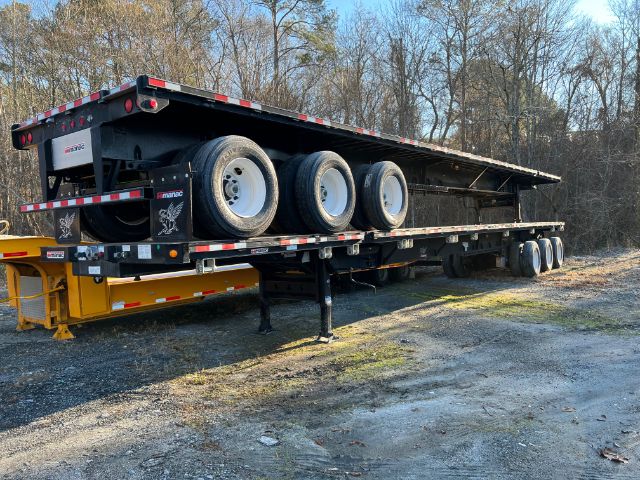
Have new flatbed expandable trailer to sell? List it here to reach thousands of buyers.
About New Flatbed Expandable Trailers
Frame design and weight are major buying points in this category. Extendable flatbeds need enough structural strength to stay rigid under concentrated loads while still keeping tare weight in a range that preserves payload. Look closely at main beam construction, crossmember spacing, flooring material, and the extension mechanism itself. Air-ride suspension is common for cargo protection and ride quality, and many buyers prefer tandem or spread axle configurations depending on state regulations and the types of oversize permits they regularly pull. Aluminum wheels, tire inflation systems, LED lighting, chain pull-outs, winch tracks, and coil package options can also affect day-to-day usability.
Securement and loading access deserve close attention because long freight often creates awkward tie-down patterns. Stake pockets, rub rails, sliding winches, and multiple securement points along both the fixed and extendable sections help keep the trailer versatile. On some models, apitong or other hardwood flooring is still preferred for durability and traction, while others use mixed-material construction to reduce empty weight. If the work includes machinery components or fabricated steel with uneven weight distribution, buyers should verify kingpin setting, neck design, loaded axle spacing, and how the trailer balances when extended. Those details directly affect stability, turning, and permit planning.
New flatbed expandable trailers appeal to fleets that need current safety systems, fresh brake and suspension components, and specifications tailored to a lane or freight niche. The right trailer is usually defined less by brand alone and more by extension range, axle layout, tare weight, and securement setup. Buyers who haul oversize freight across multiple states should also think beyond deck length and consider permit compatibility, loaded overall length, and serviceability of the extension system over time. In this category, a trailer that matches the freight profile and operating region will usually outperform one that simply offers the longest stretch.
Frequently Asked Questions
What is a flatbed expandable trailer used for?
A flatbed expandable trailer is used to haul freight that is too long for a standard flatbed, including structural steel, pipe, precast concrete pieces, bridge beams, crane sections, and other overlength cargo. The trailer deck extends to provide more support under the load while keeping the flexibility to retract when running shorter freight or traveling empty.
What specs matter most when buying a new extendable flatbed trailer?
The most important specs are closed deck length, maximum extended length, tare weight, axle configuration, suspension type, and securement equipment. Buyers should also review locking positions in the extension, kingpin setting, frame construction, flooring, and the trailer’s weight distribution characteristics when extended. Those details affect legal length, permit planning, payload, and how well the trailer fits the freight mix.
How long can an expandable flatbed trailer extend?
Extension range varies by manufacturer and model, but many units start around 48 or 53 feet closed and extend into the 70-foot to 90-foot range. The advertised maximum length is only part of the decision. Usable deck support, axle spread, and how the load sits across the fixed and sliding sections are just as important as the final stretched length.
Are air-ride suspensions common on flatbed expandable trailers?
Yes. Air-ride suspension is common on new flatbed expandable trailers because it improves ride quality and helps protect sensitive or high-value freight from shock and vibration. It can also improve load stability compared with rougher suspension types, especially on long cargo that creates leverage across the deck.
What should buyers check for permit and legal compliance on an extendable flatbed?
Buyers should check overall length when extended, axle spacing, gross weight ratings, kingpin-to-rear axle dimensions, and how the trailer will bridge under expected load conditions. Oversize freight often involves state-by-state permit rules, so a trailer that works well in one region may be less efficient in another. Matching the trailer’s dimensions and axle layout to the lanes you run can reduce permitting problems and improve dispatch flexibility.