
Used Fontaine Drop Deck Trailers For Sale in Illinois
Shop used Fontaine drop deck trailers in Illinois. Compare 48-ft step decks, axle spreads, suspension types, deck materials, and load specs.
Learn more
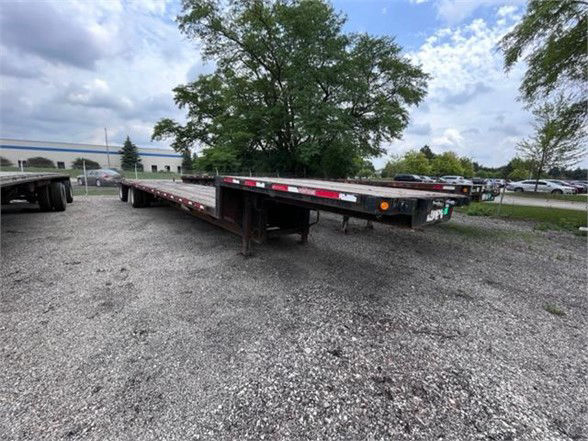
Have used fontaine drop deck trailer to sell? List it here to reach thousands of buyers.
About Used Fontaine Drop Deck Trailers in Illinois
The first buying decision is usually deck construction and weight rating. Used Fontaine drop decks can be found in all-steel designs as well as aluminum-steel combinations, with each setup affecting tare weight, durability, and repair cost. Steel trailers tend to be straightforward to repair and hold up well in hard-use applications, while combo trailers can save weight and improve payload. Pay close attention to lower deck length, loaded deck height, floor condition, crossmember integrity, and any signs of concentrated stress around the transition area. On used units, buyers should also inspect the kingpin area, upper coupler plate, landing gear mounts, and rear frame for prior damage or heavy-duty repairs.
Axle spread and suspension matter just as much as deck layout. Many used Fontaine step decks in Illinois are spec'd with tandem or wide-spread axle groups and air ride suspension, which can help with ride quality and freight protection on machinery or other sensitive cargo. Tire condition, brake life, wheel-end maintenance, slack adjusters, and air system leaks deserve a close look on any older trailer. If a trailer has seen fleet service or rental use, inspect the rub rail, stake pockets, chain spools, winch track, and any evidence of repeated side-loading or over-concentrated point loads. A clean FHWA-ready trailer is not just a compliance issue. It usually tells you a lot about the previous maintenance standard.
For Illinois buyers, practical considerations include bridge law compliance, axle spacing, and how the trailer will run across Midwest freight lanes with mixed legal and permitted loads. Common freight for a Fontaine drop deck includes forklifts, skid steers, compact equipment, steel products, lumber, pipe, and industrial machinery. The best used trailer is the one whose deck height, axle setup, flooring, and securement package match the freight you actually move. Looking closely at structural condition and spec details will usually matter more than model year alone on a used drop deck.
Frequently Asked Questions
What is the advantage of a Fontaine drop deck trailer compared with a flatbed?
A drop deck trailer gives you a lower main deck height than a standard flatbed, which allows taller freight to stay within legal road height in many cases. That makes it a practical choice for machinery, palletized equipment, and freight that would otherwise require permits or different routing. Fontaine drop deck trailers are also loaded and secured much like flatbeds, so they remain versatile for carriers that need open-deck flexibility without moving into a more specialized trailer type.
What should I inspect first on a used Fontaine step deck trailer?
Start with the structure. Check the frame rails, crossmembers, deck flooring, transition area between upper and lower deck, kingpin assembly, rear frame, and landing gear mounts. After that, inspect axles, suspension, brakes, tires, air lines, lights, and wheel ends. On older used trailers, evidence of welding repairs is not uncommon, but the quality and location of those repairs matter. A trailer with sound structure and documented maintenance is usually a better buy than one that only looks clean cosmetically.
Are all-steel or aluminum-steel Fontaine drop decks better?
Neither is automatically better. An all-steel drop deck is often preferred in severe-duty applications because it is durable and generally simpler to repair. An aluminum-steel combination trailer can reduce empty weight and increase payload, which matters if the freight is heavy but still legal by axle. The right choice depends on what you haul, how often the trailer is loaded in rough environments, and whether lower tare weight or easier repairability is more important to your operation.
Why do axle spread and suspension type matter on a used drop deck?
Axle spread affects weight distribution, bridge compliance, turning behavior, and in some cases how easily the trailer can be matched to your common loads. Suspension type affects ride quality and cargo protection. Air ride is common on drop deck trailers because it helps reduce shock transfer to freight and can improve handling characteristics. On a used trailer, the condition of the suspension components matters more than the spec sheet alone, so inspect bushings, air bags, shocks, hangers, and alignment-related tire wear.
What freight is commonly hauled on a used Fontaine drop deck trailer?
Typical freight includes construction equipment, forklifts, skid steers, palletized machinery, steel products, lumber, pipe, generators, and other loads that benefit from lower deck height. A drop deck is especially useful when freight is too tall for a flatbed but does not require a detachable lowboy. Buyers should match deck length, deck height, securement options, and weight rating to the freight they haul most often instead of choosing only by brand or model year.