
Used Transcraft Curtainside Trailers For Sale
Shop used Transcraft curtainside trailers with common specs, cargo securement features, axle setups, and buying tips for flatbed-side loading work.
Learn more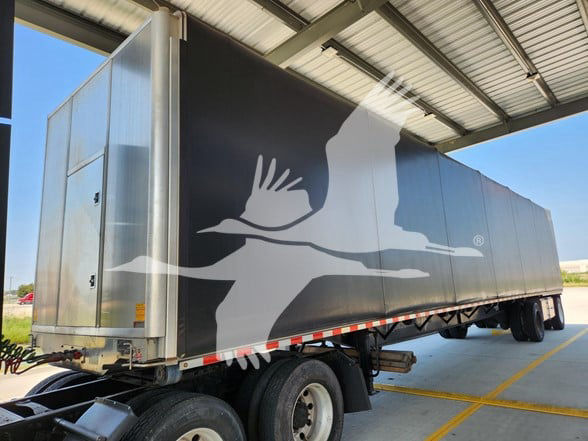
Have used transcraft curtainside trailer to sell? List it here to reach thousands of buyers.
About Used Transcraft Curtainside Trailers
Transcraft is well known for aluminum and steel composite construction, so weight and durability are both part of the buying equation. Many used units in this class feature wood floors, nail strips, 16-inch crossmember spacing, sliding winch tracks, winches, straps, D-rings, and front access doors. Suspension and axle setup matter. Air ride is common and preferred for more damage-sensitive freight, while sliding tandems offer flexibility for bridge laws and load distribution. Some units are spread axle, which can improve stability and weight placement but may be less flexible in tighter urban work or certain state regulations.
The curtain system itself deserves close attention on a used trailer. Buyers should inspect the tarp or curtain fabric for tears, UV wear, patched sections, and smooth travel along the rollers and track. On Conestoga-style systems, check bows, cable tension, crank operation, and rear locking points. On fixed curtainside designs, inspect buckles, ratchets, side posts, and header alignment. Also look at the floor condition near forklift traffic zones, the condition of the winch track, and signs of impact damage along rub rails, rear frame sections, and landing gear supports. A trailer can look clean from ten feet away and still have expensive tarp-system or structural repairs waiting.
For operations hauling higher-value or weather-sensitive flatbed freight, a used Transcraft curtainside trailer can reduce load securement time and help keep cargo cleaner in transit. The right trailer depends on how you load, what you haul, and where you run. A spread axle setup may suit heavier, stable regional freight, while a sliding tandem trailer can be easier to position for mixed routes and dock approaches. Tire size, wheel type, kingpin setting, toolbox configuration, and securement package all affect day-to-day use, so the best comparison is not just age and price, but how the trailer is spec'd for your freight lane and loading method.
Frequently Asked Questions
What is a Transcraft curtainside trailer typically used for?
A Transcraft curtainside trailer is commonly used for freight that needs weather protection but also benefits from side access. Typical loads include packaged building materials, palletized goods, crated equipment, metal products, and other freight that is awkward to load in a dry van or easier to secure on a flat deck. It is a strong fit for operations that use forklifts from the side and want faster loading than a traditional enclosed trailer.
What should I inspect first on a used curtainside or Conestoga-style trailer?
Start with the curtain or tarp system, because that is one of the most expensive and category-specific repair areas. Check fabric condition, roller movement, tracks, buckles, bows, cable tension, and latch points. After that, inspect the floor, crossmembers, winch track, rub rail, rear frame, suspension, brakes, and tire wear. Uneven curtain movement, forklift floor damage, and bent side structure are common warning signs on used units.
Is a spread axle or sliding tandem better on a used curtainside trailer?
That depends on the freight and the routes. A spread axle can offer better load distribution and a stable feel with certain heavier loads, but it may be less maneuverable and can create limitations in tight yards or under some bridge-law situations. A sliding tandem gives more flexibility for axle weighting, turning radius, and route compliance. Buyers running mixed lanes or more urban deliveries often prefer sliding tandems for the added adjustability.
Are Transcraft curtainside trailers considered flatbeds?
Many are best described as curtainside flatbeds because they retain the basic flatbed-style deck and securement approach while adding a side curtain or rolling tarp enclosure. They are not the same as a dry van, because the cargo area is designed around side access and deck loading. They are also not identical to an open flatbed, because the curtain system adds weather coverage and changes how freight is accessed and secured.
What specs matter most when comparing used Transcraft curtainside trailers?
The key specs are trailer length and width, axle configuration, suspension type, curtain or tarp system design, floor construction, crossmember spacing, securement equipment, and kingpin setting. Buyers should also compare tire and wheel specs, front door access, toolbox presence, and the overall condition of the structural components. In this category, a trailer with the right securement package and a healthy curtain system can be more valuable in service than a newer trailer with a weaker spec.