
Peterbilt Grapple Trucks For Sale in Florida
Browse Peterbilt grapple trucks for sale in Florida, including tri-axle refuse and debris haulers with loaders, heavy-duty bodies, and PTO setups.
Learn more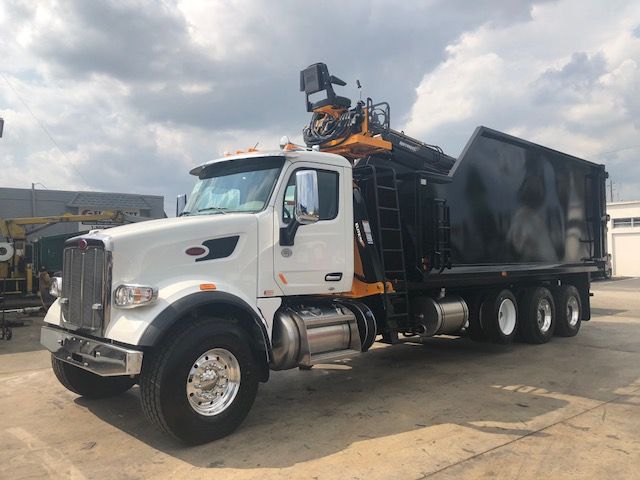
Have peterbilt grapple truck to sell? List it here to reach thousands of buyers.
About Peterbilt Grapple Trucks in Florida
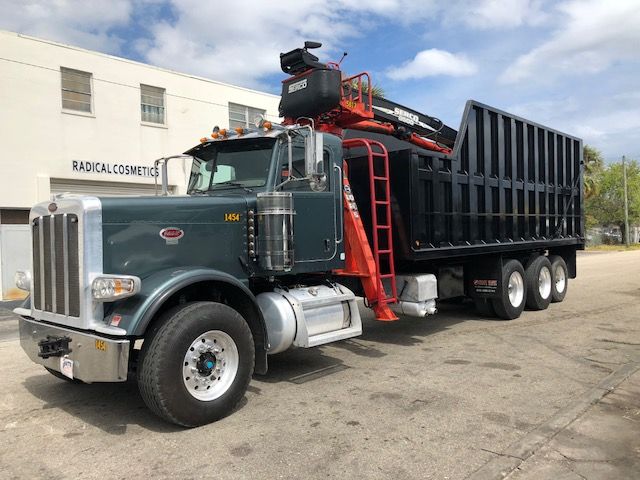
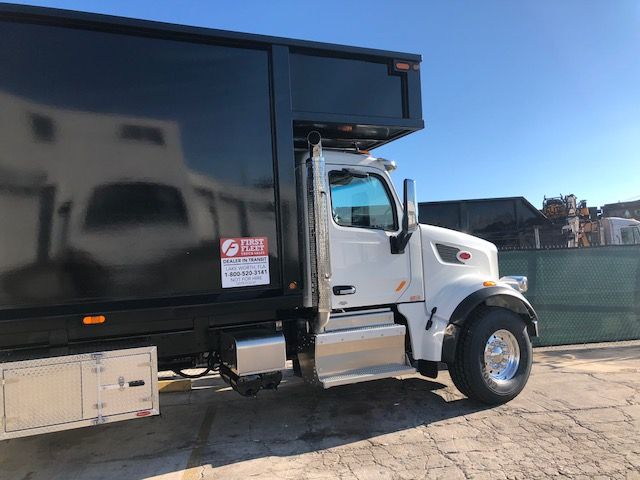
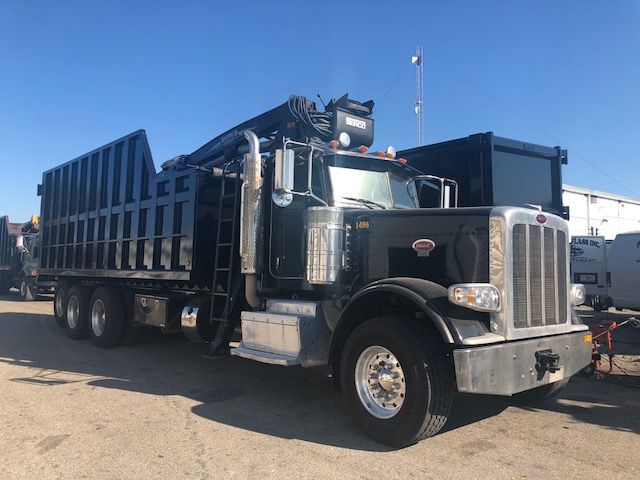
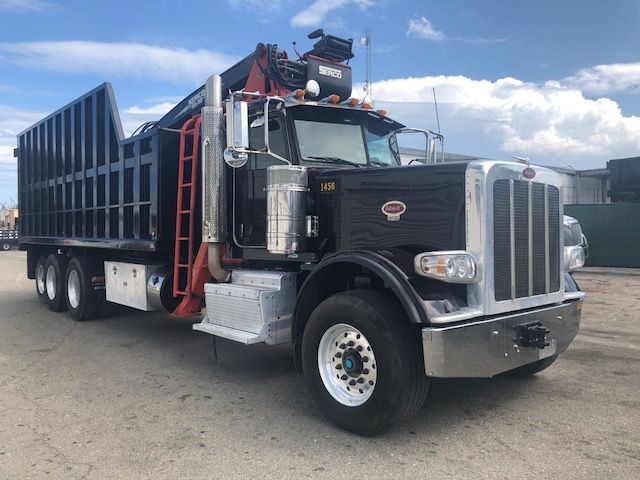
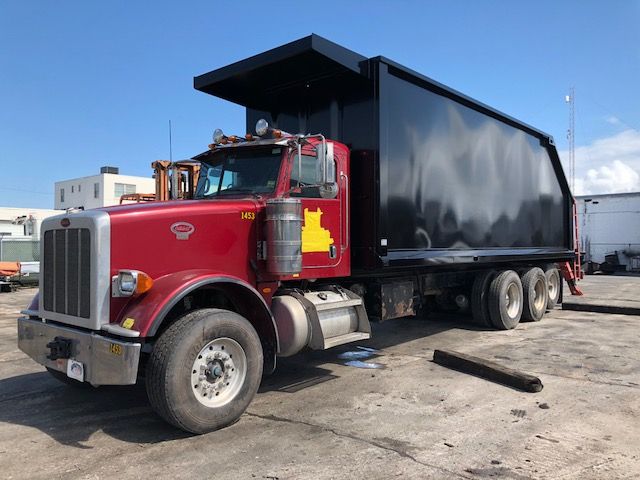
The first decision is usually the loader and body combination. Many Peterbilt grapple trucks in this class run SERCO loaders such as the 8500L or 1050XR, often with extended booms for better reach into rights-of-way, transfer piles, and roadside debris. Body capacity can range from roughly 26 feet in length to 50-yard and 67-yard debris bodies, with Hardox or other abrasion-resistant steel used where the truck will see brush, storm waste, or demolition material. Rear hitches are also common on these units for pulling an auxiliary trailer or support equipment. Buyers should look closely at loader hour meter readings, turntable wear, boom pin and bushing condition, grapple cylinder seepage, and the condition of the subframe where the loader mounts to the chassis.
Powertrain spec matters because grapple trucks spend their lives in stop-and-go service, PTO operation, and off-pavement loading areas. Peterbilt units in this category are often equipped with Cummins engines in the 450 to 550 hp range, paired with manual transmissions like an 8LL or with automatics depending on driver preference and route type. A Jake brake is a useful feature on heavier debris hauls, especially when the truck is operating in mixed urban and highway service. For Florida buyers, cooling system condition, A/C performance, corrosion around body hardware, and hydraulic hose aging are worth extra attention because heat, humidity, and seasonal weather exposure can shorten service life on working components.
A strong used Peterbilt grapple truck should be evaluated as a complete system, not just as a chassis with a crane. Check axle ratings, suspension type, frame reinforcement, PTO engagement, pump output, body floor thickness, tailgate sealing, and legal payload potential with the installed loader and body. Also confirm how the truck was used. A municipal leaf and limb truck, a land-clearing debris unit, and a waste grapple truck can all look similar on paper but wear differently in the loader, body, and driveline. Peterbilt remains popular in this segment because parts support is broad, vocational spec choices are strong, and the platform adapts well to refuse and debris upfits that need to work hard every day.
Frequently Asked Questions
What are Peterbilt grapple trucks typically used for?
Peterbilt grapple trucks are commonly used for storm debris removal, tree and limb collection, municipal refuse work, construction debris hauling, and bulk waste pickup. They combine a heavy-duty chassis, a hydraulic loader, and a large debris body so one truck can load itself and transport material without relying on separate equipment. That makes them especially useful for municipalities, site contractors, and debris haulers working tight routes or cleanup operations.
What should I inspect first on a used Peterbilt grapple truck?
Start with the loader, hydraulics, and body because those components usually show the hardest vocational wear. Inspect boom pins and bushings, cylinder seals, turntable play, outriggers if equipped, PTO engagement, hydraulic tank condition, hose routing, and pump performance. After that, check frame integrity, rear suspension, axle ratings, body floor and sidewall wear, tailgate operation, and signs of cracking around the loader mount or subframe. Engine and transmission condition still matter, but the upfit often determines the truck's true value in grapple service.
Are tri-axle Peterbilt grapple trucks better for debris hauling?
Tri-axle Peterbilt grapple trucks are often preferred when the body is large and the truck is expected to carry high-volume debris loads. The extra axle helps distribute weight, support the loader and body combination, and improve legal payload capacity depending on the exact spec and local regulations. For lighter tree service or smaller municipal routes, a smaller axle configuration may be enough, but tri-axle setups are common in heavier storm cleanup and waste applications.
What loader brands and body materials are common on Peterbilt grapple trucks?
SERCO loaders are common in this category, and buyers will also see other vocational loader brands depending on the region and upfitter. Extended boom configurations are popular because they improve loading reach and pile access. For bodies, abrasion-resistant materials such as Hardox are frequently used because they hold up better against brush, mixed debris, and repeated loading cycles. The right combination depends on whether the truck will handle green waste, demolition debris, refuse, or storm cleanup material.
Which transmission is better in a Peterbilt grapple truck, manual or automatic?
That depends on the route, driver pool, and operating environment. Manual transmissions such as an 8LL are still valued in grapple work for low-speed control, durability, and driver familiarity in vocational service. Automatic transmissions can reduce driver fatigue, improve consistency in stop-and-go operation, and make training easier for fleets with multiple operators. The better choice is the one that matches the truck's terrain, load cycle, and maintenance program.