
New Vanguard Flatbed Trailers For Sale in Illinois
New Vanguard flatbed trailers for sale in Illinois. Compare 48-foot steel flatbeds, specs, payload features, and hauling applications.
Learn more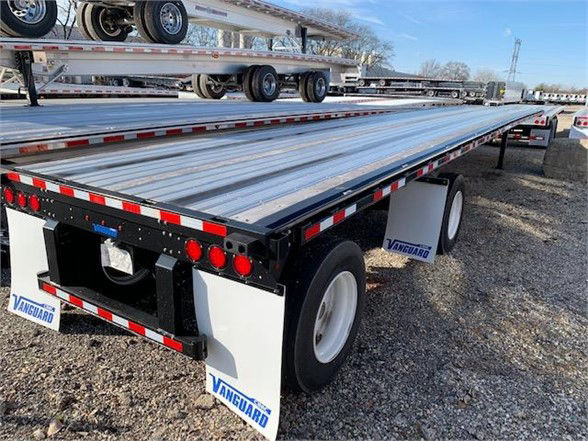
Have new vanguard flatbed trailer to sell? List it here to reach thousands of buyers.
About New Vanguard Flatbed Trailers in Illinois
On a new Vanguard flatbed, the core spec decisions usually start with trailer construction, axle layout, and suspension. Steel flatbeds remain a common choice for buyers who want durability, straightforward repairability, and long service life in tough fleet use. Typical features in this class include air ride suspension, tandem or spread axle setups, steel or aluminum wheels, galvanized components around the suspension area, and stake pockets spaced for flexible securement. Buyers should also look closely at frame rating, concentrated load rating, crossmember spacing, deck height, and the number and placement of winches, chain spools, and tie-down points. Those details have a direct effect on how well the trailer handles dense freight, forklift loading, and mixed commodity work.
For Illinois operations, axle spread and bridge law compliance are part of the buying conversation, especially for fleets running regional lanes across the Midwest. A spread axle flatbed can help with weight distribution and loading flexibility, but it also changes tire scrub, turning behavior, and maintenance patterns compared with a tandem. Deck length matters too. A 48-foot flatbed remains one of the most common open-deck trailer sizes because it fits a wide range of legal freight without adding complexity. If your freight mix includes coils, pipe, lumber, or crated equipment, check how the trailer is equipped for securement and whether the deck configuration supports your normal loading practices.
New-condition units also appeal to buyers who want current-spec components, warranty support, and predictable maintenance from day one. On a flatbed trailer, that can mean better corrosion resistance, updated lighting and wiring, fresh brakes and tires, and suspension components that have not already absorbed years of abuse from uneven loading or jobsite conditions. When comparing new Vanguard flatbed trailers for sale, the smartest approach is to match the trailer to the freight first, then verify structural ratings, suspension type, axle configuration, and securement hardware. A flatbed that looks similar on paper can perform very differently once it is loaded every day.
Frequently Asked Questions
What is the most common size for a new Vanguard flatbed trailer?
A 48-foot by 102-inch flatbed is one of the most common configurations in this category. It fits a broad range of legal open-deck freight, works well with standard loading docks and forklifts, and gives carriers flexibility across building materials, steel, machinery, and palletized cargo. That size is often the baseline spec buyers compare when shopping new Vanguard flatbed trailers.
Is a steel flatbed trailer a good choice for heavy-duty freight?
A steel flatbed is a strong choice for buyers who prioritize durability, structural strength, and easier repair over the lightest possible tare weight. Steel construction is common in demanding applications that involve dense freight, repeated forklift loading, and rougher operating conditions. The tradeoff is that an all-steel trailer may weigh more than other configurations, so buyers should compare payload goals against long-term durability needs.
What should I look for in flatbed trailer load ratings?
The two main numbers to review are the distributed load rating and the concentrated load rating. Distributed rating refers to weight spread across the trailer deck, while concentrated rating refers to heavier weight placed within a shorter section of the trailer, such as a 4-foot area. Both matter because many flatbed loads are not evenly spread. A trailer with the right concentrated load rating is better suited for machinery, steel bundles, and other dense freight.
Should I choose a tandem axle or spread axle flatbed trailer?
That depends on your routes, freight, and maintenance priorities. A spread axle flatbed can improve weight distribution and may help with certain bridge law considerations, which is relevant for many Illinois and Midwest operations. A tandem axle setup can be easier to maneuver in tighter areas and may reduce some tire scrub compared with a spread. The best choice comes down to where the trailer runs, how it is loaded, and how often it sees tight turns or urban deliveries.
Why do stake pocket spacing and tie-down points matter on a flatbed trailer?
Stake pockets, winches, chain tie-downs, and related securement points determine how easily the trailer can handle different cargo shapes and securement methods. Closer stake pocket spacing can give drivers more flexibility when securing irregular or mixed loads. Strong, well-placed tie-down hardware also speeds up loading and unloading while helping the trailer meet the practical demands of daily flatbed freight work.