
New Vanguard Flatbed Trailers For Sale
Shop new Vanguard flatbed trailers with 48-foot steel deck options, air ride suspension, spread axles, and specs built for freight flexibility.
Learn more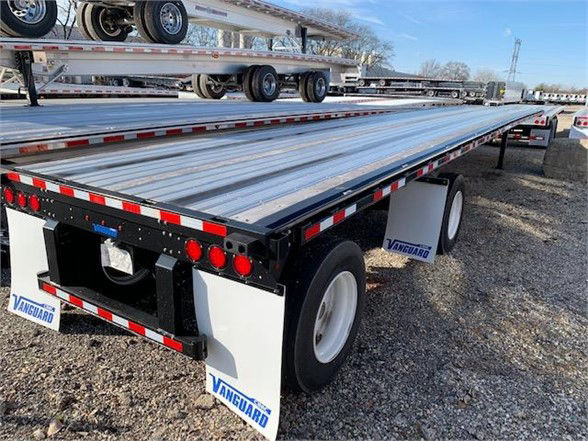
Have new vanguard flatbed trailer to sell? List it here to reach thousands of buyers.
About New Vanguard Flatbed Trailers
On new Vanguard flatbeds, pay close attention to the structure and securement package. Steel flatbed models are often chosen for durability, repairability, and long-term service in demanding freight lanes. Buyers should review frame ratings for both distributed and concentrated loads, because that affects how comfortably the trailer handles dense freight such as steel coils, bundled metal, brick, or machinery. Features like stake pockets on regular centers, rub rails, and winch track matter because they determine how efficiently drivers can secure mixed loads. Camber, crossmember spacing, and deck construction also deserve attention, especially if the trailer will see repeated forklift traffic or concentrated point loads.
Suspension and axle layout have a direct impact on tire wear, ride quality, and bridge compliance. Air ride suspension is a common choice on new flatbed trailers because it helps protect cargo and improves road manners over rough pavement. Spread axle configurations are popular for weight distribution and legal loading flexibility, but they can add scrub in tight urban turns, so route profile matters. Wheel-end specification, brake package, and corrosion-resistant components such as galvanized hangers can also influence lifecycle cost. A buyer running northern states or heavy year-round freight should think carefully about corrosion protection, brake durability, and how easy the trailer will be to service across a mixed fleet.
The right new Vanguard flatbed trailer comes down to freight profile more than brand alone. A lightweight steel configuration can make sense for operations that want the durability of steel without giving up too much payload. Deck rating, securement spacing, suspension, and axle spread should all match the commodities being hauled and the states being run. For buyers comparing new flatbed trailers for sale, Vanguard remains a practical choice in the standard open-deck market where reliability, usable specs, and straightforward freight handling are more important than unnecessary complexity.
Frequently Asked Questions
What is the most common size for a new Vanguard flatbed trailer?
The most common specification in this category is a 48-foot by 102-inch flatbed trailer. That size works across a wide range of legal loads and shipping docks, and it remains the standard choice for steel, lumber, machinery, and palletized building materials. It also gives buyers the broadest freight compatibility in the open-deck market.
Is a steel flatbed trailer a good choice compared to aluminum?
A steel flatbed trailer is often chosen for durability, lower repair complexity, and strong performance in demanding freight applications. Steel can carry a tare weight penalty compared to aluminum, but many buyers accept that tradeoff for a rugged frame and deck structure that holds up well in hard daily use. The right choice depends on whether payload sensitivity or long-term durability is the bigger priority in your operation.
Why do buyers choose spread axle flatbed trailers?
Spread axle flatbed trailers are commonly selected because they help with weight distribution and can improve legal loading flexibility on heavier freight. They are especially useful for operations that regularly move dense commodities and need to manage axle weights carefully. The tradeoff is increased tire scrub in tight turns, so spread axles are usually a better fit for regional and highway freight than constant tight-city maneuvering.
What securement features should matter most on a flatbed trailer?
Stake pockets, rub rails, winch track, and tie-down spacing are some of the most important securement features on a flatbed. These details determine how easily a driver can build a legal and efficient securement pattern for different types of cargo. Buyers hauling mixed freight should look closely at pocket spacing, access to anchor points, and how well the trailer accommodates chains, straps, and edge protection.
What does frame rating mean on a flatbed trailer?
Frame rating refers to how much weight the trailer structure is designed to support, usually shown as a distributed load rating and a concentrated load rating. That distinction matters because a trailer carrying evenly spread pallet freight is loading the deck differently than a trailer carrying dense machinery or steel in a short section. Buyers should match the rating to their actual freight profile, not just the gross weight they expect to haul.