
New Stoughton Trailers For Sale
Shop new Stoughton trailers, including grain hoppers and other specs built for payload, durability, clean unloads, and fleet-ready service.
Learn moreBrowse Stoughton Trailers by Category

Have new stoughton trailer to sell? List it here to reach thousands of buyers.
About New Stoughton Trailers
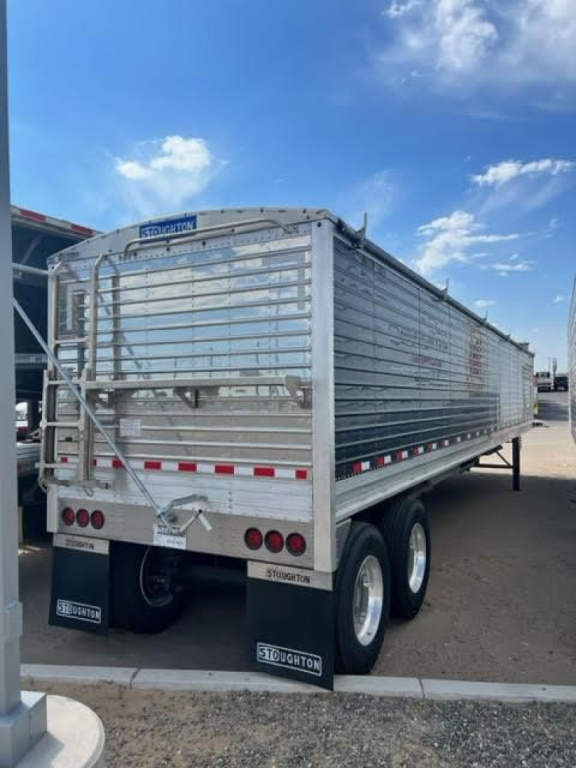
A buyer comparing new Stoughton trailers should pay close attention to body construction, discharge setup, and serviceability. Stainless front corners, stainless rear panels, corrugated side panels, ladder and catwalk placement, and trap access lighting all affect day-to-day use. Hopper door design and operator type matter if the trailer will see repeated farm, elevator, or feed mill unload cycles. Manual traps and manual roll tarps keep the trailer simple and cost-effective, while lighting packages, load gauges, dump valves, and mud flap spec can improve safety and convenience. Closed tandem axle settings are common on ag hoppers, but axle spread and kingpin settings still need to match state bridge laws and the tractor wheelbase you plan to run.
Suspension and tire package decisions have a direct effect on ride quality, maintenance cost, and legal payload. Air ride remains a popular choice because it helps protect the trailer structure and cargo while improving road manners on rough rural routes. Common tire sizes such as 11R22.5 are easy to support across most fleets and independent shops. Many buyers also look for outside aluminum wheels with inside steel wheels to balance appearance, corrosion resistance, and replacement cost. Landing gear, fenders, rear light configuration, and work lights may sound secondary at first, but they become important quickly during harvest season, night loading, and high-turn operations.
Stoughton trailers appeal to buyers who want straightforward specs that fit real-world hauling instead of unnecessary complexity. If the job is agricultural bulk transport, focus on cubic capacity, side height, tarp sealing, trap accessibility, and ease of washout between loads. If the trailer will spend more time on highway lanes than field entrances, put more weight on suspension tuning, tire wear patterns, axle alignment, and lighting durability. The right new Stoughton trailer is the one that matches commodity density, route conditions, unload frequency, and local legal requirements without giving up uptime.
Frequently Asked Questions
What are the most important specs to compare on a new Stoughton hopper trailer?
The most important specs are length, side height, cubic capacity, axle configuration, suspension type, tarp system, and hopper discharge design. On an ag hopper, those details determine how much product the trailer can legally haul, how easily it unloads, and how well it handles daily use at farms, elevators, and feed facilities. Buyers should also verify tire size, wheel material, ladder and catwalk layout, and kingpin setting so the trailer matches the tractor and the operating region.
Is air ride suspension a good choice on a new Stoughton trailer?
Air ride is a strong choice for many trailer applications because it improves ride quality, reduces shock through the trailer, and helps protect both structure and cargo on uneven roads. That matters on grain and commodity routes that include county roads, field approaches, and rough loading areas. Air ride can also help with driver comfort and overall trailer control, although maintenance practices and suspension brand support should still be part of the buying decision.
What side height should I choose on a new Stoughton grain hopper?
Side height should be matched to commodity type, desired cubic capacity, and legal gross weight in your operating area. Taller sides increase volume, which is useful for lighter commodities, but volume only helps if the load can still scale legally on your axle setup. A 74-inch side is a common ag specification because it provides strong capacity for grain while staying practical for loading, tarp use, and route flexibility.
Are manual traps and manual roll tarps still a practical spec?
Yes. Manual traps and manual roll tarps remain practical for many owner-operators and fleets because they are simple, proven, and easier to maintain than more complex powered systems. They can be a very good fit for operations that want low upfront cost and straightforward service. The tradeoff is reduced convenience in high-cycle operations, so buyers with constant unloads or frequent weather exposure may want to compare available automation options.