
Hino Box Trucks For Sale in Michigan
Shop Hino box trucks with proven medium-duty diesel performance, GVWR options, and body lengths suited for delivery, moving, and route work.
Learn more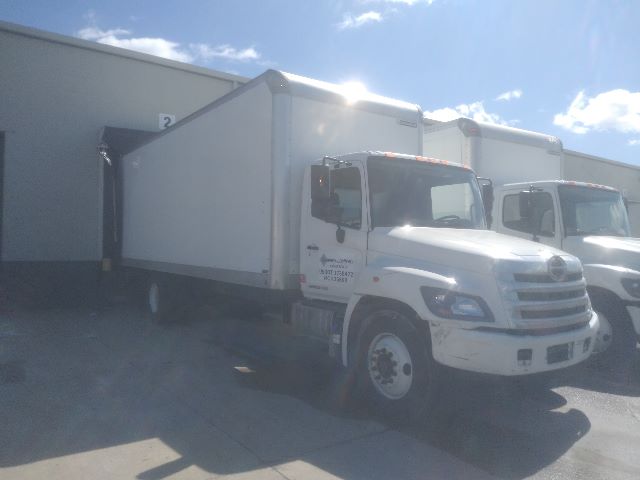
Have hino box truck to sell? List it here to reach thousands of buyers.
About Hino Box Trucks in Michigan
The first decision is usually body size and weight rating. Common box lengths run from around 16 to 26 feet, and the right match depends on cube requirements, dock access, and axle loading. Buyers should compare wheelbase, rear axle ratio, and door configuration along with the box itself. A truck built for beverage, furniture, parcel, or contractor supply work may include a liftgate, translucent roof, E-track, hardwood floor, scuff liners, or side door access. If the truck will run daily urban routes in Michigan, turning radius, cab visibility, and stop-and-go durability matter just as much as headline payload figures.
Hino trucks are known for diesel engines designed for medium-duty vocational use, paired with automatic transmissions that suit multi-stop delivery cycles. When evaluating a Hino box truck, pay close attention to engine hours, maintenance history, DPF and emissions system service, brake condition, tire wear, suspension condition, and any evidence of frame corrosion or floor damage inside the body. In northern states like Michigan, rust inspection is critical around crossmembers, cab mounts, step areas, fuel tank straps, and liftgate structure. Body condition can be just as important as chassis condition, especially on older units that may have seen dock impact, water intrusion, or repeated heavy pallet loading.
A well-matched Hino box truck works for final-mile delivery, appliance hauling, local freight, moving operations, municipal support, and distribution routes that need a dependable straight truck rather than a tractor-trailer. Buyers comparing listings should focus on usable payload, body spec, door height, liftgate rating, and service records more than model year alone. The best unit for the job is the one with the right GVWR, wheelbase, box configuration, and maintenance background for the route profile it will actually run.
Frequently Asked Questions
What are Hino box trucks commonly used for?
Hino box trucks are commonly used for local delivery, furniture and appliance hauling, parcel distribution, moving services, and refrigerated or dry freight applications. Their medium-duty chassis makes them a practical fit for multi-stop routes where a full tractor-trailer is not necessary. They are especially popular in urban and suburban operations that need a tight turning radius, a large cargo cube, and diesel durability.
What should I check first on a used Hino box truck?
Start with GVWR, body length, and payload suitability, then move to maintenance records and overall chassis condition. On a used Hino, pay close attention to engine and transmission performance, DPF and emissions service history, brake wear, tire condition, suspension components, and any signs of rust or corrosion. The cargo body should also be inspected for floor wear, roof leaks, damaged scuff liners, door seal issues, and liftgate operation if equipped.
Is a Hino 268 a good choice for delivery work?
The Hino 268 is a well-known option for medium-duty delivery work because it offers a useful balance of payload, box length compatibility, and road manners for local and regional routes. It is often spec'd for 24-foot to 26-foot bodies and works well in dry freight, moving, and route delivery service. The exact fit depends on the truck's axle rating, wheelbase, transmission spec, and body build, but the 268 platform is widely used in commercial fleets for this kind of work.
What box truck features matter most for Michigan operation?
In Michigan, rust and winter durability should be high on the checklist. Buyers should inspect the frame, crossmembers, cab corners, door hardware, liftgate components, and underbody for corrosion caused by road salt exposure. Good tires, strong heater performance, dependable cold-start behavior, and a body that seals properly against moisture are also important for year-round operation.
How do I choose the right box length on a Hino truck?
Choose box length based on cargo cube, pallet count, route access, and loading method rather than assuming longer is always better. A larger body can improve capacity, but it may reduce maneuverability in tight delivery areas and can affect axle loading if the spec is not matched correctly. Buyers should compare body length with wheelbase, rear axle rating, door opening dimensions, and liftgate capacity to make sure the truck fits the work it is expected to do.