
Service/Utility Trucks For Sale in Missouri
Browse service and utility trucks for sale in Missouri, including mechanic bodies, tool storage setups, PTO options, and work-ready chassis.
Learn more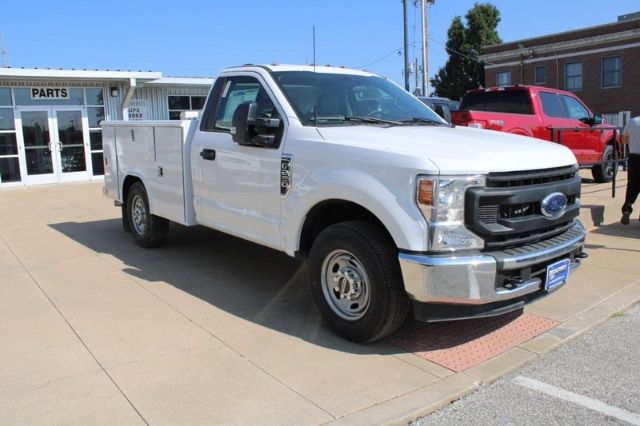
Have service/utility truck to sell? List it here to reach thousands of buyers.
About Service/Utility Trucks in Missouri
Body configuration matters as much as the truck itself. Common setups include enclosed side-pack service bodies, open mechanics-style flatbeds with tool compartments, and units with ladder racks, hitches, inverters, compressors, or PTO-driven accessories. Buyers should compare compartment layout, body length, payload rating, and bumper or receiver capacity based on daily use. A gas engine may make sense for shorter routes and lighter service work, while a diesel often fits heavier payloads, towing, PTO use, and higher annual miles. On Missouri routes that mix highways, gravel roads, farms, and utility easements, 4x4, locking differentials, all-terrain tires, skid-resistant step surfaces, and upfitter switches can be more important than cosmetic condition.
The chassis decision usually starts with GVWR, axle ratio, and cab configuration. A three-quarter-ton or one-ton pickup-based service truck is easier to maneuver in towns and tighter jobsites, while an F-450 or F-550 class chassis provides more margin for cranes, welders, generators, plows, spreaders, and denser tool loads. Check front and rear GAWR, suspension condition, frame integrity, and whether the body installation looks factory-correct with proper mounting and wiring. If towing is part of the job, confirm receiver rating, trailer brake controller, cooling package, and available wheelbase for body and hitch clearance. For used units, idle hours, PTO hours, rust around body seams and tail shelves, door latch wear, and compartment seal condition can tell you as much as odometer miles.
A good service truck should match the work order, not just the badge on the grille. Electrical contractors may prioritize enclosed compartments, inverter power, and ladder access. Municipal and snow-duty buyers may need plow prep, dual alternators, spreader controls, and transmission PTO capability. General contractors and maintenance fleets often focus on payload, lockable storage, backup camera visibility, and simple, durable interiors that hold up to daily entry and exit. When comparing service and utility trucks for sale in Missouri, pay closest attention to body design, usable payload after upfit, power take-off compatibility, and how well the truck supports the exact tools and equipment your crew carries every day.
Frequently Asked Questions
What is the difference between a service truck and a utility truck?
The terms are often used interchangeably, but a service truck usually refers to a work truck with side compartments and space for tools, parts, and jobsite supplies, while a utility truck can describe a broader range of fleet vehicles used by contractors or public utilities. In the market, both typically mean a truck with a service body, external storage compartments, and work-oriented upfit features. The real difference comes from the body design and equipment package, such as ladder racks, cranes, compressors, generators, or PTO-driven accessories.
What size chassis is best for a service or utility truck?
The right chassis depends on payload, towing, and the weight of the body and equipment. Light-duty and medium-duty pickup platforms such as F-250, F-350, or similar trucks work well for technicians carrying hand tools, fittings, and lighter materials. Heavier chassis like F-450 and F-550 are better when the truck needs to support cranes, welders, generators, plows, spreaders, or frequent trailer towing. Buyers should compare GVWR, front and rear axle ratings, and actual payload remaining after the body and upfit are installed.
Is gas or diesel better for a service body truck?
Gas engines are often a good fit for lighter-duty service trucks with shorter daily routes, lower annual mileage, and less PTO or towing demand. Diesel engines usually make more sense for heavier bodies, higher payloads, regular towing, and long-distance or high-hour operation. The best choice depends on duty cycle, not just fuel preference. Buyers should also factor in maintenance costs, idle time, emissions system requirements, and how much weight the truck carries every day.
What should I inspect on a used service or utility truck?
Start with the body, not just the cab and engine. Look for rust in the compartment floors, tail shelf, hinges, and lower door seams. Check latch operation, weather seals, shelving condition, wiring quality, lighting, and signs of overloaded compartments. On the chassis side, review frame condition, suspension wear, tire wear patterns, brake condition, PTO operation if equipped, and any difference between engine hours, idle hours, and odometer miles. A truck with modest mileage but very high idle time may have seen extensive stationary work use.
Do I need 4x4 on a service truck in Missouri?
Many Missouri buyers benefit from 4x4 because service trucks often leave pavement and operate on construction sites, farm roads, utility easements, and winter conditions. If the truck stays mostly on maintained roads and carries a moderate load, a 4x2 setup may be sufficient and usually costs less to maintain. If the job includes snow, mud, rural access, or off-road utility work, 4x4, a limited-slip or locking differential, and all-terrain tires can improve uptime and reduce the risk of getting stuck with a full body and tools on board.