
Trucks For Sale Near Ozark, Alabama
Browse trucks for sale in Ozark, Alabama, including medium and heavy-duty commercial trucks for hauling, vocational work, and fleet use.
Learn more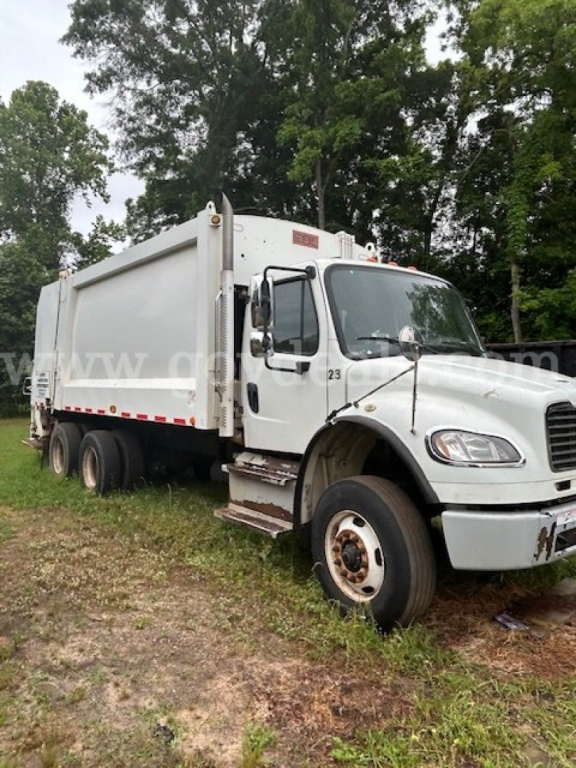
Have truck to sell? List it here to reach thousands of buyers.
About Trucks Near Ozark, Alabama
For medium-duty trucks, common platforms include Class 6 and Class 7 chassis used for box trucks, service trucks, dump bodies, garbage packers, hooklift units, and flatbeds. Popular models in this range are often spec'd with diesel engines from Cummins, Detroit, or Mercedes-Benz, paired with Allison automatic transmissions for vocational work. Buyers should pay close attention to wheelbase, frame rail condition, front axle capacity, rear axle ratio, and whether the truck was ordered for local route service or higher-speed regional work. If the truck carries specialized equipment such as a rear loader, rollback, crane body, or utility package, hydraulic system condition and PTO operation can be just as important as the base engine and transmission.
Heavy-duty trucks bring another set of decisions. Day cabs, sleepers, tandem axles, lift axles, and fifth wheel setup all affect what the truck can legally and efficiently pull. Engine brake performance, transmission gearing, suspension type, and locking differential specs deserve a close look if the truck will see uneven jobsite surfaces or frequent loaded starts. In vocational categories, buyers should inspect crossmembers, spring hangers, body mounts, hoist systems, and signs of frame modification or corrosion. In fleet and municipal service, idle hours can tell as much of the story as odometer miles, especially on trucks that spent years in refuse, utility, or public works duty.
A strong used truck purchase is usually the result of matching the chassis to the job rather than chasing the lowest price. Service history, engine diagnostics, brake wear, tire date codes, DEF and emissions system condition, and evidence of consistent preventive maintenance all carry real value. For buyers in Ozark and the surrounding Wiregrass region, the best truck is one that fits route length, payload, licensing requirements, and body equipment needs without being over- or under-spec'd. That approach usually delivers better uptime, easier parts support, and a lower cost per mile or per hour in service.
Frequently Asked Questions
What should I check first when comparing used trucks for sale?
Start with the truck's intended job and confirm the basic chassis specs support that application. GVWR, axle rating, wheelbase, cab configuration, transmission type, PTO provision, and body compatibility should all be verified before reviewing cosmetic condition. After that, look at engine hours, service records, tire condition, brake wear, frame condition, and any active fault codes. A truck that is correctly spec'd for the work will usually be a better long-term buy than one that simply has a lower asking price.
How important are engine hours on a used vocational truck?
Engine hours are very important, especially on municipal, refuse, utility, and other vocational trucks that spend long periods idling or operating PTO-driven equipment. Odometer mileage alone can understate total engine wear in those applications. High idle time affects emissions components, cooling systems, and general engine condition. When available, compare hours to miles and review maintenance records to understand how the truck was actually used.
What is the difference between a medium-duty and heavy-duty truck?
Medium-duty trucks generally fall into Class 6 and Class 7 applications and are often used for local delivery, service bodies, dump work, and specialty equipment. Heavy-duty trucks usually start in Class 8 and are built for higher GVWR, greater axle capacity, and more demanding pulling or vocational work. The difference affects CDL requirements, payload, body options, drivetrain durability, and operating cost. Buyers should choose the smallest truck that safely and legally handles the work, because overspec'ing can increase fuel, maintenance, and acquisition costs.
Why does wheelbase matter when buying a truck?
Wheelbase affects body fitment, turning radius, axle loading, ride quality, and how the truck performs in tight work sites or urban routes. A short wheelbase may improve maneuverability but limit body length or equipment placement. A longer wheelbase can support larger bodies and better weight distribution, but it may be harder to operate in confined areas. Wheelbase should always be matched to the intended body, payload, and route environment.
Are automatic transmissions a good choice for work trucks?
Automatic transmissions are common in work trucks because they reduce driver fatigue, simplify training, and perform well in stop-and-go service. Allison automatics are especially common in refuse, municipal, and utility applications because they pair well with PTO and hydraulic equipment. That said, transmission choice should match the duty cycle. Regional hauling or specialized heavy applications may call for different gearing, automated manual options, or a more job-specific drivetrain setup.