
Used Volvo Conventional Daycab Trucks For Sale in Florida
Browse used Volvo conventional daycab trucks in Florida, including VNR models built for regional hauling, port work, and urban freight.
Learn more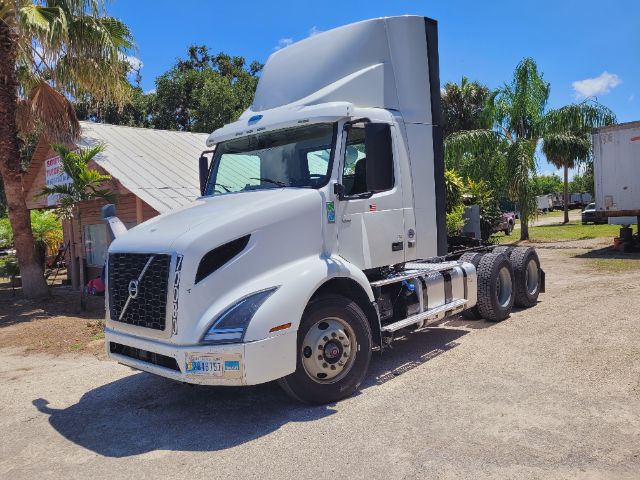
Have used volvo conventional daycab truck to sell? List it here to reach thousands of buyers.
About Used Volvo Conventional Daycab Trucks in Florida
One of the biggest decisions in a used Volvo daycab is the powertrain. Many trucks in this class are spec'd with Volvo D11 or D13 engines paired to the I-Shift automated manual transmission, though some units may have different horsepower ratings depending on whether they were ordered for city work, regional freight, or heavier start-stop service. Buyers should pay attention to horsepower and torque, rear axle ratio, wheelbase, and gross vehicle weight rating, because those specs directly affect launch performance, fuel economy, and how well the truck matches the trailer and payload it will pull. A shorter wheelbase usually helps in tight yards and urban delivery environments, while a longer spec can improve ride quality and stability in higher-speed regional lanes.
For Florida buyers, application matters. Port and container work often calls for a durable daycab with the right fifth wheel setup, frame strength, and axle spec for repeated short hauls and frequent hook-and-drop cycles. Regional dry van or refrigerated freight may put more value on fuel-efficient gearing, aerodynamic fairings, cruise control, and a quieter cab. Volvo daycabs are well regarded for driver-friendly interiors, good outward visibility, and safety technology that may include collision mitigation, lane departure warning, and integrated telematics depending on model year and original fleet spec. On used trucks, service history, emissions system condition, brake and tire wear, and any signs of heavy idle time deserve close attention.
A well-matched used Volvo conventional daycab can lower operating cost when the spec fits the route. Look closely at engine hours versus miles, transmission behavior, suspension type, PTO needs if vocational equipment is involved, and the condition of the aftertreatment system. Florida heat and humidity also make air conditioning performance and cooling system health more important than buyers in some other regions might expect. When comparing listings, the best value is not just model year or odometer reading. It is the truck whose axle, engine, transmission, and wheelbase configuration aligns with the work it will do every day.
Frequently Asked Questions
What is the difference between a Volvo VNR daycab and a Volvo VNL daycab?
The Volvo VNR is typically designed for regional and urban applications, with a tighter footprint and a spec that often favors maneuverability and stop-and-go efficiency. A Volvo VNL daycab is usually based on a highway platform and may be better suited to longer regional lanes where ride quality and highway comfort matter more. The right choice depends on route length, trailer type, and how much time the truck will spend in congested areas versus open-road operation.
What engine and transmission combinations are common in used Volvo daycab trucks?
Many used Volvo conventional daycabs are equipped with Volvo D11 or D13 engines and the Volvo I-Shift automated manual transmission. The D11 is often selected for lighter regional applications where weight savings and fuel economy matter, while the D13 is common in heavier hauling or operations that need more torque. Buyers should verify horsepower, torque rating, transmission programming, and rear axle ratio together, because those specs determine how the truck performs under load.
Are Volvo daycab trucks a good choice for port and regional work in Florida?
Yes, Volvo daycabs are commonly used in Florida for container drayage, regional van freight, reefer work, and dedicated delivery routes. Their maneuverability, comfortable cab layout, and automated transmission options make them practical for high-frequency stop-and-go service and day routes. For port work, it is especially important to confirm axle ratings, fifth wheel placement, frame condition, and cooling system health due to the demands of heavy short-haul cycles and hot weather.
What should I inspect first on a used Volvo conventional daycab?
Start with the engine hours, maintenance records, and any fault code history if available. Then inspect the aftertreatment system, transmission operation, suspension wear, brake condition, tires, and signs of frame damage or hard use around the fifth wheel area. On a Florida truck, air conditioning performance, radiator condition, and overall cooling system integrity should be checked early, because heat-related issues can become expensive quickly in daily operation.
What wheelbase and axle setup is best for a used Volvo daycab?
There is no single best setup, because the ideal wheelbase and axle configuration depends on the application. Shorter wheelbases are easier to maneuver in tight terminals, city streets, and port environments, while longer wheelbases can improve ride stability on regional highway routes. Single-axle and tandem-axle daycabs both exist in the market, so buyers should match axle capacity, kingpin settings, and trailer type to the actual freight they plan to move.