
Trucks For Sale Near Bremerton, Washington
Browse trucks for sale in Bremerton, WA, including vocational and highway models with diesel power, commercial specs, and fleet-ready configurations.
Learn more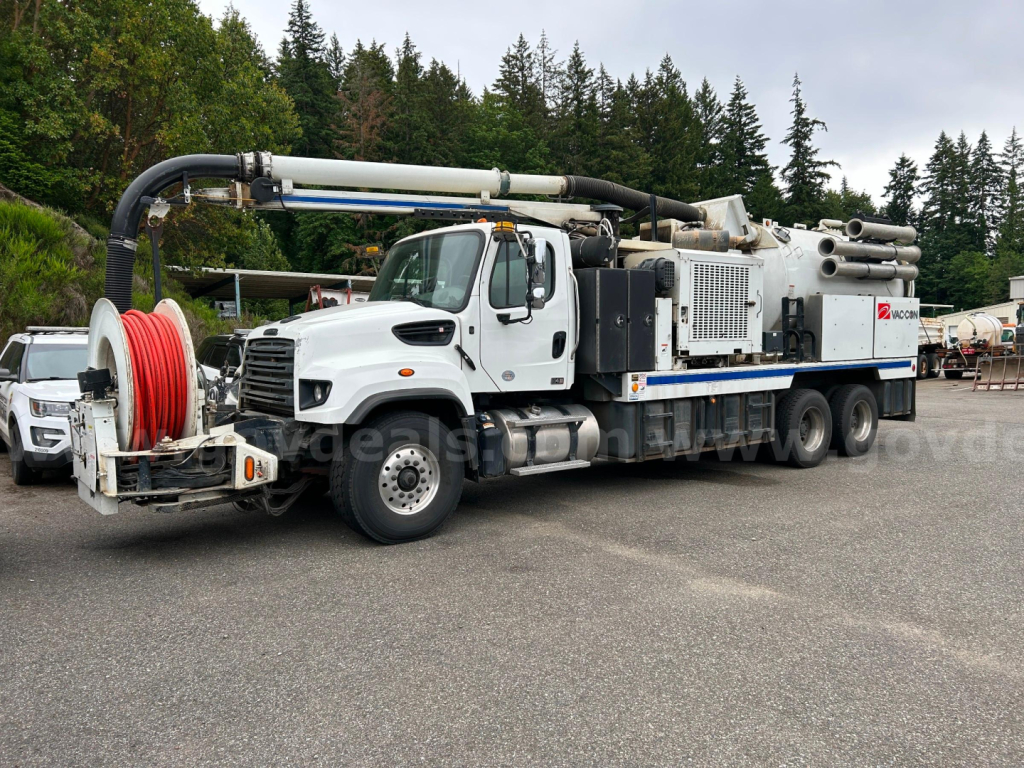
Have truck to sell? List it here to reach thousands of buyers.
About Trucks Near Bremerton, Washington
For buyers comparing commercial trucks, the chassis details matter as much as the badge on the hood. Diesel engines from major OEMs are typically paired with automatic or automated manual transmissions, while many vocational units still rely on Allison automatics for stop-and-go work and PTO-driven applications. Axle ratings, locking differentials, frame strength, and front axle capacity become especially important on severe-duty models such as Freightliner 114SD, Kenworth T880, Peterbilt 567, or similar platforms. If the truck is intended for municipal, construction, or utility service, look closely at PTO provisions, engine brake spec, steering axle set-back or set-forward design, and body upfitter compatibility.
Condition should be evaluated by use class, not just mileage. A lower-mile truck that has spent years in heavy idle service, vacuum work, or short-route operation can show wear in different places than a highway tractor with higher road miles. Buyers should review engine hours, maintenance records, emissions system history, brake and suspension condition, tire wear, hydraulic or PTO operation when applicable, and signs of frame corrosion or cab damage. In western Washington, rust is often less severe than in snowbelt markets, but moisture exposure still makes electrical condition, wiring integrity, and underbody inspection worthwhile.
A good truck purchase comes down to matching the spec to the work for the next five to seven years. For regional freight, fuel economy, wheelbase, and sleeper configuration may lead the decision. For vocational fleets, durability, body integration, and service access usually matter more than peak highway efficiency. Buyers shopping trucks for sale in Bremerton should focus on legal payload, bridge formula implications, CDL requirements, and local support for the engine, transmission, and body equipment on the truck. The best value is rarely the cheapest unit on the page. It is the truck with the right ratings, the right maintenance history, and the fewest compromises for the job.
Frequently Asked Questions
What should I check first when buying a used commercial truck?
Start with the truck's intended application and confirm the chassis matches the work. Key items include GVWR, axle ratings, wheelbase, engine and transmission spec, PTO capability, and body compatibility if it is a vocational truck. After that, review maintenance records, engine hours, fault history, brake and tire condition, suspension wear, and any signs of frame damage or corrosion. A truck can look clean and still be poorly spec'd for the job, so application fit comes before cosmetics.
Is mileage or engine hours more important on a used truck?
Both matter, but engine hours often tell the more complete story on vocational and municipal trucks. A unit used for vacuum, utility, or stop-and-go service may accumulate heavy idle time and PTO hours without adding many road miles. Highway tractors usually show wear more directly through mileage. The best approach is to compare miles, engine hours, service history, and the type of work the truck performed rather than relying on one number alone.
What is the difference between a highway truck and a vocational truck?
A highway truck is generally spec'd for freight movement, fuel efficiency, and sustained road speed, often with lighter tare weight and gearing suited to linehaul or regional hauling. A vocational truck is built for jobsite or work-truck duty and may include heavier frames, higher front axle capacities, PTO provisions, automatic transmissions, locking rears, and severe-duty suspensions. Vocational trucks are common in construction, utility, municipal, vacuum, dump, and service applications where durability and body integration are more important than pure highway efficiency.
Are automatic transmissions common in commercial trucks?
Yes. Automatic and automated manual transmissions are both common, but they serve slightly different roles. Allison automatics are especially popular in vocational applications because they perform well in stop-and-go service and with PTO-driven equipment. Automated manual transmissions are common in highway and regional trucks because they can improve driver consistency and fuel economy. The right transmission depends on terrain, duty cycle, driver experience, and whether the truck powers auxiliary equipment.
What matters most when buying a truck for work in Washington State?
Buyers in Washington should pay close attention to terrain, moisture exposure, and the type of routes the truck will run. Trucks working in hilly areas benefit from adequate horsepower, torque, and engine braking. Units operating around the coast or in wet conditions should be inspected for electrical issues, corrosion, and underbody wear even if they are not from a heavy road-salt region. Local dealer support, emissions compliance, licensing requirements, and body or PTO service availability also affect long-term operating cost.