
Used Box Trucks For Sale in Pennsylvania
Browse used box trucks in Pennsylvania. Compare GVWR, body length, liftgates, door styles, and diesel or gas options for delivery fleets.
Learn more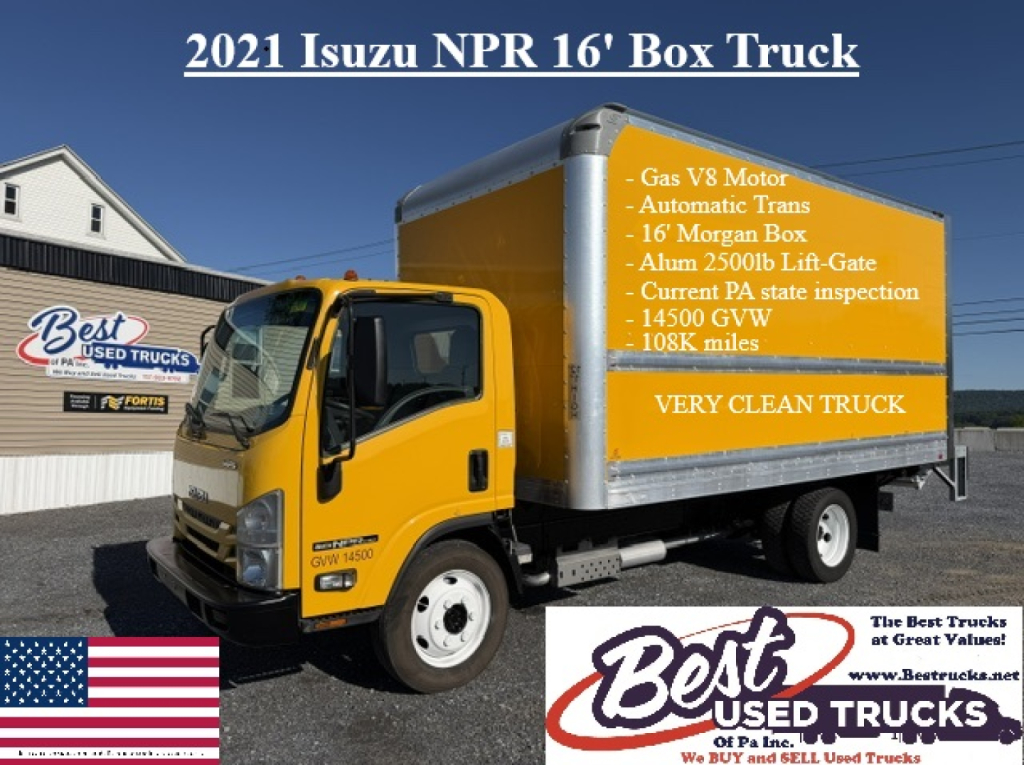
Have used box truck to sell? List it here to reach thousands of buyers.
About Used Box Trucks in Pennsylvania
Body spec matters as much as chassis spec. Interior height, body width, E-track layout, scuff liners, translucent roof panels, and rear door style all affect daily productivity. Roll-up rear doors are common for dock work and multi-stop delivery, while curbside doors can speed hand unloads on route. Liftgates are a major value point on used box trucks, with 2,000 to 3,000 lb capacities frequently seen on medium-duty units. Buyers hauling appliances, vending product, medical equipment, or palletized freight should check liftgate platform size, cycle condition, and whether the body floor height matches the loading environment. Aluminum bodies can save weight and resist corrosion, while wood floors and lower wall scuff protection are important in trucks that have seen years of cart, pallet jack, or furniture use.
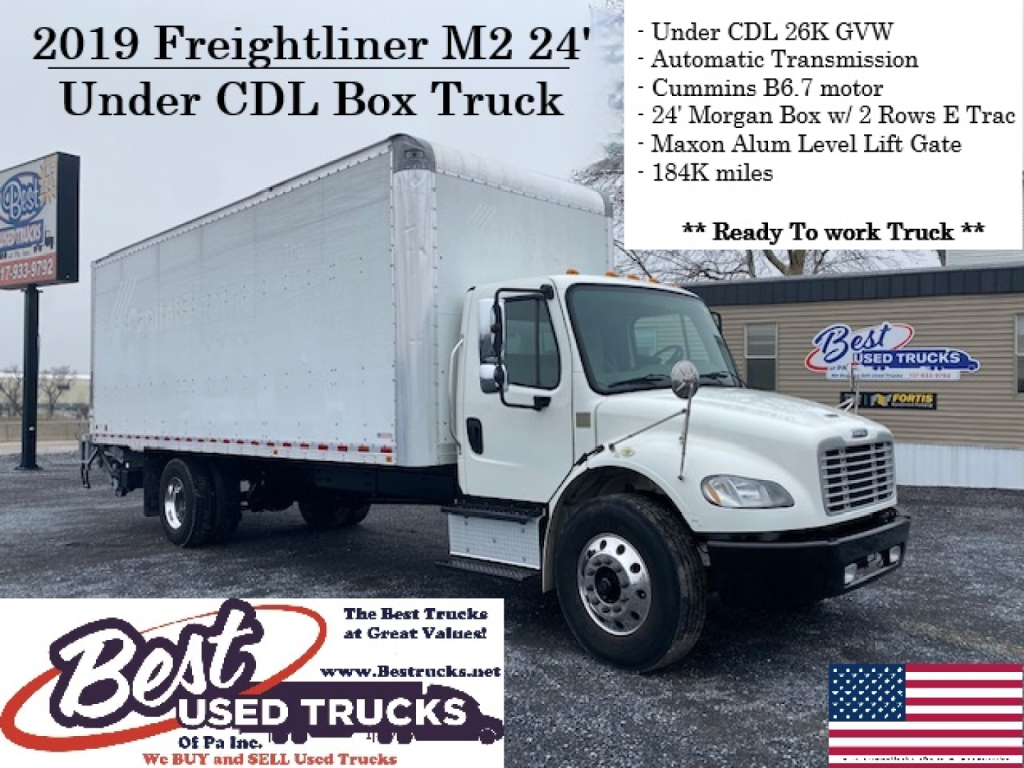
Powertrain choice usually comes down to route profile, maintenance preference, and payload needs. Diesel platforms such as the Freightliner M2 106 with a Cummins B6.7 are common for 22 to 26 foot bodies and tend to be favored for regional delivery, heavier payloads, and longer service life in high-mile operations. Gas engines are common in lighter box trucks and can make sense for local fleets that want simpler emissions systems and lower upfront cost. Automatic transmissions dominate this category, with Allison automatics especially common in medium-duty delivery work. Suspension setup also deserves attention. Spring suspension is straightforward and durable, while air ride can improve ride quality, reduce cargo shock, and help with dock-height consistency when paired with an in-cab dump control.
For Pennsylvania buyers, rust, frame condition, brake life, and current inspection status should be part of any used truck evaluation. A clean cargo body can hide hard chassis use, so it is worth checking crossmembers, cab corners, door hardware, roof condition, and signs of water intrusion around the front nose and rear frame. Tire size, axle ratings, and wheelbase should match the body length and intended payload, not just the price point. If the truck will handle city furniture delivery, beverage routes, parcel work, or warehouse shuttles, focus on turning radius, door access, and liftgate condition. If it will run longer regional lanes, pay closer attention to horsepower, rear axle ratio, ride quality, and service history. A good used box truck is less about brand alone and more about getting the right combination of GVWR, cargo cube, access features, and operating cost for the route.
Frequently Asked Questions
What size used box truck is best for local delivery work?
For local delivery, 16 to 18 foot box trucks are often the easiest to live with in dense areas because they offer better maneuverability, easier parking, and lower overall operating cost. A 22 to 26 foot box truck makes more sense when the freight is palletized, lightweight but bulky, or the route needs more cube per stop. The right size depends on cargo dimensions, loading method, dock access, and whether the truck needs to stay under 26,000 lb GVWR.
Is an under-CDL box truck the best choice for most fleets?
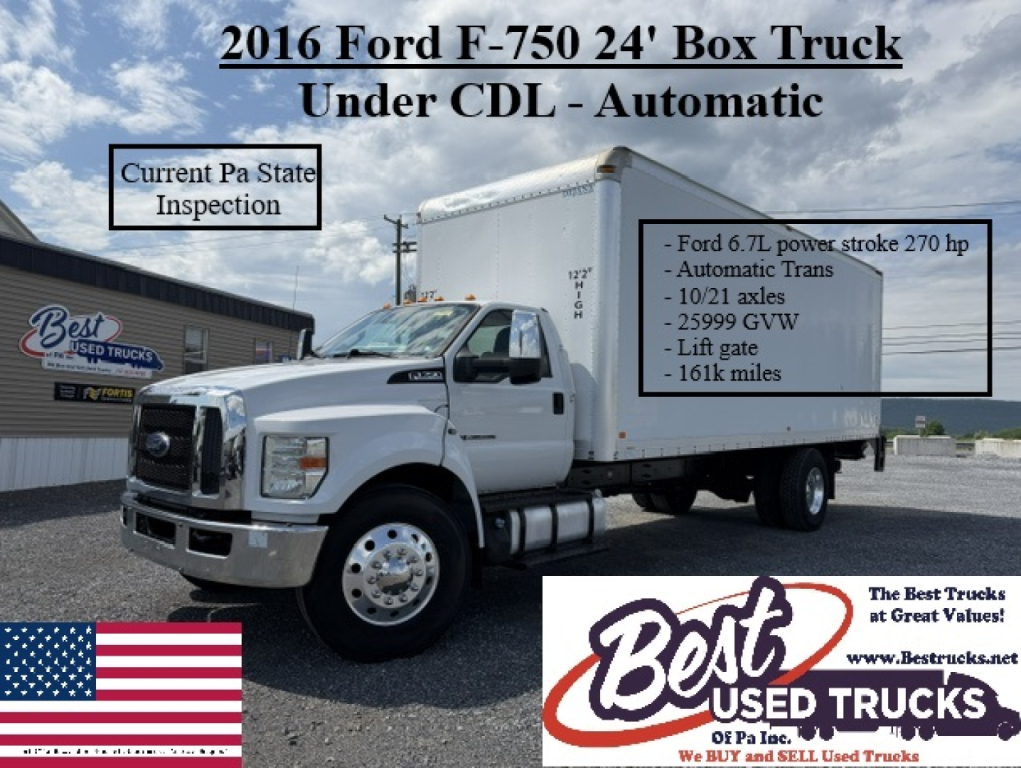
An under-CDL box truck is a strong option for many private fleets, final-mile operators, and local delivery businesses because it can maximize cargo capacity while avoiding CDL driver requirements in many situations. Trucks rated around 25,990 to 26,000 lb GVWR are common in this role. Buyers still need to consider state rules, insurance requirements, driver qualifications, and actual payload after the body and liftgate are installed, because a heavier body can reduce usable carrying capacity.
What should I inspect first on a used box truck?
Start with the cargo body, liftgate, and chassis condition because those items directly affect uptime and repair cost. Check the roof for leaks, inspect the floor for soft spots or heavy forklift wear, and look at E-track, scuff liners, and rear door tracks for signs of abuse. On the chassis side, pay attention to frame rust, brake condition, tire wear, suspension components, fluid leaks, and service records. If the truck is in Pennsylvania, corrosion on the underbody and electrical issues from weather exposure deserve extra attention.
Should I buy a diesel or gas box truck?
Diesel box trucks are usually preferred for larger bodies, heavier payloads, and higher annual mileage because they offer strong low-end torque and are common in medium-duty fleet service. Gas box trucks can be a smart choice for lighter local work where lower acquisition cost and simpler maintenance are priorities. The best decision depends on route length, idle time, emissions system tolerance, expected service life, and access to technicians familiar with the engine platform.
How important is a liftgate on a used box truck?
A liftgate is critical if freight is loaded without a dock or forklift. In many delivery applications, the liftgate is not just a convenience but a requirement for productivity and safety. Buyers should verify rated capacity, platform dimensions, hydraulic operation, wiring condition, and whether the gate type fits the freight. A 2,000 lb gate may be enough for carts and light freight, while palletized product or equipment often calls for a 2,500 to 3,000 lb unit with a larger platform.