
Trucks For Sale Near Alva, Oklahoma
Browse trucks for sale in Alva, Oklahoma, including medium-duty and vocational models with diesel power, PTO options, flatbeds, and service bodies.
Learn more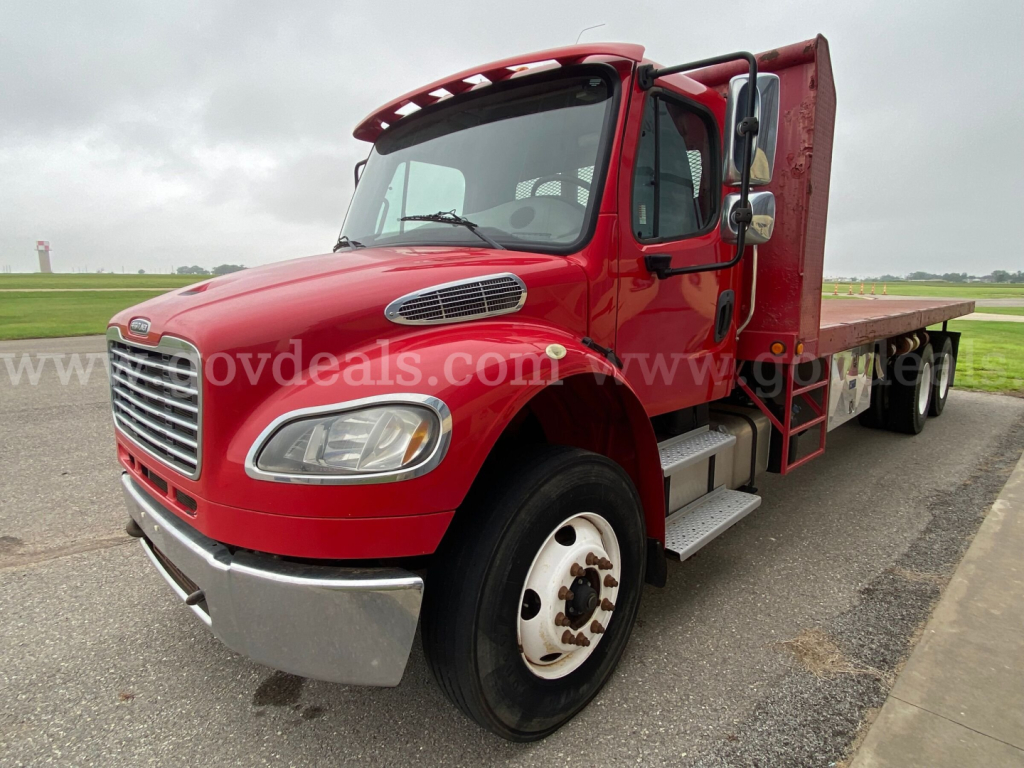
Have truck to sell? List it here to reach thousands of buyers.
About Trucks Near Alva, Oklahoma
Medium-duty trucks such as Freightliner M2 models, International MV units, Kenworth T-Series, Peterbilt 330 and 337, and comparable Ford and Chevrolet chassis are common choices for regional work because they balance payload, maneuverability, and lower operating cost. Typical engine options in this class include Cummins and medium-duty Detroit diesels paired with Allison automatic transmissions or manual gearboxes, depending on route and driver preference. Buyers should look closely at mileage, engine hours, idle time, brake type, tire condition, and any signs of frame modification or corrosion. For trucks used on county roads, job sites, and grain or feed routes, suspension setup, turning radius, and bed length can have a direct impact on daily usability.
Body and equipment details often determine the truck's real value. On flatbed configurations, check deck length, deck material, rub rail condition, stake pockets, tie-down points, headache rack design, and any forklift or Moffett mounting provisions. On vocational trucks, verify PTO operation, hoist condition, hydraulic leaks, auxiliary lighting, trailer brake controller setup, and receiver or pintle capacity. If towing is part of the workload, axle ratio, hitch rating, and brake system compatibility deserve close attention. Buyers in Oklahoma also tend to value clean starts, strong A/C performance, and straightforward emissions serviceability, especially on trucks that spend time idling in summer heat or covering short-stop rural routes.
A good truck in this category is one that matches payload and body requirements without carrying unnecessary weight or complexity. The smartest comparison is total job fit: cab size, bed or body configuration, powertrain, maintenance access, and how easily the truck can be kept productive in local service. Looking beyond price to service records, upfit quality, tire age, driveline condition, and registration class will usually tell you more than the model year alone. For many buyers, the best truck is the one with a proven diesel platform, the right wheelbase for the body, and specs that support dependable work across both highway miles and rougher county-road conditions.
Frequently Asked Questions
What should I look for first when comparing trucks for sale?
Start with the truck's intended workload and match that to GVWR, axle ratings, wheelbase, and body type. A truck that looks clean but is underspecified for payload or towing will cost more in downtime and wear than a properly matched chassis. Engine and transmission combination, PTO capability, suspension type, and frame condition should be reviewed before cosmetic items because those factors determine how well the truck will perform in real service.
Are medium-duty trucks a good choice for local hauling and vocational work?
Yes, medium-duty trucks are often the most practical choice for local and regional operations that need payload capacity without the size and operating cost of a full Class 8 truck. They are commonly used for flatbeds, service trucks, dumps, van bodies, and municipal applications. Buyers typically choose them for easier maneuverability, strong body-upfit flexibility, and dependable diesel and automatic transmission combinations that work well in stop-and-go service.
Why does wheelbase matter when buying a truck?
Wheelbase affects body fitment, turning radius, bridge law considerations, and overall jobsite usability. A longer wheelbase may be needed for a longer flatbed or specialized body, but it can reduce maneuverability in town, on county roads, or around tight yards. A shorter wheelbase can improve handling in confined spaces, but it may limit bed length, storage options, and weight distribution.
What matters most on a used flatbed truck?
On a used flatbed truck, the most important checks are frame condition, deck integrity, tie-down hardware, suspension wear, and evidence of overloading or poor repairs. Buyers should inspect rub rails, stake pockets, crossmembers, headache rack mounting, and any forklift mount or rear attachment points. It is also important to confirm that the engine, transmission, and brakes are matched to the truck's loaded use, not just empty-road driving.
How important are maintenance records on a used truck?
Maintenance records are one of the best indicators of long-term value because they show how the truck was serviced, how often wear items were replaced, and whether major repairs were handled on time. Records can help verify mileage-related service, fluid intervals, brake work, tire replacement, emissions repairs, and transmission maintenance. A truck with average cosmetics but strong service history is often a better buy than one that presents well but has little documentation.