
Taylor Lifts - Fork For Sale
Explore Taylor fork lifts for sale, including heavy-capacity models with diesel power, large pneumatic tires, and container-yard capability.
Learn more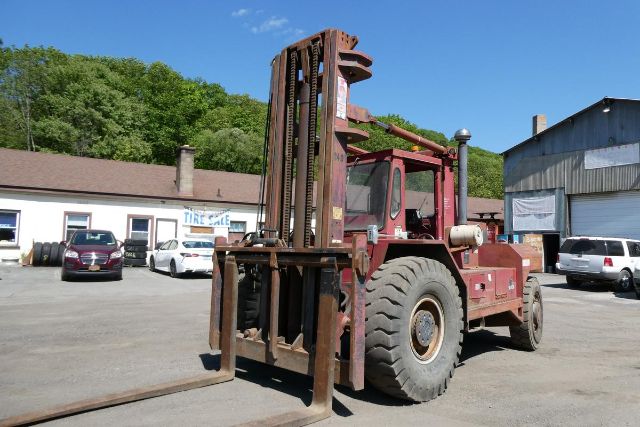
Have taylor lifts - fork equipment to sell? List it here to reach thousands of buyers.
About Taylor Lifts - Fork
Capacity, mast configuration, and operating environment should drive the buying decision. Many Taylor fork trucks are set up for loads well above typical warehouse ranges, with models commonly used in the 15,000-pound to 30,000-pound class and beyond. Buyers should confirm rated capacity at the actual load center, not just the headline number, especially if the truck will handle long material, bundled product, or oversized crates. Mast height, lowered height, free lift, side shift, fork length, and carriage type all matter if the unit will work around trailers, racks, or uneven outdoor surfaces.
Most older Taylor lifts in this class are diesel-powered and equipped with industrial automatic or powershift transmissions, large pneumatic tires, and robust hydraulic systems. Outdoor applications often favor air-filled tires for rough ground and yard use, while brake type, axle condition, steer cylinder performance, and mast wear deserve close inspection on any used machine. On larger forklifts, buyers should also pay attention to engine parts support, transmission service history, chain and roller wear, lift and tilt cylinder condition, and evidence of frame or mast repairs. A machine may show low hours, but overall condition, maintenance records, and proper operation under load usually tell the real story.
For trucking and freight operations, a Taylor fork truck can be a practical fit when loading flatbeds, handling crated equipment, moving heavy pallets, or supporting cross-dock and yard work. Cab style also matters. Open and partially enclosed operator stations are common on older machines, while visibility, weather protection, and ease of entry can affect day-to-day productivity. If the work involves oversized freight or frequent trailer loading, fork length, turning radius, overall width, and transport weight should be checked carefully before purchase. These are purpose-built heavy forklifts, and the right one depends less on model year and more on capacity, mast setup, hydraulic function, and how closely the machine matches the material being handled.
Frequently Asked Questions
What are Taylor fork lifts typically used for?
Taylor fork lifts are commonly used in heavy outdoor material handling applications where larger loads, rougher surfaces, and longer operating cycles are normal. Typical jobs include handling steel, lumber, machinery, pipe, concrete products, containerized freight, and heavy palletized cargo. They are often found in ports, industrial yards, sawmills, equipment dealers, and trucking terminals that need more capacity and durability than a standard warehouse forklift can provide.
What should I check first when buying a used Taylor fork truck?
Start with rated capacity, mast type, and overall hydraulic performance. After that, inspect the engine, transmission, brakes, steer axle, mast channels, chains, rollers, lift cylinders, and tilt functions. On heavy forklifts, leaks, structural repairs, tire condition, and carriage wear can have a major effect on operating cost. It is also important to verify that the machine lifts, tilts, steers, and brakes properly under load, not just at idle in the yard.
Are Taylor forklifts good for outdoor and rough-surface work?
Yes. Many Taylor fork trucks are designed specifically for outdoor industrial service and are equipped with large pneumatic tires, substantial ground clearance, and heavy-duty driveline components. That makes them a strong fit for gravel lots, lumber yards, steel yards, and port environments. Buyers still need to match tire type, axle condition, and mast setup to the actual terrain and load profile, because rough-ground suitability can vary by model and configuration.
How important is load center when evaluating forklift capacity?
Load center is critical because the published capacity of a forklift is tied to a specific distance from the face of the forks to the center of the load. If the load is longer, taller, or less balanced than the rated load center assumes, true lifting capacity drops. This matters even more on heavy Taylor forklifts that handle long bundles, pipe, machinery, or oversized crates. Buyers should compare the data plate rating to the real dimensions of the material they plan to move.
Do older Taylor fork lifts still make sense for buyers today?
They can, especially in applications that value simple mechanical systems, heavy construction, and lower acquisition cost. Older Taylor forklifts are often attractive to buyers who need a dedicated yard machine rather than a high-utilization indoor fleet unit. The key is parts support, service history, and actual operating condition. A well-maintained older machine with sound hydraulics, good tire life, and a solid mast can still be a productive asset in the right operation.