
TRAILKING Traveling Axle Trailers For Sale
Shop TRAILKING traveling axle trailers built for low deck height, easy loading, and dependable hauling of equipment and machinery.
Learn more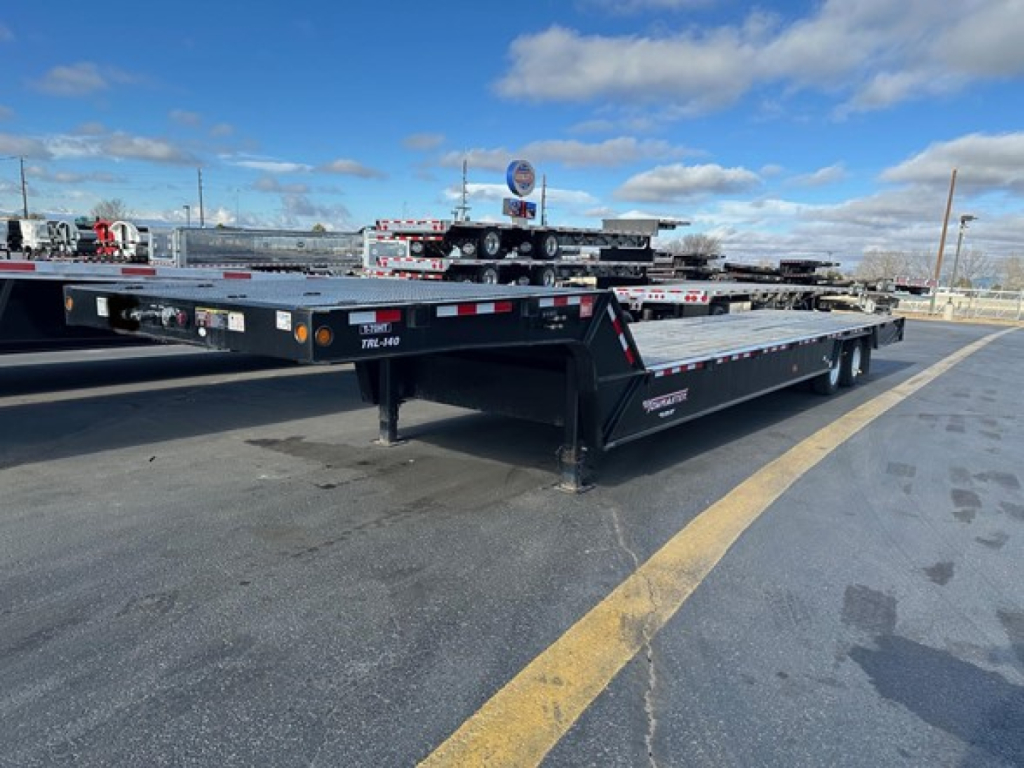
Have trailking traveling axle trailer to sell? List it here to reach thousands of buyers.
About TRAILKING Traveling Axle Trailers
A buyer comparing traveling axle trailers should start with capacity, deck length, loaded deck height, and axle configuration. TRAILKING models in this category are commonly spec'd with tandem axles, air ride or spring suspension, wood or steel decking, stake pockets, and hydraulic tails controlled from the roadside. Tire size, bridge law considerations, and overall trailer weight matter if you are trying to maximize payload while staying legal on your regular routes. Many units are built with heavy-duty main beams, crossmember spacing suited for concentrated equipment loads, and tie-down points placed for mixed fleets that haul more than one machine type.
The main advantage of a traveling axle trailer is operational efficiency. Low approach angle protects low-clearance equipment, and the hydraulic tail makes repeated loading cycles easier on both the trailer and the machine operator. That matters for contractors, rental fleets, municipalities, and equipment dealers that load several times a day. Buyers should pay attention to tail construction, hydraulic system condition, deck wear, suspension type, and how the axle slide mechanism has been maintained. On used units, inspect pin and bushing wear, hydraulic leaks, frame straightness, deck condition, tire wear patterns, and signs of twisting near the rear transition and axle area.
TRAILKING has a strong reputation in construction and equipment hauling, so these trailers tend to attract buyers who want a practical heavy-duty platform with straightforward serviceability. Matching the trailer to the job is more important than chasing maximum capacity on paper. Consider the heaviest machine you haul, the track or tire contact points, how often you load on uneven ground, and whether your drivers need simple controls and fast setup. A well-matched traveling axle trailer can improve loading safety, reduce equipment damage, and keep short-haul and regional moves moving efficiently.
Frequently Asked Questions
What is a traveling axle trailer used for?
A traveling axle trailer is used to haul equipment that benefits from a low loading angle and easy deck access. Common applications include moving skid steers, mini excavators, rollers, forklifts, compact loaders, and other construction or rental fleet machines. The axle assembly moves to help lower the deck for loading and then returns to a road position for transport.
How is a traveling axle trailer different from a detachable gooseneck trailer?
A traveling axle trailer gives you low loading capability without disconnecting the front of the trailer. A detachable gooseneck trailer is often the better choice for taller or heavier equipment and for operations that need front-loading access. A traveling axle trailer is usually faster and simpler for frequent loading cycles involving medium-duty equipment and shorter move distances.
What specs matter most when buying a TRAILKING traveling axle trailer?
The key specs are rated capacity, usable deck length, loaded deck height, axle count, suspension type, tail design, and trailer tare weight. Buyers should also look at deck material, tie-down layout, tire size, and hydraulic control placement. Those details affect payload, ease of loading, driver usability, and how well the trailer fits the machines being hauled.
Are hydraulic tail trailers good for low-clearance equipment?
Yes. Hydraulic tail trailers are often chosen specifically for low-clearance equipment because they reduce the approach angle during loading. That helps prevent scraping and lowers the chance of damaging smaller machines, paving equipment, or attachments that sit close to the ground. The benefit is especially noticeable for fleets that load on uneven jobsite surfaces.
What should I inspect on a used traveling axle trailer?
Focus on the hydraulic tail operation, axle slide mechanism, frame condition, suspension, tires, brakes, deck wear, and all structural welds. Look closely for uneven tire wear, bent crossmembers, hydraulic seepage, and wear in pins, bushings, and pivot points. A careful inspection tells you how the trailer was used and whether it is ready for daily equipment hauling or likely to need immediate shop work.