
Reefer Trailers For Sale in Maryland
Browse reefer trailers for sale in Maryland, including 53-foot refrigerated trailers with Thermo King or Carrier units for cold-chain freight.
Learn more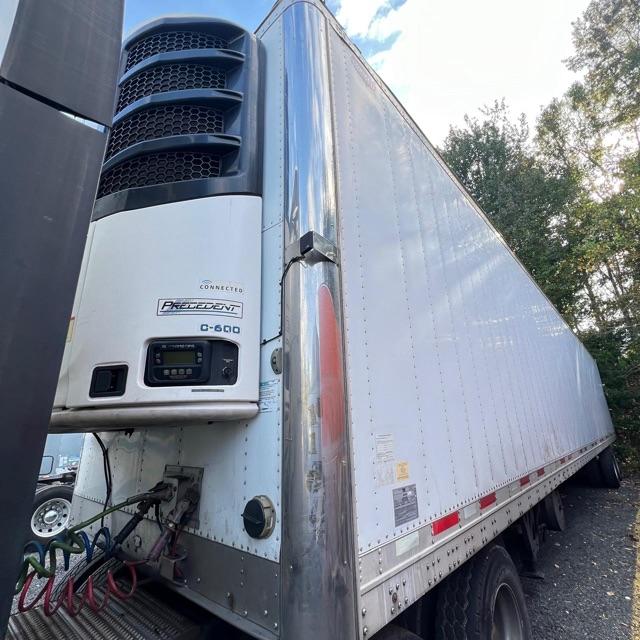
Have reefer trailer to sell? List it here to reach thousands of buyers.
About Reefer Trailers in Maryland
Multi-temp capability is a major spec decision if you haul LTL grocery or mixed frozen and chilled product. Trailers equipped with bulkheads, center chutes, and remote evaporators can carry separate temperature zones, but they add complexity and service cost compared with a straight single-temp reefer. Interior condition is just as important. Look closely at the floor type, scuff liners, interior walls, door seals, and ceiling for signs of impact damage, moisture intrusion, or insulation breakdown. A reefer trailer with a sound box, tight doors, and a clean insulated interior will hold temperature more efficiently and reduce run time on the unit.
For Maryland operations, corrosion and washout history deserve extra attention. Port traffic, coastal humidity, road salt, and heavy distribution use can shorten the life of crossmembers, rear frames, hinges, and wiring if the trailer has not been maintained well. Check the trailer’s overall empty weight if payload matters, since lightweight models can improve revenue on dense freight. Also review suspension type, brake spec, tire condition, wheel ends, and door configuration. Swing doors are still common, but roll-up doors may make sense for route delivery where frequent stops matter more than maximum thermal efficiency.
A good reefer trailer is really a combination of two assets: the insulated trailer and the refrigeration system. Buyers comparing listings should look past year and price and focus on unit hours, service intervals, operating mode, fuel consumption, and whether the trailer has been used in longhaul, regional grocery, or high-cycle delivery work. If the trailer will run under food-grade requirements, washout condition, floor wear, and odor control carry real value. The right spec depends on the lane, the commodity, and how often the trailer will be opened, precooled, and reloaded between stops.
Frequently Asked Questions
What should I check first when buying a used reefer trailer?
Start with the refrigeration unit’s hours, service history, and ability to pull down and hold set temperature under load conditions. After that, inspect the trailer body for insulation integrity, floor wear, door seal condition, interior liner damage, and signs of water intrusion. A reefer trailer can look acceptable from the outside and still have expensive problems in the unit, evaporator, or insulated structure.
Is a multi-temp reefer trailer worth it?
A multi-temp reefer trailer is worth the added cost if you haul mixed frozen and chilled products on the same route, especially in grocery distribution. These trailers use bulkheads, chutes, and separate airflow management to maintain multiple zones. They are more versatile but also more complex to maintain than a single-temp reefer, so buyers should match the specification to their freight mix and stop pattern.
How many hours is a lot for a reefer unit?
High hours are not automatically a deal breaker, but reefer unit hours should be judged alongside maintenance quality and component replacement history. A well-maintained Thermo King or Carrier unit with documented service can still provide reliable operation at higher hours, while a lower-hour unit with poor maintenance can become expensive quickly. Engine condition, compressor performance, start-stop behavior, and alarm history matter more than the hour meter alone.
What trailer features matter most for food-grade reefer work?
Food-grade reefer work usually calls for a clean insulated interior, sound scuff liners, a durable floor with good drainage and airflow characteristics, tight door seals, and a reefer unit that maintains stable temperature. Buyers should also consider odor-free interiors, washout history, and any damage that could trap contamination or affect sanitation. For grocery and retail distribution, multi-temp equipment and center chute configurations may also be important.
Why does reefer trailer weight matter?
Trailer tare weight affects payload capacity, fuel economy, and how efficiently you can load dense commodities. Lightweight reefer trailers can improve revenue on heavier temperature-controlled freight, but buyers should balance weight savings against durability, especially in high-cycle regional service. The best choice depends on commodity density, route length, and how rough the loading environment is.