
Doonan Flatbed Trailers For Sale in Michigan
Browse Doonan flatbed trailers for sale in Michigan. Compare 48- and 53-foot specs, deck construction, axle setups, and load-securing features.
Learn more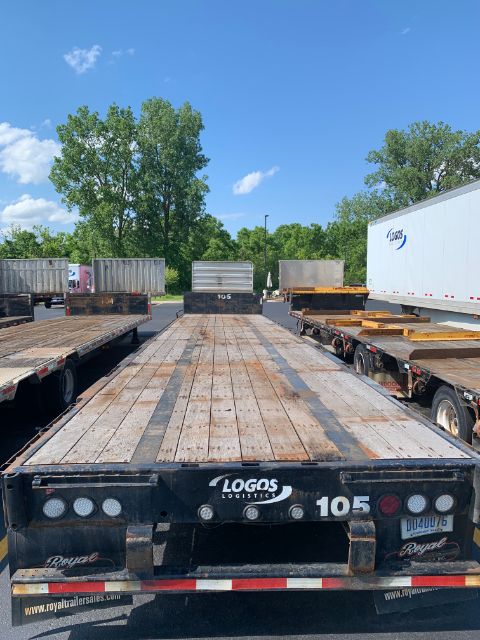
Have doonan flatbed trailer to sell? List it here to reach thousands of buyers.
About Doonan Flatbed Trailers in Michigan
Deck construction matters as much as overall length. On a used Doonan flatbed, check crossmember spacing, deck condition, and the condition of the main frame around high-stress areas. Apitong and other hardwood flooring remains common because it handles concentrated forklift traffic and replacement is manageable over the life of the trailer. Trailer tare weight is also worth comparing unit to unit. A lighter flatbed can improve legal payload, but frame design, deck rating, and overall structural condition are what determine how well the trailer holds up under repeated heavy loading.
Load securement features are a major buying point in this category. Many flatbeds are equipped with stake pockets, rub rails, winches, sliding winches, and chain spool setups, and some buyers specifically look for coil package capability depending on the freight mix. Tire and wheel size can vary, including low-profile setups such as 17.5-inch tires on certain applications, so it is smart to match the running gear to the roads, load weights, and service network you expect to use. Suspension type, brake condition, air system health, and axle alignment all affect operating cost just as much as purchase price.
A Doonan flatbed trailer is a strong fit for fleets and owner-operators that need an open-deck trailer with simple maintenance and broad freight compatibility. For Michigan operations, it also makes sense to inspect corrosion exposure, winter-related wear, and the condition of lights, wiring, and air lines. The best choice is usually the trailer with the right deck length, securement layout, and structural condition for your freight, not just the newest model year.
Frequently Asked Questions
What should I look at first when buying a used Doonan flatbed trailer?
Start with the frame, crossmembers, deck, suspension, brakes, and axle alignment. A flatbed can look acceptable from a distance but still have expensive structural wear in the neck, rear frame, or around concentrated load points. Check the rub rail and stake pockets for damage from repeated securement use, and inspect the floor for rot, cracking, or patched sections that may affect forklift loading and cargo support.
Are Doonan flatbed trailers available in both 48-foot and 53-foot lengths?
Yes. Doonan flatbeds are commonly found in 48-foot and 53-foot lengths, with 102-inch width being standard across much of the market. The right length depends on your freight profile, loading dock access, and legal weight distribution. A 53-foot flatbed gives more deck space for longer freight and mixed loads, while a 48-foot trailer can still be a strong fit for dense commodities and tighter operating areas.
Why do tire size and axle setup matter on a flatbed trailer?
Tire size and axle configuration affect ride height, maintenance cost, parts availability, and how the trailer performs under load. Tandem axle flatbeds are the standard choice for general freight, but tire profile can vary by trailer and application. Low-profile tire setups can change deck height and replacement cost, so buyers should consider service access, expected load weights, and total operating cost before choosing one configuration over another.
What types of freight are commonly hauled on a Doonan flatbed trailer?
Common flatbed freight includes steel, lumber, wallboard, machinery, pipe, bundled material, palletized products, and oversized items that need crane or forklift loading from the side or top. This trailer type is popular because it accepts many load shapes that would not fit easily in a dry van. The tradeoff is that the operator must handle tarping and securement correctly for weather exposure and DOT compliance.
Is a flatbed trailer in Michigan more likely to need corrosion inspection?
Yes. Michigan roads, winter moisture, and road salt can accelerate corrosion on frames, landing gear, brake components, wiring connections, and air system hardware. Buyers should inspect for rust scaling, repairs, seized adjusters, damaged air lines, and electrical issues caused by exposure. A trailer with a solid maintenance history and a clean understructure can be a better value than a newer unit with more corrosion damage.