
New Drop Deck Trailers For Sale in Illinois
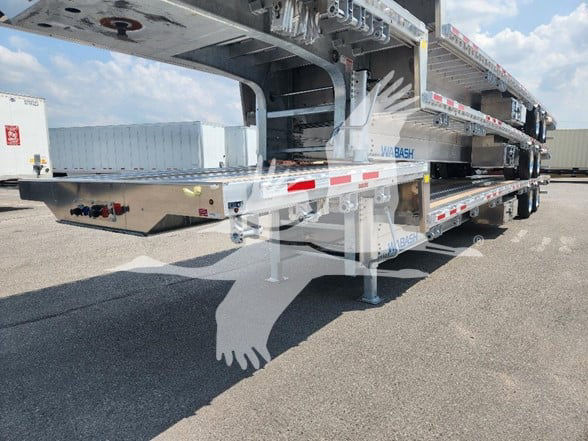
Have new drop deck trailer to sell? List it here to reach thousands of buyers.
New Drop Deck Trailers in Illinois
Spec decisions on a new drop deck often come down to axle configuration, suspension, and securement layout. Air ride is a common choice for more delicate or higher-value freight, and spread axle or sliding rear axle setups can help with bridge law compliance and load placement flexibility. Illinois operators may want to pay close attention to axle spacing, overall length, and routes that cross into neighboring states with different enforcement patterns. On the deck itself, options such as apitong or engineered hardwood flooring, aluminum components for weight savings, steel main beams for durability, and galvanized packages for corrosion resistance can make a real difference in lifecycle cost. Buyers hauling mixed freight should also look closely at sliding winches, multi-position tie-downs, chain slots, toolboxes, and winch track placement.
A good step deck spec is usually driven by cargo profile more than brand preference. Machinery haulers often want ramps, a strong rear transition, and concentrated load capability. General commodity carriers may prioritize low empty weight, wide tie-down spacing, and clean deck access for forklifts. Some new drop deck trailers are configured for specialty work with container twist-lock combinations, rear axle dump valves, tire inflation systems, and scuff-resistant components. Tire size, wheel choice, brake package, lighting, and rear plug configuration all affect serviceability and compatibility with the rest of the fleet.
For a buyer comparing new drop deck trailers for sale in Illinois, the smartest approach is to match the trailer to the freight lanes first, then to the maintenance plan. A lighter combo construction trailer can improve payload, while a heavier-duty all-steel or steel-dominant build may hold up better in severe service. Look at loaded deck height, top deck length, lower deck length, ground clearance, neck design, and the availability of ramps or container locks before focusing on cosmetic options. The right new drop deck trailer should make legal loading easier, securement faster, and long-term operating cost more predictable.
Frequently Asked Questions about New Drop Deck Trailers in Illinois
What is the difference between a drop deck trailer and a flatbed trailer?
A drop deck trailer has two deck levels, an upper deck over the tractor connection area and a lower main deck behind the step, while a flatbed has one continuous deck height. That lower deck is the main advantage because it allows taller freight to move within legal height limits without stepping up to a lowboy. For many loads such as forklifts, palletized equipment, and light machinery, a step deck provides the extra height clearance needed while keeping loading and securement simpler than more specialized trailers.
What length and axle setup are most common on new drop deck trailers?
The most common new drop deck trailer lengths are 48 feet and 53 feet. Tandem axle, spread axle, and sliding rear axle configurations are all common depending on payload needs, bridge law concerns, and the states the trailer will operate in. A spread axle can improve weight distribution and stability, while a sliding rear axle adds flexibility for load placement and compliance. The best setup depends on freight type, lane mix, and how often the trailer crosses state lines.
What features matter most when buying a new drop deck trailer?
The most important features are loaded deck height, lower deck length, weight rating, flooring type, securement layout, and suspension. Buyers should also evaluate concentrated load capacity, ramp compatibility, tool storage, lighting, corrosion protection, and options such as tire inflation systems or axle dump valves. If the trailer will handle mixed freight, multi-position tie-downs, sliding winches, and a well-planned winch track layout can improve loading speed and reduce securement compromises.
Are drop deck trailers good for hauling machinery?
Yes, drop deck trailers are widely used for machinery that can be loaded by ramps and does not need the extremely low deck height of a lowboy. They work well for skid steers, compact excavators, forklifts, generators, lifts, and many industrial units. The key is to confirm machine weight, track or tire width, loading angle, and overall loaded height. Ramp design, rear transition strength, and deck construction are especially important if machinery hauling will be a primary application.
Why do some new drop deck trailers have aluminum and steel construction together?
Combo construction is used to balance durability and payload. Steel main beams and crossmember areas can provide strength where the trailer takes the most stress, while aluminum side components and other sections reduce empty weight. That combination is common on premium drop deck trailers because it helps preserve structural integrity without giving up as much payload capacity. For fleets watching gross weight and fuel efficiency, the material mix can be a meaningful factor in overall operating cost.