
2024 Fontaine Drop Deck Trailers For Sale
Shop 2024 Fontaine drop deck trailers. Compare combo and steel step deck specs, axle setups, deck heights, capacities, and securement features.
Learn more
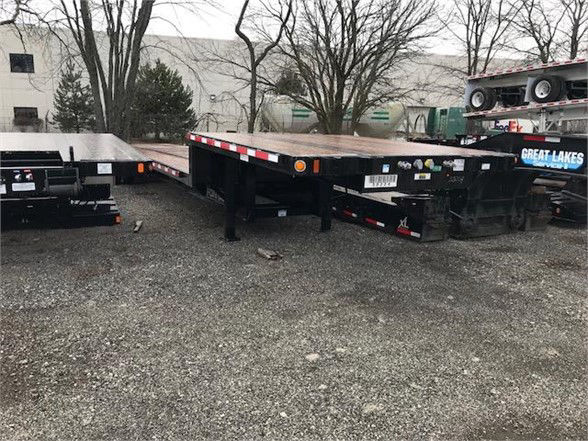
Have 2024 fontaine drop deck trailer to sell? List it here to reach thousands of buyers.
About 2024 Fontaine Drop Deck Trailers
Fontaine drop decks are commonly found in both all-steel and combo designs. A combo trailer uses steel main beams with aluminum flooring, side rails, and crossmembers or other weight-saving components to reduce tare weight without giving up structural strength where it matters most. Buyers comparing 2024 models should pay close attention to trailer weight, beam rating, floor construction, and crossmember spacing. Features such as 130K load-bearing flanges, 1-1/8 inch aluminum flooring, Apitong nailer strips, integrated rub rails, and stake pockets on 24-inch centers are all relevant because they directly affect securement flexibility, durability, and payload efficiency.
Axle layout is another major decision point. Tandem air ride suspensions remain the standard, often with Hendrickson components, dump valves, and ABS systems. A widespread or rear axle slide setup can be especially valuable for operators running in states with stricter bridge and kingpin laws, including California-legal applications. Common specs include an 18-inch kingpin setting, 255/70R22.5 low-profile tires, steel wheels, and full-length winch tracks with sliding winches. If the trailer will spend time under concentrated machinery loads, look closely at concentrated load ratings, main deck height, bulkhead options, and whether the securement package includes chain tie-downs recessed into the side rail, coil package provisions, or additional load securement openings.
For many buyers, the best 2024 Fontaine step deck comes down to matching build style to lane and commodity. A lighter combo configuration can improve payload on general open-deck freight, while a heavier steel specification may make sense for rougher service and repeated equipment hauling. Practical details matter just as much as headline capacity. Landing gear type, spare tire carrier, dock bumpers, mud flap placement, side rail lighting, and toolbox provisions all affect day-to-day usability. When comparing listings, focus on legal payload, securement layout, axle adjustability, and deck dimensions first. Those specs usually tell you faster than anything else whether a drop deck is set up for machinery, steel, construction materials, or mixed freight work.
Frequently Asked Questions
What is the difference between a Fontaine drop deck and a standard flatbed trailer?
A Fontaine drop deck has two deck levels instead of one continuous deck. The upper deck sits over the tractor frame area, and the lower deck drops down behind it to provide additional legal load height. That lower deck is the main reason buyers choose a step deck over a flatbed for taller freight such as equipment, crated machinery, tanks, and taller palletized products that would exceed height limits on a standard flatbed.
What should I look for in a 2024 Fontaine drop deck trailer specification?
Start with overall length, upper and lower deck dimensions, rear deck height, and trailer tare weight. Then review frame construction, beam rating, flooring material, crossmember spacing, and the full securement package, including winch tracks, sliding winches, stake pockets, chain tie-downs, and rub rails. Suspension type, axle spread or slide, kingpin setting, tire size, and concentrated load rating are also critical because they affect bridge compliance, commodity fit, and how the trailer performs in different states and hauling applications.
Are Fontaine combo drop deck trailers better than all-steel models?
Neither is automatically better. A combo Fontaine drop deck is usually preferred when lower trailer weight and higher payload matter most, because aluminum components can cut tare weight while retaining steel strength in key structural areas. An all-steel trailer may be the better fit for severe-duty work, frequent loading with hard equipment, or operations that prioritize repair familiarity and heavy-use durability over every pound of payload savings.
Why does a rear axle slide matter on a Fontaine step deck?
A rear axle slide gives the operator more flexibility in weight distribution and bridge law compliance. It can help balance axle weights for different load lengths and concentrated load positions, and it is especially useful for carriers operating in jurisdictions with stricter dimensional and axle placement rules. For many buyers, a sliding rear axle is a practical feature that expands where and how the trailer can be used without changing the core deck layout.
What freight is a Fontaine drop deck trailer commonly used for?
Fontaine drop deck trailers are commonly used for construction materials, industrial equipment, farm machinery, steel products, crated freight, and mixed open-deck shipments that need more height than a flatbed allows. They are popular with carriers that want one trailer capable of handling both general flatbed-style freight and taller specialized loads. The best fit depends on deck length, deck height, securement layout, and whether the trailer is spec'd for lighter general freight or heavier concentrated loads.