
New Mac Flatbed Trailers For Sale
Shop new Mac flatbed trailers built for payload, corrosion resistance, and hauling versatility with aluminum construction and common securement options.
Have new mac flatbed trailer to sell? List it here to reach thousands of buyers.
New Mac Flatbed Trailers
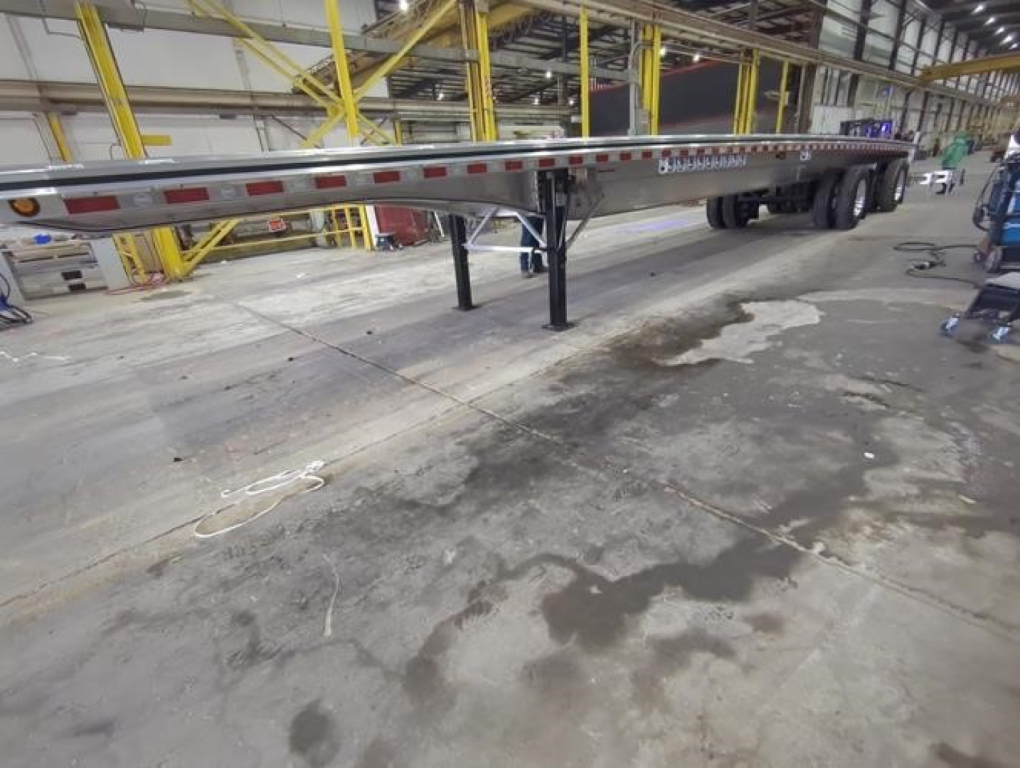
A buyer should pay close attention to deck design and cargo securement layout. Nail strips, stake pockets, pipe spools, sliding winches, and coil package configurations all affect how versatile the trailer will be across different lanes. If the freight mix includes steel coils, plate, or dense industrial freight, a proper coil package is important for securement and load positioning. For more general commodity hauling, the spacing and quantity of winches, pocket layout, and deck durability may matter more day to day than headline specs alone. Air ride suspension is common on premium flatbeds because it helps protect cargo, improves ride quality, and is often preferred for more sensitive loads.
Spread axle configuration is another key decision on a new Mac flatbed trailer. Fixed spread axles are common for stability, bridge law compliance, and weight distribution, but they can be less maneuverable in tight yards than a sliding tandem. Wheel spec, tire size, and GVWR should also be reviewed with the intended operation in mind. Many trailers in this class are set up around an 80,000-pound GVWR and run standard 22.5-inch rubber, with aluminum outside wheels and steel inside wheels as a practical balance of weight savings and durability. Empty weight is worth comparing closely because even small differences can affect revenue over time.
Mac flatbeds are often chosen by buyers who want a straightforward open-deck trailer with premium materials and strong resale appeal. The best spec depends on the freight, the states traveled, and how much flexibility the operation needs. Buyers comparing new flatbed trailers should look beyond length and price and evaluate beam construction, crossmember design, deck surface, securement hardware, axle spacing, and tare weight as a complete package. On a flatbed, the right configuration is the one that handles real cargo efficiently, secures quickly, and stays productive with minimal downtime.
Frequently Asked Questions about New Mac Flatbed Trailers
What are the main advantages of a new Mac flatbed trailer?
A new Mac flatbed trailer is typically chosen for its aluminum construction, lower empty weight, and resistance to corrosion. Those factors can improve legal payload and reduce long-term maintenance compared with heavier trailer designs. Mac also has a strong reputation in the open-deck market, which can support resale value when the trailer is kept in good condition and spec'd for mainstream freight.
What freight is a Mac flatbed trailer commonly used for?
Mac flatbed trailers are commonly used for steel, lumber, machinery, crated freight, building materials, and other loads that require side loading, rear loading, or overhead crane access. A flatbed is one of the most versatile trailer types in commercial trucking, but the exact freight it can handle depends on the deck rating, securement equipment, axle configuration, and whether it includes options such as a coil package or additional winch capacity.
Why does tare weight matter so much on a flatbed trailer?
Tare weight matters because a lighter trailer can allow more cargo to be hauled legally under gross weight limits. On high-density freight, a few hundred pounds of trailer weight can directly affect payload and revenue. Aluminum flatbeds are popular for this reason, but buyers still need to balance low weight against durability, repair considerations, and the demands of the freight they haul most often.
Should I choose a fixed spread axle or a sliding tandem on a flatbed?
A fixed spread axle flatbed can offer good stability and favorable bridge law performance, which is useful for many regional and heavy commodity applications. A sliding tandem can be more maneuverable and may offer more flexibility for weight distribution in certain operations. The better choice depends on route restrictions, customer yards, state bridge rules, and the type of loads being scaled on a regular basis.
What securement features should buyers look for on a new flatbed trailer?
The most useful securement features depend on the freight mix, but buyers should closely evaluate stake pockets, sliding winches, winch track, pipe spools, rub rail design, and nail strips. If steel coils or other concentrated loads are part of the operation, a proper coil package is important. The goal is to have securement points that match actual loading patterns so drivers can tie down cargo efficiently and stay compliant without improvising.