
Manac Drop Deck Trailers For Sale in Colorado
Browse Manac drop deck trailers with combo construction, air ride, winches, and beavertails built for legal-height freight and equipment hauling.
Learn more
Have manac drop deck trailer to sell? List it here to reach thousands of buyers.
About Manac Drop Deck Trailers in Colorado
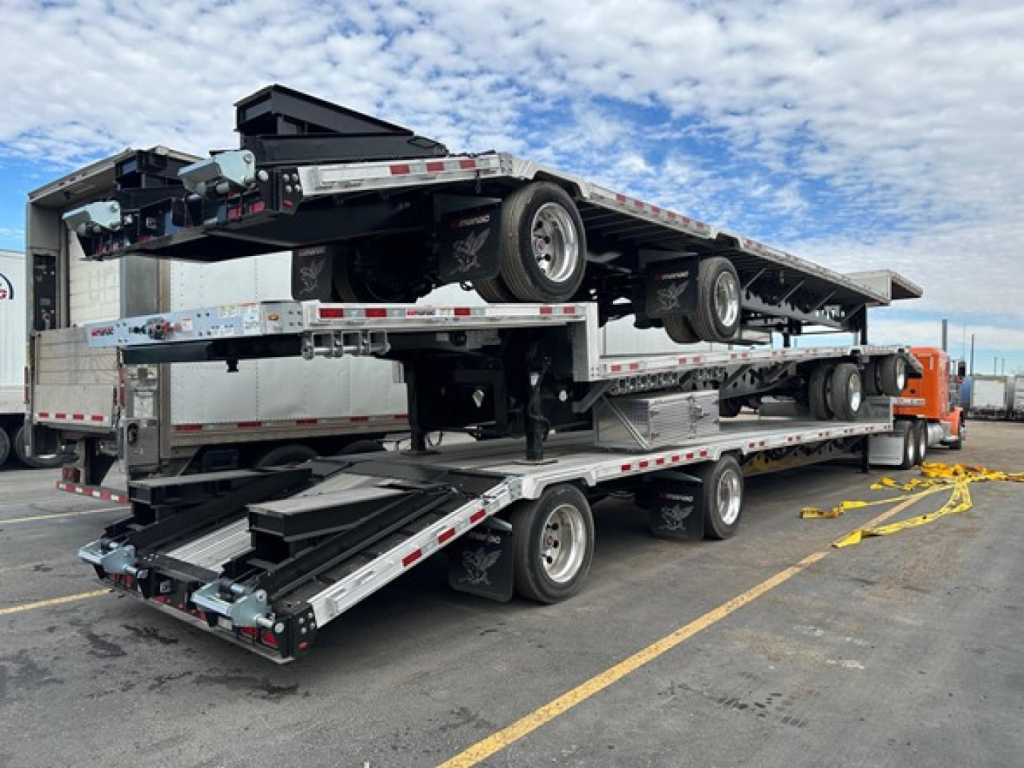
A lot of buyers start with deck layout and construction. Common Manac drop deck specs include a 53-foot by 102-inch overall size, combo construction with steel main beams and aluminum decking or rails, and practical tie-down features like stake pockets, sliding winches, pipe spools, and nail strips. That steel-and-aluminum combination is popular because it balances durability with tare weight, helping operators protect payload while still holding up to repeated forklift traffic and chain securement. If you regularly load machines, a beavertail with flip ramps can save time and make the trailer more versatile for small iron, lifts, and wheeled equipment.
Suspension and axle setup deserve close attention because they affect both legal loading and day-to-day usability. Air ride remains a common choice for ride quality and freight protection, while tandem, spread axle, and rear sliding axle configurations each serve different needs. A fixed spread can help with weight distribution and stability, while a sliding rear axle may be useful when bridge laws or state-specific dimensions come into play, especially on California-legal or multistate operations. Tire size, wheel material, and deck height also matter more than they look on paper. Low-profile 22.5 tires can help preserve loading height, and aluminum outside wheels are often chosen to trim weight without giving up serviceability.
When comparing Manac step deck trailers, focus on the freight mix more than the model name. Check loaded deck length, upper deck length, loaded deck height, ramp style, crossmember spacing, and the condition of the deck surface if you are evaluating a used trailer. Buyers hauling machinery should pay attention to ramp angle, concentrated load rating, and rear frame design. Buyers hauling general commodity freight should look closely at tie-down density, winch track layout, and how easily the trailer can transition between chain and strap work. A well-spec'd Manac drop deck can cover a broad range of legal-height freight while staying lighter and simpler than more specialized heavy-haul equipment.
Frequently Asked Questions
What is the main advantage of a Manac drop deck trailer over a standard flatbed?
The main advantage is lower deck height. A Manac drop deck trailer, also called a step deck, allows you to haul taller freight while staying within legal height limits that would be difficult or impossible on a standard flatbed. That makes it a strong fit for equipment, building materials, and other loads that need open-deck access but do not require a lowboy.
What specs matter most when buying a Manac drop deck trailer?
The most important specs usually include overall length and width, loaded deck height, upper deck length, axle configuration, suspension type, and trailer construction. Buyers should also look at securement equipment such as stake pockets, sliding winches, pipe spools, and nail strips. If machinery hauling is part of the job, beavertails, flip ramps, and concentrated load capability should be near the top of the list.
Are combo Manac drop deck trailers a good choice for payload and durability?
Yes. Combo construction, typically using steel main beams with aluminum decking and rails, is a common choice because it balances strength and weight. Steel provides structural durability in the high-stress areas, while aluminum helps reduce tare weight and preserve payload capacity. For many fleets, that makes a combo drop deck more versatile than an all-steel trailer for mixed freight applications.
How do spread axle and sliding axle Manac drop deck trailers compare?
A spread axle setup can improve weight distribution and stability, and it is often preferred for certain freight profiles and operating conditions. A sliding axle setup gives more flexibility for bridge law compliance and state-to-state legal positioning. The better choice depends on your lanes, commodity mix, and the regulations you deal with most often, especially if you run in states with tighter axle or overall length requirements.
Is a beavertail necessary on a Manac step deck trailer?
A beavertail is not necessary for every operation, but it is valuable if you regularly load wheeled or tracked equipment. The sloped rear section reduces ramp angle and can make loading safer and faster, especially when paired with flip ramps. If your work is mostly palletized or forklift-loaded freight, a straight rear deck may be enough and can preserve usable deck space.