
Cottrell Trailers For Sale
Shop Cottrell car hauler trailers with specs, capacities, axle setups, and features that matter for auto transport performance.
Learn more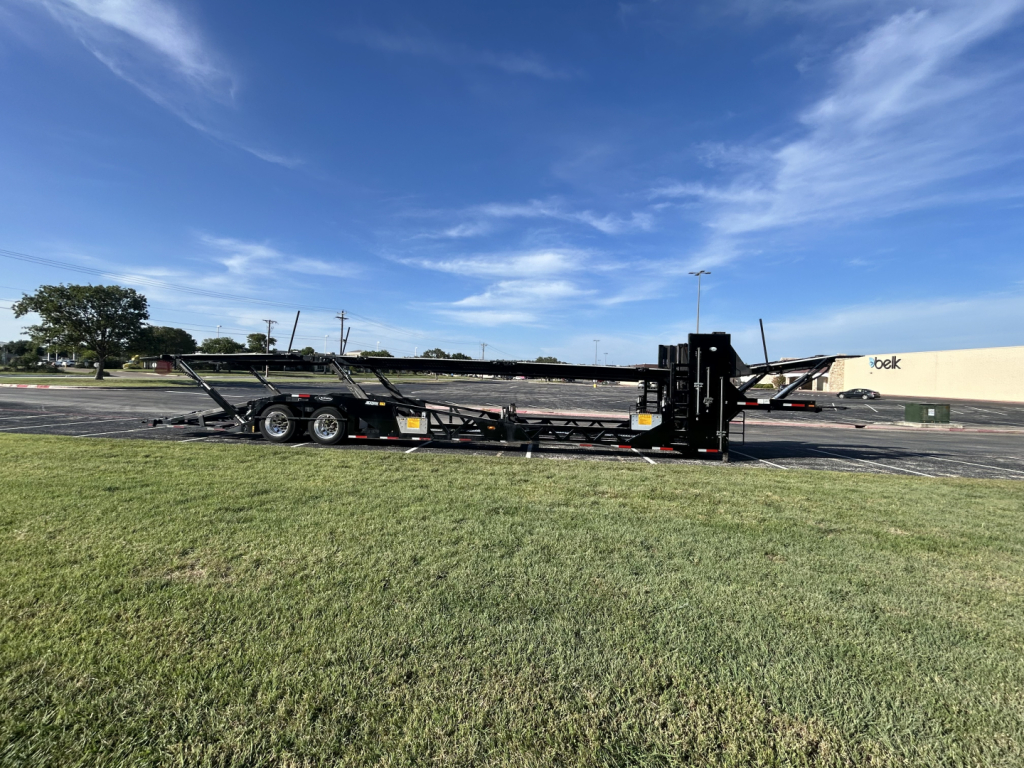
Have cottrell trailer to sell? List it here to reach thousands of buyers.
About Cottrell Trailers
A serious buyer should look closely at ramp construction, hydraulic system condition, and deck articulation points. Aluminum wheels and aluminum ramps help cut tare weight, while self-contained hydraulic systems simplify operation and reduce dependency on truck-mounted components. Tire inflation systems, axle lift or over-lift setups, and truck packages are common options on late-model Cottrell trailers because they improve tire life, turning clearance, and day-to-day usability. Brake condition, drum wear, suspension brand, and tire size also deserve attention because car hauler duty cycles are hard on running gear, especially in urban pickup and delivery work with frequent load angle changes.
Cottrell trailers are built for operators who need efficient load sequencing and dependable securement across mixed vehicle profiles. The real buying decision often comes down to lane type and customer mix. A trailer used in dealer transfers, auction work, and OEM distribution may need different deck flexibility than one focused on larger retail vehicles or regional route density. Ground clearance, approach angles, upper deck height, and how easily the trailer handles low-profile cars can affect loading speed and claim risk. On higher-capacity units, every hydraulic cylinder, pivot, latch, and slide should be evaluated for wear because downtime on a car hauler is expensive and usually felt immediately in lost loads.
For buyers comparing Cottrell trailers against other auto transport brands, the appeal is usually operational familiarity and a design that many drivers already know how to load efficiently. That matters in fleets with multiple drivers and in owner-operator setups where uptime and loading speed directly affect revenue. A well-maintained Cottrell trailer can be a strong fit for long-haul auto transport, regional dealership runs, and auction lanes, provided the frame, decks, hydraulics, and running gear show consistent maintenance. Capacity on paper is important, but real-world fit comes from deck configuration, weight distribution, and how the trailer handles the vehicle mix you move most often.
Frequently Asked Questions
What are Cottrell trailers typically used for?
Cottrell trailers are primarily used for commercial auto transport, including dealership transfers, auction moves, OEM distribution, and regional or long-haul vehicle delivery. Most are configured as car carrier trailers designed to move multiple passenger vehicles in one trip. Their deck systems and loading geometry are built to handle a mix of sedans, crossovers, SUVs, and light trucks, although actual capacity depends on vehicle size, weight, and trailer configuration.
How many vehicles can a Cottrell trailer carry?
Many Cottrell car hauler trailers in this class are built around 7-car to 9-car capacity, with 8-car setups being common on 53-foot high-mount units. Actual vehicle count depends on wheelbase, ride height, roof height, and the share of SUVs or pickups in the load. A trailer may be rated for a certain number of vehicles, but practical capacity is determined by deck spacing, axle weight distribution, and legal height limits once the load is set.
What features should I look for on a used Cottrell trailer?
Focus on hydraulic system performance, ramp and deck condition, cylinder leakage, pivot wear, and the condition of latches and slides. Running gear matters just as much, so inspect brake condition, drum wear, suspension components, tire age, and axle alignment. Useful options on many Cottrell trailers include self-contained hydraulics, aluminum ramps, aluminum wheels, tire inflation systems, and axle lift or over-lift setups that improve maneuverability and reduce tire scrub.
Are Cottrell trailers good for mixed vehicle loads?
Yes, Cottrell trailers are widely chosen for mixed vehicle loads because their deck layouts are designed for flexible positioning and efficient loading sequences. They are especially common in operations moving a combination of cars, crossovers, and light SUVs. The key is matching the specific trailer model and deck configuration to the vehicle mix you haul most often, since larger retail units can reduce the number of spots available compared with compact auction or fleet vehicles.
What matters most when comparing one Cottrell trailer to another?
The most important comparison points are deck configuration, hydraulic condition, structural integrity, and how the trailer fits your normal freight profile. Two trailers with the same nominal length and capacity can perform very differently depending on ramp style, upper deck design, axle setup, and tare weight. Buyers should also consider parts support, ease of driver loading, and whether features like self-contained hydraulics or tire inflation systems align with the operating conditions of their routes.