
Club Car Others For Sale
Shop Club Car other trucking equipment, including utility and Carryall models with diesel power, dump beds, enclosed cabs, and jobsite-ready hauling.
Selling a club car other? List your club car other for sale and reach thousands of commercial buyers.
Club Car Others
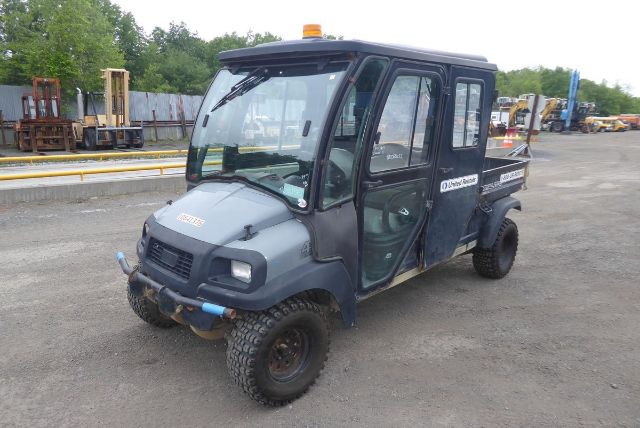
A buyer should focus first on drivetrain, payload needs, and operating environment. Many Club Car utility units are configured with diesel or gas engines, automatic transmissions, and either 2WD or 4WD depending on the model and intended terrain. Diesel-powered units are especially common in fleet and industrial settings because they offer strong low-speed torque, simple serviceability, and long run life. Features like enclosed cabs, heaters, power steering, and bench seating can make a big difference for crews using the vehicle year-round. Tire size, ground clearance, turning radius, and overall dimensions also matter if the vehicle will be working in tight yards, loading areas, or unimproved surfaces.
Dump body configuration is another major decision point. Many Club Car work models are equipped with steel utility beds or manual and hydraulic dump bodies for moving gravel, mulch, tools, parts, waste, and maintenance supplies. Bed dimensions, side height, and dump mechanism capacity directly affect real-world productivity. Buyers should also look at frame condition, suspension wear, brake performance, and hour meter readings, since these units often spend their lives in stop-and-go duty cycles. If the vehicle will be used on mixed surfaces or in wet conditions, 4WD capability and tire selection become more important than top speed.
For buyers comparing listings, the value of a Club Car utility vehicle usually comes down to condition, task-specific setup, and ease of ownership. A well-kept Carryall or similar Club Car platform can be a practical fleet tool for moving people, equipment, and light materials with lower operating costs than a pickup or larger off-road unit. Also known as utility vehicles or work UTV-style carts in some operations, these machines are best suited for private property and controlled-site use rather than over-the-road transport. The strongest listings tend to be the ones with clear service history, functional dump equipment, solid tires, and cab or seating options matched to the job.
Frequently Asked Questions about Club Car Others
What is Club Car other trucking equipment typically used for?
Club Car equipment in this category is usually used for property maintenance, yard hauling, crew transport, and short-distance material movement on private sites. Common applications include warehouses, truck terminals, industrial campuses, farms, municipal departments, and construction support. These vehicles are designed for low-speed work where maneuverability and utility matter more than highway capability.
Is a Club Car Carryall considered a truck?
A Club Car Carryall is better described as a commercial utility vehicle than a highway truck. It fills a similar role to a compact work truck for on-site operations by carrying tools, parts, light materials, and personnel, but it is generally intended for off-road or private-property use. Buyers should verify local rules if they need any form of street use, registration, or site compliance.
What should I check when buying a used Club Car utility vehicle?
The most important checks are engine condition, transmission operation, steering response, brake function, tire wear, suspension condition, and bed or dump body performance. Hour meter readings are useful, but overall maintenance history and visible wear often tell more about remaining life. On enclosed-cab units, inspect doors, latches, glass, heat, and electrical accessories, especially if the vehicle has seen year-round outdoor service.
Are diesel Club Car models a good choice for fleet use?
Diesel Club Car models are often a strong fit for fleet environments because they provide good low-speed pulling power, efficient fuel use, and straightforward maintenance. They are well suited for repetitive hauling and utility work in industrial settings. The right choice still depends on duty cycle, site conditions, noise requirements, and technician familiarity with the engine platform.
How important are 4WD and dump body features on a Club Car?
Those features are highly important if the vehicle will operate on loose ground, wet surfaces, gravel, or uneven terrain, or if it will regularly move bulk material. A 4WD setup improves traction and stability in demanding conditions, while a dump body reduces labor for unloading soil, debris, or maintenance materials. For paved facilities with lighter loads, a 2WD unit with a standard utility bed may be sufficient and more cost-effective.