
Used Freightliner Chipper Trucks For Sale
Shop used Freightliner chipper trucks with durable chip boxes, optimized payloads, and PTO hoists. Compare M2 specs, body materials, and axle packages
Learn more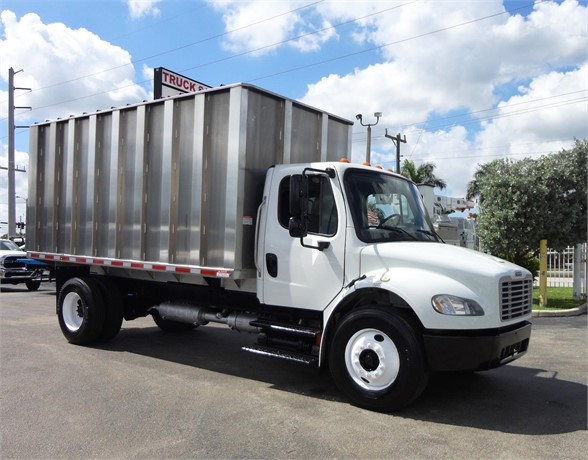
Have used freightliner chipper truck to sell? List it here to reach thousands of buyers.
About Used Freightliner Chipper Trucks
Tare weight drives payload and productivity. Aluminum chip boxes cut 800 to 1,200 pounds versus steel and will not rust, yet high tensile steel bodies tolerate rough loading better and typically offer higher point load resistance at the floor and tailgate. A UHMW liner reduces hang up, protects coatings, and speeds unloading, with a modest weight penalty. Verify axle ratings and wheelbase to keep the center of gravity forward enough for legal axle splits when the box is heaped, and account for crew tools, pole racks, and side boxes that shift weight. Under CDL 26,000 GVWR M2 builds balance maneuverability with payload, while tandem 6x4 packages raise legal capacity and stability on soft ground.
Thermal integrity matters in stop and go forestry routes. Extended high idle for chipper work and PTO operation for hoists or aerial devices add heat to the transmission, hydraulics, and aftertreatment. Favor Allison automatics with PTO provision, adequate cooler capacity, and a healthy fan drive, and confirm charge air cooler and radiator fins are clean. DPF active regen produces exhaust heat, so check tailpipe routing, heat shields near the chip box and tarp, and proper clearance behind the cab to maintain airflow. Hydraulic reservoirs sized for the pump flow with return filtration help control fluid temperature and extend component life.
Corrosion resistance protects residual value. Wet chips carry acids and fines that collect along the floor to side seam, at crossmember feet, and under the doghouse, so sealed seams, zinc rich primer, powder coat, or e coat make a difference. Stainless or galvanneal hinges and latches, sealed LED lighting, and weather resistant harness connectors reduce downtime. Inspect hoist cylinders for chrome pitting, pin bosses for elongation, tailgate hardware for alignment, and body mounts for crushed isolators. Safety and uptime features such as body props, interlocked PTO controls, non slip ladders, strobes, and backup alarms are worth seeking. Match box capacity, body material, suspension, axle ratio, and wheelbase to your chip density, average haul distance, and the streets you run to keep payload legal and turnaround times tight.
Frequently Asked Questions
What body material and floor thickness work best on a Freightliner chipper truck body?
High tensile steel floors at 3/16 inch or 1/4 inch with 12 inch crossmember spacing handle impact and abrasion well, especially if you sometimes load short log sections with the chips. Aluminum bodies save 800 to 1,200 pounds and resist rust, but they benefit from a wear liner to protect the floor from gouging. A UHMW liner reduces hang up and speeds unloading, and it also shields paint from wet chip acids.
How much payload can an under CDL Freightliner M2 106 chipper truck carry?
A 26,000 GVWR M2 106 with a 12 to 16 yard chip box typically scales 14,500 to 17,000 pounds empty, depending on body material, toolboxes, and crew gear, leaving roughly 9,000 to 11,500 pounds for payload. Chip density varies widely with species and moisture, about 350 to 700 pounds per cubic yard, so capacity is usually volume limited when chips are dry and weight limited when chips are green or rain soaked.
What should I inspect on the dump body and hoist when evaluating a used chipper truck?
Check the floor to side seams for rust jacking, the rear hinge pins and bosses for wear, and the hoist cylinder for leaks or chrome pitting. Confirm the dump angle reaches at least 45 degrees, the body prop locks securely, and the subframe to chassis mounts are tight with intact isolators. Inspect tailgate latches, seals, and hinges, the chip hood or roof screens, tarp condition, and wiring for lights and work lamps. Look for cracks around the doghouse and hoist saddle, and verify the PTO engages smoothly at proper engine speed.
How do emissions systems and heat management affect chipper truck performance on stop and go routes?
Frequent short trips and extended idling can delay passive DPF regeneration, so a truck with a healthy cooling stack, functional fan drive, and correct regen strategy is important. Verify heat shields near the exhaust and tarp, tailpipe routing away from the box, and adequate clearance behind the cab for airflow. Allison transmissions with PTO provision and auxiliary coolers, plus a hydraulic reservoir sized to the pump with return filtration, help control temperatures during long idle or PTO periods.
Which drivetrain and suspension specs suit urban forestry work on a Freightliner chassis?
Allison 2500 or 3000 series automatics pair well with Cummins B6.7 or L9 and Detroit DD5 or DD8 power, offering smooth low speed control. Ratios in the mid 5s to low 6s on 22.5 inch tires improve launch with a full box, and spring or rubber block rear suspensions add roll stiffness for stability while dumping. A 4x2 under CDL is nimble and lighter, while a 6x4 increases legal payload and traction on soft jobsites. Aim for a wheelbase that centers the loaded box over the axles without compromising curb to curb turning.}]}