
Kenworth Conventional Daycab Trucks For Sale in Oklahoma
Browse Kenworth conventional daycab trucks in Oklahoma. Compare T800 and similar specs for vocational, regional, and heavy-haul applications.
Learn more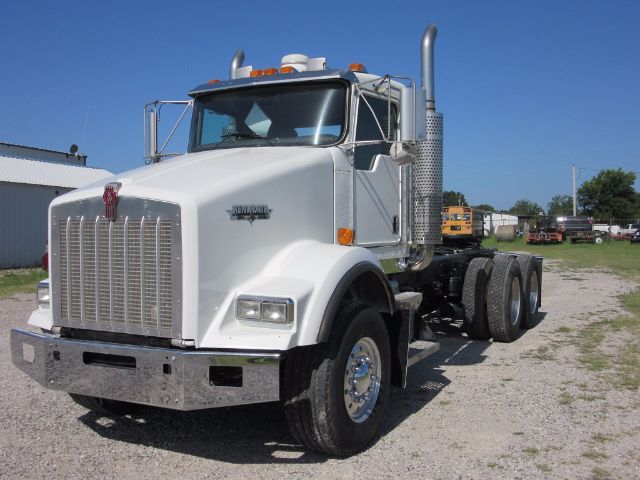
Have kenworth conventional daycab truck to sell? List it here to reach thousands of buyers.
About Kenworth Conventional Daycab Trucks in Oklahoma
The spec sheet matters more than the badge in this category. Buyers typically start with wheelbase, front axle rating, rear axle rating, frame configuration, and gearing. Oklahoma operators often look closely at double frame construction, locking differentials, and suspension setup because many daycabs here are used in oilfield support, construction, lowboy pulling, and severe-service applications. A truck with a 20,000 lb front axle, heavy rears, and a shorter wheelbase can be set up very differently from a highway daycab built for regional van or hopper work. Rear ratios such as 4.10 or 4.30 are common in vocational and heavy-haul specs, while faster ratios are usually better suited to fuel-conscious highway use. Transmission choice also tells you a lot. Fuller 10-speed, 13-speed, and 18-speed manuals remain popular in older Kenworth daycabs because they give the driver better control in off-road or loaded starts.
Engine selection is another key buying point. Older Kenworth daycabs in this class are often powered by Caterpillar, Cummins, or PACCAR engines, and each has a different service profile, emissions history, and buyer preference in the used market. A Cat C15 ACERT, for example, still attracts attention from buyers who want strong horsepower and torque for heavier applications, but maintenance records and overall condition should carry more weight than brand loyalty alone. Look at horsepower and torque in relation to the truck's intended work, then verify cooling system condition, engine brake operation, transmission model, differential setup, tire size, and frame integrity. On used vocational daycabs, steer axle wear, suspension bushings, crossmember condition, and signs of frame repairs are worth a careful inspection.
A Kenworth conventional daycab is usually bought for a specific job, so matching the truck to the duty cycle is the real decision. For local and regional hauling, focus on fuel economy, wheelbase, and driver comfort features like air ride, air conditioning, tilt and telescopic steering, and visibility. For heavier vocational use, prioritize axle ratings, locker configuration, pusher or tag compatibility, and the condition of the frame, clutch, and driveline. Kenworth's long-standing reputation for cab durability, parts support, and vocational configurability keeps these trucks relevant across a wide range of Oklahoma operations, from aggregate and farm support to equipment hauling and municipal work.
Frequently Asked Questions
What is a Kenworth conventional daycab truck best used for?
A Kenworth conventional daycab truck is best suited for local, regional, and vocational applications where a sleeper is not needed. Common uses include dump work, equipment hauling, regional freight, oilfield support, hopper pulling, municipal service, and terminal-to-terminal runs. The daycab layout reduces overall length and weight, which helps maneuverability and can improve payload or body-upfit flexibility compared with a sleeper tractor.
Which Kenworth daycab models are most common on the used market?
The most common Kenworth conventional daycab models on the used market include the T800, W900 daycab, and T680 daycab. The T800 is especially common in vocational and severe-service work because of its rugged chassis options and axle configurations. The W900 daycab is often chosen for heavy-haul or owner-operator applications, while the T680 daycab is more focused on regional highway efficiency and driver comfort.
What specs matter most when buying a used Kenworth daycab?
The most important specs are wheelbase, front and rear axle ratings, frame type, rear ratio, suspension, engine horsepower, torque, and transmission model. Buyers should also check whether the truck has locking differentials, a double frame, PTO capability, and the right tire and wheel setup for the intended job. On a used truck, service history, engine hours if available, driveline condition, and evidence of prior frame or suspension repairs are just as important as the published specs.
Is a higher rear axle ratio better on a Kenworth daycab?
A higher numerical rear axle ratio, such as 4.30, generally provides better low-speed pulling power and startability, which is useful for heavy loads, off-road use, and vocational work. It can also raise engine rpm at highway speed, which may reduce fuel economy compared with a faster highway ratio. The right ratio depends on the trailer weight, terrain, transmission, tire size, and how much of the truck's work is local versus highway miles.
Are older Kenworth daycabs with Caterpillar engines still desirable?
Yes, many older Kenworth daycabs with Caterpillar engines remain desirable, especially in heavy-haul and vocational applications where buyers value torque, durability, and driver familiarity with manual drivetrains. A Cat-powered truck can still be a strong buy if the maintenance history is solid and the engine, cooling system, transmission, and rear ends have been properly maintained. Condition and application fit should come before engine brand alone.