
New Mack Water Trucks For Sale in Montana
Shop new Mack water trucks for dust control, road work, site cleanup, and compaction with durable chassis options built for demanding jobs.
Learn more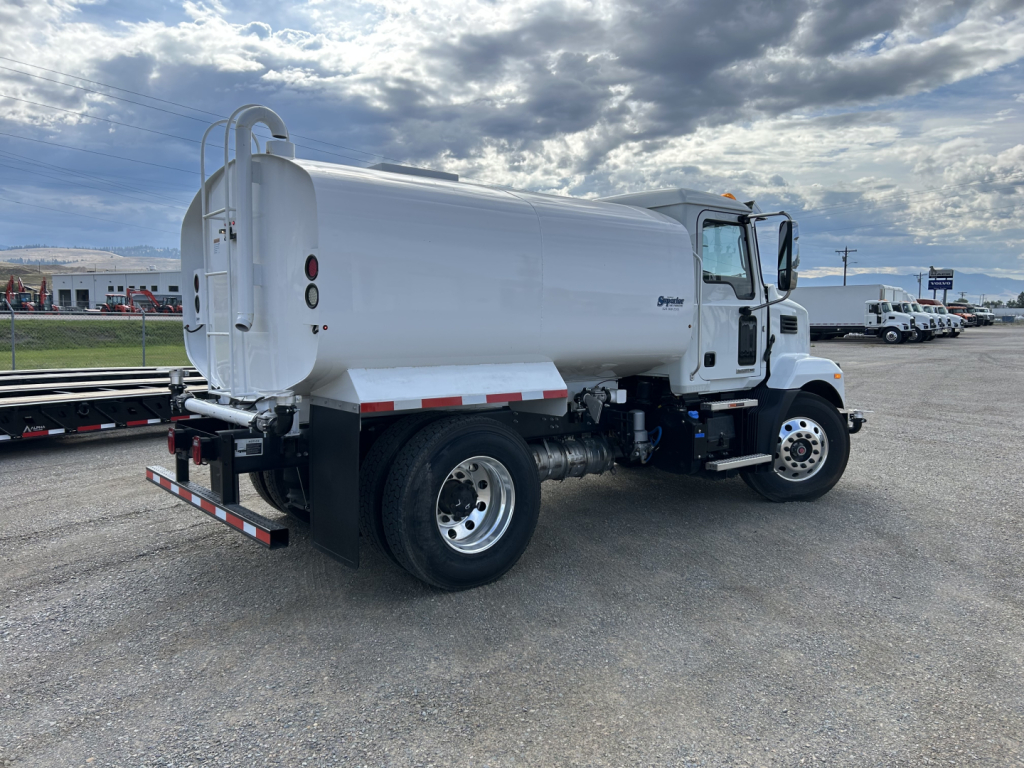
Have new mack water truck to sell? List it here to reach thousands of buyers.
About New Mack Water Trucks in Montana
A buyer should start with tank size and fill method. Many water trucks in this class are spec'd around 2,000 to 4,000 gallons, with 2,500 gallons being a common setup for medium-duty applications. That size works well for municipalities, construction crews, aggregate yards, and paving support without pushing the truck into an unnecessarily large footprint. Look closely at baffled tank construction, corrosion-resistant materials, rear and side spray nozzles, hose reel configuration, pump output, and whether the unit allows both hydrant pressure fill and draft fill from ponds or tanks. If the truck will spend time on unpaved haul roads, ground clearance, rear suspension spec, tire choice, and frame reinforcement matter just as much as spray coverage.
On a Mack chassis, buyers often focus on GVWR, wheelbase, engine output, transmission choice, and cab layout. A model such as the Mack MD7 is commonly used for vocational body applications because it offers a practical balance of payload capacity, maneuverability, and driver visibility. For water service, the right wheelbase has to match the tank and plumbing package so weight stays balanced across the axles when the tank is full and when it is partially loaded. PTO integration, body builder compatibility, and access to controls inside or outside the cab can make a noticeable difference in day-to-day operation, especially for crews that cycle through repeated fill, spray, and travel intervals.
The best new Mack water truck setup depends on where and how it will work. Municipal users may prioritize reliable spray patterns, easy operator training, and simple maintenance access. Construction and mining support operations may need heavier-duty pumps, better off-road durability, and more aggressive tires for unstable surfaces. In dry western states, buyers also tend to value dependable suction capability, freeze-conscious plumbing layouts, and tank systems that are easy to winterize. A well-spec'd water truck is not just a tank on a chassis. It is a purpose-built vocational truck designed to deliver consistent water volume, safe axle loading, and dependable performance in demanding field conditions.
Frequently Asked Questions
What size tank is typical for a new Mack water truck?
A common tank size for a medium-duty Mack water truck is around 2,500 gallons, although actual capacity depends on the chassis GVWR, axle ratings, and intended application. That size is popular because it gives useful water volume for dust control and compaction support without creating an oversized truck for tighter jobsites or municipal routes. Buyers should confirm that the tank, pump, and full water load are properly matched to the truck's weight ratings and wheelbase.
What is a Mack water truck used for?
A Mack water truck is commonly used for dust suppression on construction sites, gravel roads, mines, and aggregate operations, along with soil conditioning, compaction support, and general washdown or cleanup work. Some are also used by municipalities for street maintenance, landscaping support, and fire control standby in remote areas. The exact application determines the right tank size, nozzle package, pump capacity, and chassis spec.
What features matter most on a water truck for Montana conditions?
For Montana use, buyers usually pay close attention to cold-weather durability, off-pavement traction, and the ability to operate over long distances between service points. Freeze protection for plumbing, easy winterization, reliable draft-fill capability, and a durable baffled tank are especially important. Tire selection, suspension setup, and ground clearance also matter if the truck will work on ranch roads, energy sites, gravel pits, or undeveloped construction access routes.
Is a Mack MD7 a good chassis for a water truck body?
The Mack MD7 is a practical choice for many water truck applications because it offers medium-duty capacity, vocational body compatibility, and a manageable overall size for both public-sector and contractor use. It is well suited for moderate-capacity tanks where maneuverability and driver visibility are important. The final suitability depends on the completed truck's body spec, axle ratings, wheelbase, PTO setup, and how much off-road use the unit will see.
What should I check before buying a new water truck?
Start with the complete build sheet, not just the chassis model. Confirm tank capacity, tank material, baffling, nozzle layout, pump type, fill options, hose reel setup, and control placement. Then verify that axle ratings, wheelbase, PTO provision, and suspension are correctly matched to the water body. A water truck performs best when the chassis and tank system are engineered together, with attention to weight distribution, service access, and the actual terrain where the truck will work.