
Conventional Daycab Trucks For Sale in Washington
Browse conventional daycab trucks built for regional hauling, port work, and local freight with spec guidance on wheelbase, axle ratings, and powertrain.
Learn more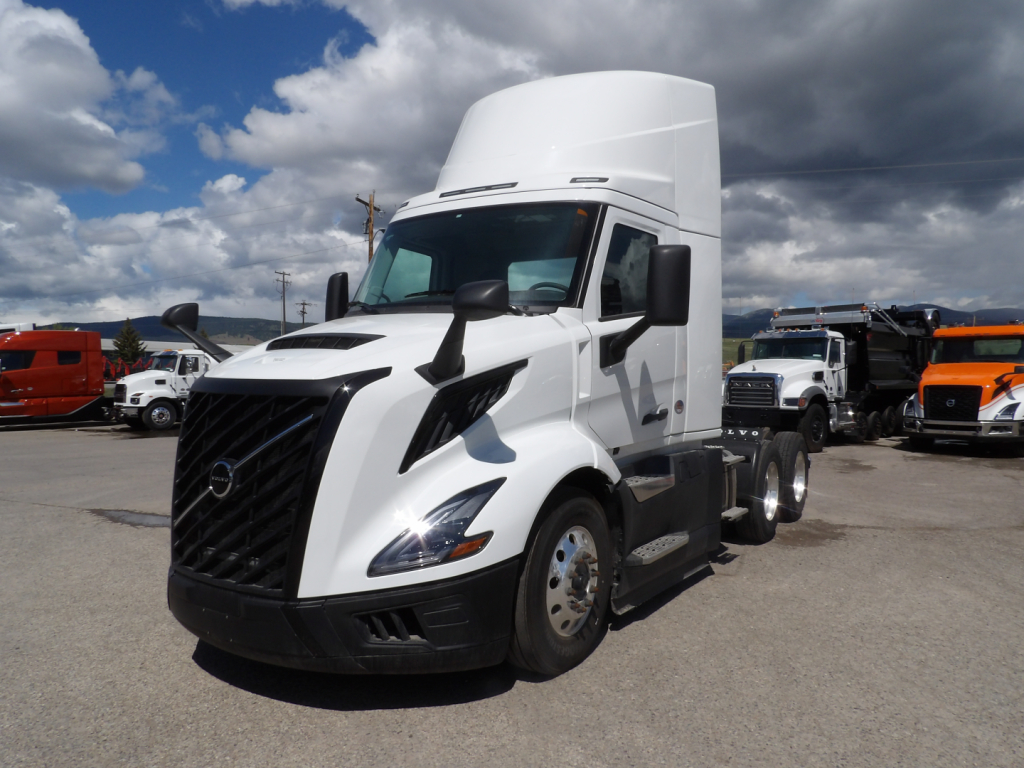
Showing 13 to 13 of 13 results
Have conventional daycab truck to sell? List it here to reach thousands of buyers.
About Conventional Daycab Trucks in Washington
The most important spec decision usually starts with the axle and wheelbase layout. Tandem axle daycabs are common for general freight and regional tractor work, while tri-axle setups and pusher axles show up in heavier vocational or higher GCW applications. Wheelbases around 185 to 205 inches are popular when maneuverability is a priority, while longer wheelbases can support larger fuel capacity, PTO equipment, or specific fifth wheel placement requirements. Buyers should pay attention to front axle ratings around 12,000 to 13,200 pounds, rear axle ratings near 40,000 pounds, suspension type, and rear axle ratio. Those details affect bridge compliance, trailer compatibility, low-speed launch, and cruise RPM on highway segments.
Powertrain specs on modern conventional daycabs often fall in the 425 to 515 horsepower range, commonly paired with automated manual transmissions such as Volvo I-Shift or Mack mDrive in 12- or 13-speed configurations. For stop-and-go work, crawler gears, hill start assist, differential locks, and engine brakes can make a real difference in drivability and clutch life, especially when operating on grades, job sites, or crowded port ramps. Direct drive versus overdrive transmission selection should match the rear ratio and average road speed. Disc brakes, collision mitigation systems, blind spot monitoring, backup alarms, tire pressure monitoring, and lane support technology are increasingly common and worth evaluating if driver retention and risk reduction are part of the buying decision.
A well-matched conventional daycab should also be reviewed for fifth wheel type, slide travel, fuel tank capacity, PTO provisions, and cab comfort. Dual 100-gallon tanks may matter for regional range, while an air slide fifth wheel helps fleets that pull mixed trailer lengths or need kingpin setting flexibility. Air ride suspensions and air ride seats improve driver comfort on rougher routes, and interior trim can matter more than many buyers expect in trucks that spend full shifts in heavy traffic. Also known simply as a day cab tractor, this equipment class is built to work hard in dense freight environments where easy ingress, lower tare weight, and efficient day-to-day operation are more valuable than sleeper space.
Frequently Asked Questions
What is a conventional daycab truck used for?
A conventional daycab truck is used for local and regional tractor work where the driver returns the same day and does not need a sleeper berth. Common applications include port drayage, distribution, construction hauling, tanker work, intermodal moves, and dedicated short-haul freight. The conventional hood design provides easier engine access than cabover models and remains the dominant layout for North American Class 8 tractors.
How do I choose the right wheelbase for a daycab?
Wheelbase should match the trailer type, turning requirements, fuel capacity, and any PTO or auxiliary equipment needs. Shorter wheelbases are easier to maneuver in terminals, city streets, and tight yards, while longer wheelbases can improve ride quality and make room for larger tanks or specialized chassis equipment. Fifth wheel placement and kingpin setting also matter because they affect axle loading and legal bridge compliance.
What horsepower is typical for a conventional daycab?
Many conventional daycab tractors are spec'd between 425 and 515 horsepower, though the right rating depends on gross combination weight, terrain, and duty cycle. A regional freight tractor on mostly highway lanes may be efficient with a mid-400 horsepower engine, while heavier loads, mountain routes, and stop-start work can justify 500 horsepower or more. Engine torque, rear axle ratio, and transmission gearing are just as important as peak horsepower when evaluating performance.
Is an automated manual transmission a good choice in a daycab truck?
For many fleets, an automated manual transmission is now the preferred choice in a daycab because it reduces driver fatigue, improves consistency, and can help protect the driveline in stop-and-go service. Features such as crawler gears, multi-speed reverse, hill start assist, and drive mode selection can be especially useful in port operations, steep grades, and low-speed yard work. The transmission should still be matched carefully to axle ratio, expected road speed, and load profile.
What features matter most on a daycab for Washington operations?
In Washington, buyers often prioritize powertrain specs that can handle mixed terrain, wet-weather traction aids, strong braking performance, and safety technology for urban and port environments. Differential locks, engine brakes, disc brakes, collision mitigation, blind spot monitoring, and backup systems are all practical features. Fuel capacity, corrosion resistance, suspension design, and cab comfort also matter because trucks may see a mix of interstate mileage, coastal weather, and heavy terminal traffic.