
New International Chipper Trucks For Sale in Florida
Shop new International chipper trucks for tree care and landscape work, with aluminum chip bodies, PTO hoists, and CDL-friendly specs.
Learn more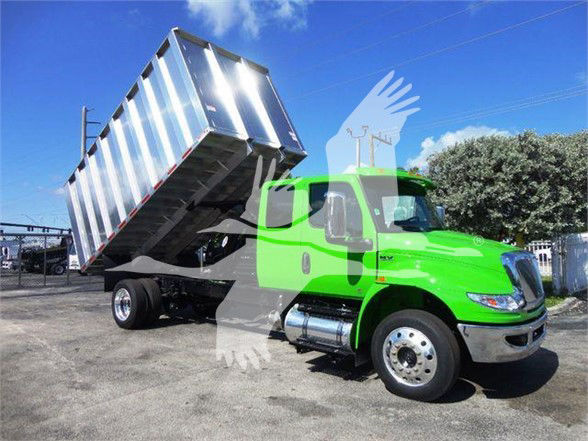
Have new international chipper truck to sell? List it here to reach thousands of buyers.
About New International Chipper Trucks in Florida
The body is what separates a chipper truck from a standard dump truck. Most setups use a high-sided chip box or chipper dump body, often in aluminum to save weight and resist corrosion in humid, coastal environments. Common body lengths run around 12 to 16 feet, with tall sidewalls, a full bulkhead, roof structure, and rear barn doors for chip containment. Buyers should pay attention to floor thickness, crossmember spacing, long beam construction, and hoist capacity, because these details affect how well the body handles repetitive loading from a chipper and the constant vibration of tree debris, logs, and brush. A hitch and trailer plug are also common when the truck will tow a wood chipper behind the body.
On the chassis side, key buying points include engine rating, transmission choice, axle capacity, suspension, brake type, and cab layout. Many new International chipper trucks are equipped with Cummins diesel power in the 260 to 300 hp range and an Allison automatic transmission, a combination that suits urban work and frequent PTO use. Air brakes, air ride suspension, and low-profile 22.5 tires are common on more fully appointed units, while extended cabs are popular for crews that need extra inside storage or occasional passenger capacity. For tree companies and municipalities, visibility, turning radius, mirror spec, and ease of cab entry matter just as much as horsepower.
A good chipper truck spec is driven by material type and route pattern. If the truck is carrying mostly chips and brush, a lightweight aluminum body can improve legal payload and reduce corrosion concerns. If the operation regularly loads heavier wood, stumps, or dense storm debris, body structure and hoist design become more important than appearance. Buyers also compare PTO engagement style, tarp or roof design, rear door configuration, and how easily the body can be cleaned out at the end of the day. Also known as a chip box truck, arborist truck, or landscape dump truck, this category is designed around fast loading, safe containment, and efficient dumping for high-cycle vocational work.
Frequently Asked Questions
What is a chipper truck used for?
A chipper truck is used to haul wood chips, brush, leaves, and other tree-service debris from pruning, removals, and storm cleanup. It typically works with a tow-behind wood chipper, carrying the discharged material in a high-sided enclosed body while also providing dump capability at the disposal site. Many fleets also use chipper trucks for landscape debris, municipal right-of-way maintenance, and seasonal cleanup work.
Why do many buyers choose an aluminum chipper body?
Aluminum chipper bodies are popular because they reduce tare weight and resist rust, which is especially valuable in humid and coastal regions like Florida. Lower body weight can translate into more usable payload when hauling chips and brush, and corrosion resistance helps preserve the body over years of outdoor storage and wash-down cycles. The tradeoff is that body design and reinforcement still matter if the truck will see heavier debris or rough loading practices.
Can a new International chipper truck be spec'd to avoid CDL requirements?
Yes, many chipper trucks are built at a 26,000 lb. GVWR specifically to stay within a common non-CDL threshold, although licensing requirements depend on the full vehicle and trailer combination, local regulations, and how the truck is used. This is a common target for tree and landscape companies that want medium-duty capability without moving every driver into a CDL position. Buyers should still verify state and federal requirements before putting a unit into service.
What chassis features matter most on a chipper truck?
The most important chassis features are GVWR, wheelbase, engine horsepower and torque, transmission type, axle ratings, suspension, brake system, and cab configuration. In daily tree-service work, automatic transmissions are valued for ease of operation, while air brakes and air ride suspension can improve control and driver comfort. Turning radius, mirror visibility, and access to PTO controls also matter because these trucks spend a lot of time in neighborhoods, job sites, and tight municipal routes.
What should a buyer inspect on the chip body itself?
The chip body should be evaluated for wall height, roof construction, bulkhead strength, floor thickness, crossmember spacing, rear door design, and hoist specification. These details determine how well the body contains loose chips, handles vibration, and survives repeated dump cycles. It is also smart to confirm hitch capacity, trailer plug type, lighting compliance, and how the PTO and hydraulic system are matched to the body, especially if the truck will tow a chipper every day.