
New International Chipper Trucks For Sale
Shop new International chipper trucks built for arborist, tree care, and landscape work with dump bodies, PTO systems, and commercial-duty specs.
Learn more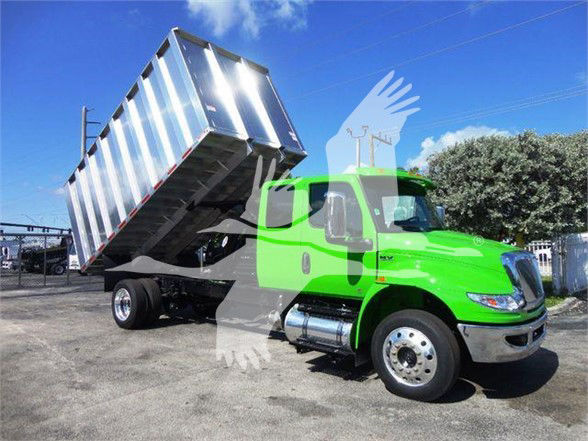
Have new international chipper truck to sell? List it here to reach thousands of buyers.
About New International Chipper Trucks
The body setup matters as much as the chassis. A typical chipper truck body uses tall smooth side walls, a full roof, rear barn doors, and a heavy bulkhead to contain loose material and improve loading efficiency from the chipper discharge chute. Aluminum bodies are common because they reduce empty weight and resist corrosion, while steel substructures and crossmembers help support repeated dumping cycles. Buyers should pay attention to body length, side height, floor thickness, crossmember spacing, hoist specification, and rear door design. A hitch plate with trailer plug is also a practical requirement if the truck will regularly tow a chipper or mini skid.
On the chassis side, International medium-duty trucks are popular in municipal and contractor fleets because they offer straightforward serviceability, good cab ergonomics, and strong vocational spec flexibility. Common configurations in this class include single-axle 4x2 layouts, automatic Allison transmissions, diesel power in the 260 to 300 horsepower range, air brakes, and GVWR ratings around 25,999 to 26,000 pounds for CDL-sensitive applications. Buyers comparing new units should look at fuel tank capacity, cab style, suspension choice, turning radius, and PTO integration. Extended cab layouts are especially useful for crews that need extra interior storage or seating without stepping up to a larger truck.
A good chipper truck spec is matched to route density, dump frequency, and crew size. High-wall 16-foot bodies are common for tree care work because they balance chip volume with maneuverability in residential streets, tight commercial lots, and municipal right-of-way work. If the truck will see constant stop-and-go operation, an automatic transmission, air ride seating, heated mirrors, and easy cab access can make a real difference in driver fatigue and uptime. For buyers focused on productivity, the best new International chipper trucks are the ones with a durable body, clean PTO and hoist integration, enough engine for towing, and a chassis spec that fits the weight, licensing, and service demands of daily arborist work.
Frequently Asked Questions
What is a chipper truck used for?
A chipper truck is used to collect, transport, and dump wood chips, brush, leaves, and other organic debris generated by tree service and landscape crews. It is commonly paired with a tow-behind wood chipper, which blows chipped material directly into the enclosed body. This type of truck is widely used by arborists, municipalities, utility line clearance contractors, and grounds maintenance fleets.
Why do many buyers choose a 26,000 GVWR International chipper truck?
A 26,000 GVWR configuration is popular because it can maximize legal carrying capacity while staying at or below the CDL threshold in many applications. That can simplify hiring and route planning, especially for local tree and landscape operations. Buyers still need to confirm state rules, actual body weight, payload needs, and whether towing a chipper or equipment trailer changes licensing or axle requirements.
Are aluminum chipper bodies better than steel?
Aluminum chipper bodies are often preferred for corrosion resistance and lighter empty weight, which can help preserve payload on a medium-duty chassis. Steel can offer advantages in impact resistance and repair familiarity, depending on the body design and duty cycle. The better choice depends on climate, expected service life, dumping frequency, and how rough the loading environment will be.
What specs matter most on a new International chipper truck?
The most important specs are body length and wall height, hoist capacity, floor and bulkhead construction, PTO setup, hitch and trailer plug, engine horsepower and torque, transmission type, brake system, and GVWR. Cab configuration also matters because tree crews often need room for additional workers, tools, and safety gear. A strong vocational spec should support both chip hauling and the towing demands of a commercial chipper.
What is the difference between a chipper truck and a standard dump truck?
A chipper truck is built for high-volume, low-density material and usually has much taller sides and a roofed or partially enclosed body to keep chips and brush contained. A standard dump truck is designed more for dense material such as gravel, soil, or demolition debris and typically has lower side walls and a heavier-duty body structure. While both dump, the body design and intended payload are very different.