
Used Peterbilt Boom Trucks For Sale in Illinois
Shop used Peterbilt boom trucks in Illinois. Compare lift capacity, reach, chassis specs, axle setup, and utility-ready body options.
Learn more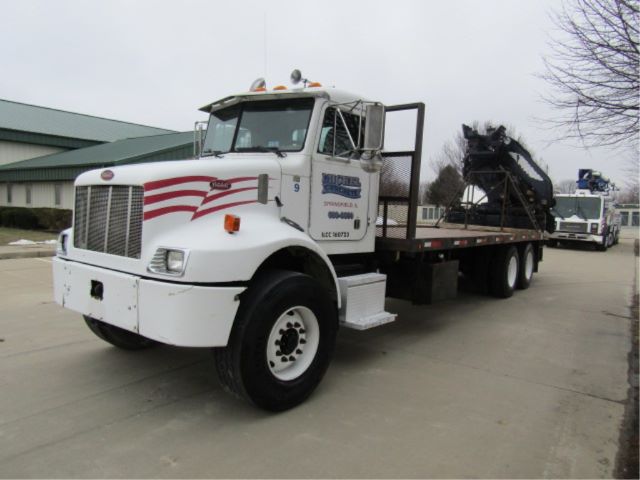
Have used peterbilt boom truck to sell? List it here to reach thousands of buyers.
About Used Peterbilt Boom Trucks in Illinois
The first buying decision is usually the boom package, not just the truck. Pay close attention to working height, horizontal reach, platform capacity, winch rating if equipped, and whether the unit is a material handler or personnel lift. Insulated booms matter for utility and electrical work, while non-insulated units are more common in general construction, signage, and tree applications. Buyers should also confirm turret condition, rotation function, hydraulic performance, outrigger design, and any signs of structural repair on the boom, subframe, or body. A clean Peterbilt chassis is valuable, but the lift system, PTO operation, and hydraulic maintenance history often decide the real cost of ownership.
On the truck side, used Peterbilt boom trucks can be found with diesel engines from Cummins or other vocational-spec powerplants, paired with manual or automatic transmissions depending on fleet preference and operator training. Axle layout, wheelbase, and bridge compliance are especially important in Illinois if the truck will travel between urban jobsites, county roads, and tighter residential streets. Some units include a tag or cheater axle to help with body weight and payload distribution. Buyers should check GVWR, front axle capacity, rear suspension rating, tire condition, brake type, and PTO compatibility with the installed boom system. Tool compartments, compressor setups, and work lighting can also add real value for crews that need a fully job-ready truck.
A used Peterbilt boom truck should be evaluated as a complete vocational package. Look at annual inspection records, dielectric test documentation when applicable, hour meter readings on the boom, and signs of corrosion on outriggers, body mounts, and hydraulic lines, especially in a state where winter road treatment can accelerate rust. Peterbilt parts support and familiar cab layouts remain a draw for many operators, but the best unit is the one with the right reach, stable weight distribution, and a service history that matches the work you plan to do.
Frequently Asked Questions
What should I check first on a used Peterbilt boom truck?
Start with the boom system and its documentation. Verify working height, side reach, platform or lifting capacity, PTO engagement, hydraulic function, outrigger operation, and any inspection or test records. On insulated units, dielectric testing and certification history are critical. After that, inspect the Peterbilt chassis for engine condition, transmission operation, axle ratings, frame integrity, and rust around mounts and outriggers.
Are Peterbilt boom trucks good for utility and municipal work in Illinois?
Peterbilt boom trucks are widely used for utility, lighting, sign, and municipal applications because the chassis is well suited for vocational body installations and road travel between jobsites. In Illinois, a strong chassis, stable outrigger footprint, and proper axle capacity matter because trucks may see a mix of urban driving, county routes, and seasonal weather exposure. The right spec depends on the boom type, body weight, and how much equipment the crew carries every day.
What is the difference between an insulated and non-insulated boom truck?
An insulated boom truck is designed for work near energized electrical lines and includes a boom structure and components built to provide electrical insulation when properly tested and maintained. A non-insulated boom truck is used for general lifting and access work such as signage, construction support, and tree service where electrical protection is not the primary requirement. Buyers should never assume a used unit is utility-ready without current test records and a verified insulation rating.
Why do some used boom trucks have a cheater axle or tag axle?
A cheater axle or tag axle helps distribute weight from the boom body, outriggers, tools, and carried materials across more axle capacity. This can improve legal load compliance and overall stability on a properly designed truck. For a used Peterbilt boom truck, the extra axle can be a real advantage if the installed body is heavy or if the truck operates with a lot of onboard equipment, but it should be checked for condition, functionality, and how it affects turning radius and maintenance costs.