
Used Peterbilt Boom Trucks For Sale
Browse used Peterbilt boom trucks built for lifting, utility, sign, and service work, with strong chassis options and body upfit flexibility.
Learn more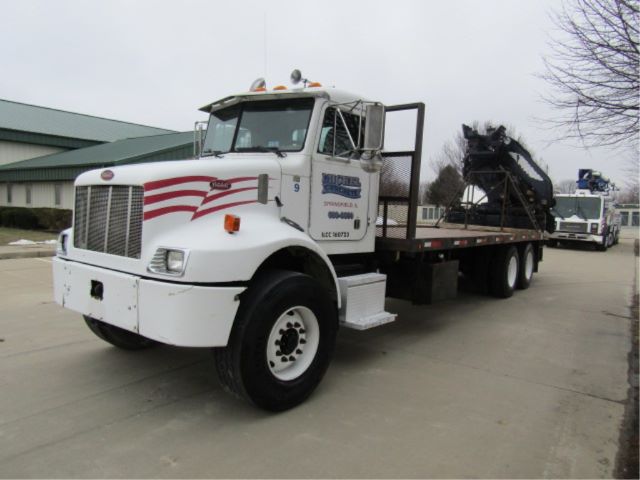
Have used peterbilt boom truck to sell? List it here to reach thousands of buyers.
About Used Peterbilt Boom Trucks
A used Peterbilt boom truck can be configured with non-CDL or CDL GVWRs depending on the body, boom reach, outriggers, and payload requirements. Common decision points include single-axle versus tandem or tag-style support, wheelbase length for body balance, and front axle capacity for heavier boom assemblies. Buyers should look closely at PTO operation, hydraulic system condition, outrigger function, turret response, and any signs of structural repair on the subframe or body. If the truck will spend time on urban streets or tight utility easements, turning radius and overall stowed length matter. If it will handle heavier material lifting, rear suspension, axle ratings, and frame reinforcement become more important.
The Peterbilt chassis itself is usually attractive to fleet buyers because parts support is strong and vocational spec options are familiar to most truck shops. Engines and transmissions vary by year and original application, with medium-duty and severe-service combinations both appearing on the used market. Mileage matters, but idle hours, PTO hours, and maintenance history often tell more of the story on a boom truck than odometer readings alone. Buyers should also confirm boom make and model, platform or winch rating, working height, side reach, material handler capacity if equipped, and current inspection status. For many applications, annual dielectric testing, ANSI compliance, and documented boom service records are just as important as engine and driveline condition.
A well-matched used Peterbilt boom truck can reduce setup time and keep crews productive on jobs that require lifting personnel, tools, lighting components, signs, transformers, or bundled materials. The best fit depends on how the truck will actually work: frequent road travel favors a balanced chassis and manageable overall height, while stationary utility or construction work may justify a heavier setup with more reach and lifting capacity. Buyers comparing listings should focus on the complete operating package, including chassis spec, boom geometry, hydraulic performance, outrigger footprint, storage layout, and remaining service life of the aerial equipment.
Frequently Asked Questions
What should I inspect first on a used Peterbilt boom truck?
Start with the boom system, outriggers, hydraulic functions, and inspection records, then evaluate the Peterbilt chassis underneath. A boom truck can have a decent engine and transmission but still require expensive repairs if the aerial device has worn pins, leaking cylinders, damaged hoses, slow turret response, or structural issues in the boom or subframe. Check PTO engagement, outrigger deployment, basket or hook function if equipped, and any evidence of welding or reinforcement around stressed areas. Maintenance logs, annual inspections, and boom service documentation are important because they show how the truck was operated and whether the lifting equipment was maintained to standard.
Are used Peterbilt boom trucks usually CDL trucks?
Some are, and some are not. The CDL requirement depends on GVWR, body configuration, boom size, and local regulations. Smaller utility or service boom trucks may fall below CDL thresholds, while heavier units with large booms, material handlers, tandem axles, or substantial tool bodies often require a CDL. Buyers should verify the door-tag GVWR, axle ratings, and registered weight rather than assuming based on appearance alone.
Why does wheelbase matter on a boom truck?
Wheelbase affects body fit, stability, turning radius, axle loading, and overall jobsite usability. A longer wheelbase can help distribute the weight of the boom body and improve balance, especially on units with heavy outriggers or material handling capability. A shorter wheelbase may be easier to maneuver in city streets, alleys, and confined worksites, but it can limit body layout and affect weight distribution. The right wheelbase depends on the boom design, storage needs, and the kind of terrain and access your crews deal with every day.
Is mileage less important on a boom truck than on a regular work truck?
Mileage still matters, but it is only part of the picture. Boom trucks often spend significant time idling, operating PTO-driven hydraulics, and working on site at low road speeds. That means engine hours, PTO hours, hydraulic wear, and maintenance history can be more informative than odometer readings alone. A lower-mile truck with poor boom maintenance can be a worse buy than a higher-mile unit with complete service records and a well-maintained aerial device.
What applications are Peterbilt boom trucks commonly used for?
Used Peterbilt boom trucks are commonly found in utility work, electrical and lighting service, sign installation, telecom work, municipal maintenance, tree service, and contractor support roles. Some are personnel-lift focused, while others are set up as material handlers with winches for lifting components into place. The intended use should guide the buying decision because working height, side reach, platform style, lifting capacity, storage configuration, and chassis weight rating all need to match the job.