
Used Komatsu Wheel Loaders For Sale
Shop used Komatsu wheel loaders with proven loader performance, common WA-series specs, bucket options, tire setups, and jobsite buying insights.
Learn more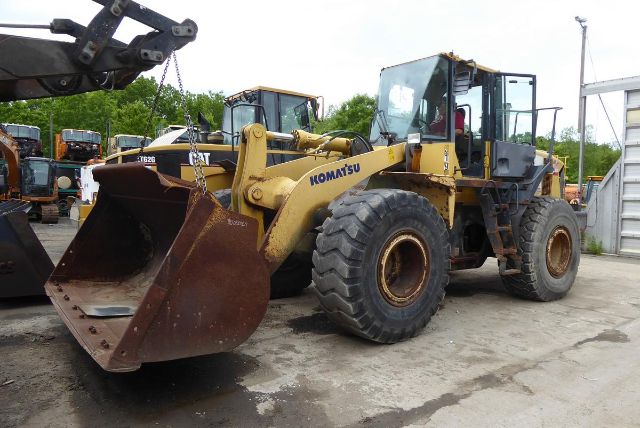
Have used komatsu wheel loaders trucking equipment to sell? List it here to reach thousands of buyers.
About Used Komatsu Wheel Loaders
A used Komatsu wheel loader is typically evaluated around operating weight, horsepower, bucket setup, linkage condition, and tire size. Mid-size models often carry 20.5R25 or 23.5R25 tires, enclosed cabs, and automatic powershift transmissions, while larger units step up in bucket volume and lift capacity for quarry and high-production work. Buyers should inspect articulation joint wear, boom and bucket pins and bushings, hydraulic cylinder leakage, cutting edge condition, transmission engagement, axle noise, and brake response. Hour meter accuracy also matters, but condition can tell more than the dash on older machines, especially when the machine shows clear evidence of loader arm wear, seepage, or driveline issues.
Komatsu wheel loaders are often selected for their balance of pushing power and operator comfort. Features commonly found on used machines include ride control, quick couplers, limited slip or locking differentials, rearview camera systems, air conditioning, and general-purpose or high-capacity buckets. Depending on the application, some buyers want forks, grapple setups, or material handling buckets instead of a standard dirt bucket. If the loader will spend most of its time loading on-road trucks or transfer trailers, pay close attention to hinge pin height, reach at full lift, and cycle speed. If it will work in a yard with scrap, demolition, or abrasive aggregate, look closely at underbody guarding, tire condition, scuffing on the bucket, and the overall health of the cooling system.
For fleet buyers, the value in a used Komatsu loader often comes down to serviceability and total cost per hour. Engine platform, parts support, transmission condition, and hydraulic response have a direct impact on uptime. A clean cab and decent cosmetics matter less than cold-start behavior, smoke, blow-by, loader arm tightness, and how the machine steers and shifts under load. Komatsu loaders have a strong presence in the market, so there is usually a broad range of older mechanical units and newer, more electronically managed machines. The best fit is the one sized correctly for the material, truck fleet, and production target, with enough remaining component life to avoid a major transmission, tire, or hydraulic repair soon after purchase.
Frequently Asked Questions
What should I check first on a used Komatsu wheel loader?
Start with the major cost items: engine condition, transmission operation, hydraulic performance, articulation joint wear, and tire life. A loader that starts cleanly, shifts smoothly in all gears, lifts strongly without chatter, and shows limited pin and bushing play is generally a better candidate than one with cosmetic appeal but weak driveline or hydraulic performance. Also inspect boom cylinders for leaks, look for cracks or weld repairs around the loader arms and frame, and verify that the hour meter reading appears consistent with pedal wear, seat condition, and overall machine looseness.
Are Komatsu WA-series wheel loaders good for loading trucks and bulk material handling?
Yes. Komatsu WA-series wheel loaders are widely used for truck loading, stockpile work, aggregate handling, and general yard production. The lineup covers mid-size and larger machines that can be matched to dump trucks, hoppers, and plant feed applications based on bucket size, lift height, and breakout force. Buyers should confirm that the machine’s bucket and linkage configuration are suitable for the material being handled, because dense aggregate, mulch, scrap, and snow all place different demands on the loader.
How important are tire size and tire condition on a used wheel loader?
Tire size and tire condition are critical because they affect stability, traction, ride quality, and replacement cost. Common wheel loader tire sizes such as 23.5R25 can represent a major ownership expense if a machine needs a full set soon after purchase. Uneven wear may also point to alignment issues, poor maintenance, or hard use on abrasive surfaces. A buyer should inspect tread depth, sidewall damage, matching tire brands and sizes, and the condition of the rims before making a value decision.
What bucket details matter most when buying a used Komatsu loader?
Bucket width, struck capacity, heaped capacity, edge condition, and overall wear all matter. A worn cutting edge, thin floor, damaged side cutters, or cracked bucket shell can reduce productivity and add repair cost. The bucket has to match both the machine and the job. A general-purpose bucket may be fine for dirt or mixed yard work, while aggregate, light material, or fork applications may require a different attachment setup. Buyers loading highway trucks should also confirm that the bucket gives adequate reach and dump clearance at full lift.
Is an older used Komatsu wheel loader still worth buying if it has high hours?
It can be, if the machine has been maintained well and the major components still perform properly. High hours alone do not disqualify a wheel loader used in a fleet yard or production setting. What matters more is evidence of regular service, solid oil pressure, acceptable blow-by, strong hydraulic response, proper transmission engagement, and manageable wear in the pins, bushings, and center joint. A high-hour machine with documented maintenance and good operating behavior can be a better value than a lower-hour unit with neglected driveline or hydraulic issues.